27 October, 2026 | 8:35 PM


Wheat mixed; maize outlook brightens on ethanol demand
10-06-2026 12:00:00 AM
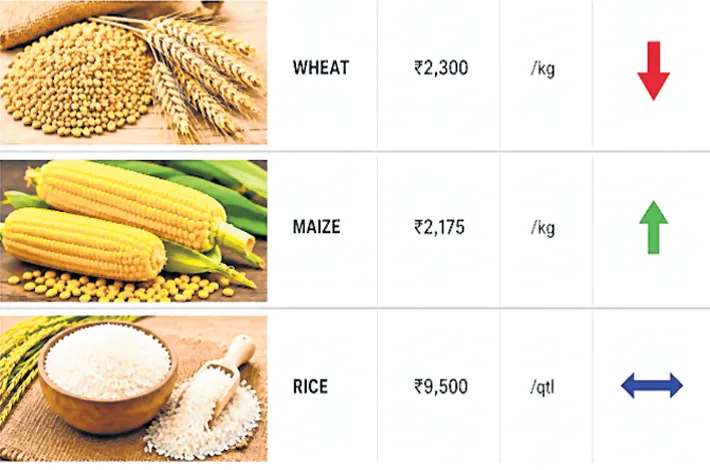
Rice remains stable amid limited activity, while grain markets track monsoon progress closely
Wheat prices displayed a mixed trend across key markets on Tuesday, while maize and rice prices remained largely stable. Higher arrivals and subdued demand pressured wheat prices in Kota, Rajasthan, whereas traders expect maize prices to strengthen in the coming months due to rising demand from the ethanol sector.
In Kota, wheat prices declined by ₹10 per 100 kg to ₹2,300-2,325. Arrivals increased by 10,000 bags to 25,000 bags, adding supply pressure to the market. Traders said the arrival of lower-priced wheat from other regions also contributed to the decline.
Demand remained weak as millers and stockists restricted purchases to immediate requirements amid comfortable supplies. In contrast, wheat prices in Indore, Madhya Pradesh, remained steady at ₹2,570 per 100 kg. Market participants said stable demand and adequate availability kept prices unchanged.
Traders expect wheat prices to remain range-bound in the near term as both private buyers and government agencies hold sufficient stocks.
The market is also closely watching the government's Open Market Sale Scheme, under which wheat and rice are sold to bulk buyers through electronic auctions. Industry participants expect wheat sales under the scheme to begin during July or August, which could influence future price movements.
At Vashi in Navi Mumbai, wheat prices remained steady at ₹2,700 per 100 kg. Government procurement activities and limited trading interest supported prices despite muted market activity. Maize prices were unchanged at ₹2,175 per 100 kg in Indore and ₹1,800-2,050 per 100 kg in Davanagere, Karnataka.
Traders said demand and supply remained balanced. However, expectations of increased ethanol production are supporting market sentiment. Industry estimates suggest India's ethanol demand could rise sharply over the next decade as flex-fuel vehicles gain wider acceptance. Rice prices also remained stable across major varieties in Vashi. The 1409, 1509 and 1121 basmati varieties held their previous levels as trading activity remained limited.
Market participants are closely monitoring monsoon progress, as rainfall patterns could influence rice acreage and production prospects during the current season.
Market participants said weather conditions and sowing progress will remain key factors influencing grain prices in the coming weeks. While adequate stocks are currently preventing sharp price movements, any disruption to monsoon patterns or changes in government procurement and distribution policies could affect supply expectations and overall market sentiment. Additionally, traders are monitoring export demand, ethanol blending trends and crop acreage estimates, which may provide fresh direction to wheat, maize and rice markets.