25 October, 2026 | 6:37 AM


When children learn to trust themselves
10-09-2026 12:00:00 AM
The real gift is not winning
A child’s confidence is rarely built in a single dramatic moment. It grows quietly through everyday experiences — being allowed to answer a question, attempt something difficult, make a mistake, or handle a small responsibility without an adult immediately stepping in.
For parents, this can be harder than it sounds. The instinct to protect children from disappointment is natural. Yet removing every obstacle can unintentionally send the message that the world is too difficult for them to manage alone. Children need support, but they also need opportunities to discover their own capabilities.
Let them try before helping
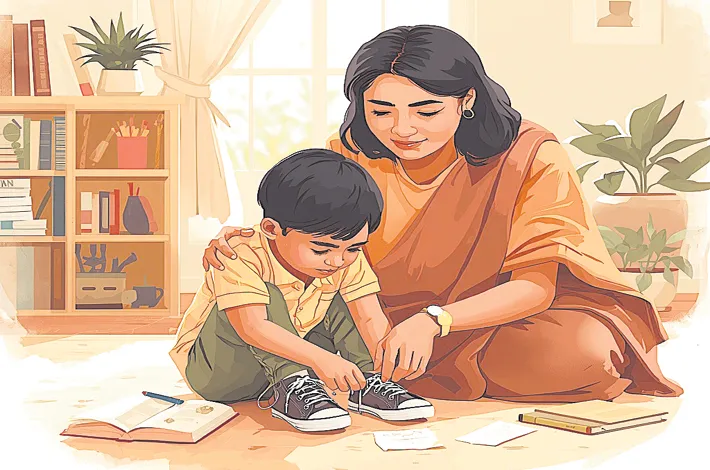
A child struggling to tie shoelaces, complete a school project or settle a disagreement with a friend may not always need an immediate solution from a parent. A simple question such as, “What do you think you could try next?” can encourage independent thinking.
Research on autonomy and learning has consistently highlighted the value of giving children meaningful choices and helping them develop their own problem-solving skills. This does not mean leaving children alone with every difficulty. Parents can remain close without taking control. Think of it as being a safety net rather than a steering wheel.
Change the language of praise
There is also a lesson in how adults celebrate achievement. Saying “You’re so clever” may sound encouraging, but specific feedback can be more useful: “You kept working even when that part was difficult.”
Research has found that praising effort and strategies can encourage persistence and resilience, while excessive emphasis on fixed abilities may make failure feel like evidence that a child is not capable.
Make room for ordinary failures
Missing a goal, receiving a disappointing mark or losing a competition can hurt. Parents do not need to erase that feeling. They can acknowledge it and then help the child ask, “What can I learn from this?”
Children who gradually learn that mistakes are survivable become better prepared for unfamiliar situations. Experts also caution against immediately rescuing children from every failure because trying again is part of developing resilience.
Ultimately, confidence is not the belief that everything will go perfectly. It is the quieter conviction that, even when things go wrong, “I can face this, learn and try again.” That may be one of the most valuable lessons a family can give a child.