1 October, 2026 | 5:41 AM


WHY ALL EYES ARE ON THE STRAIT OF HORMUZ
24-06-2025 12:00:00 AM
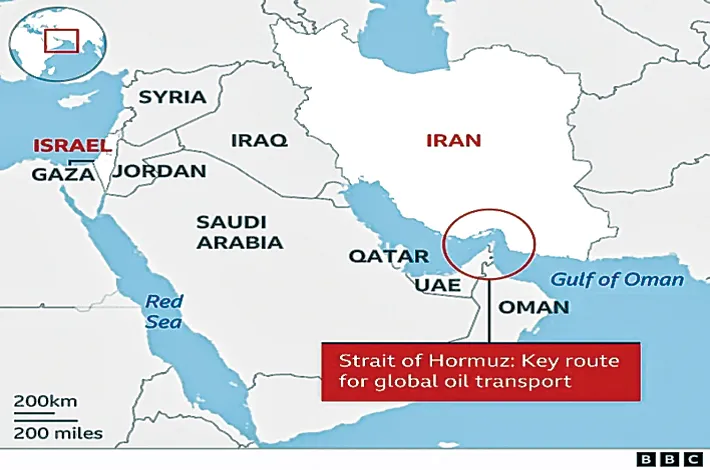
Alarm bells are ringing across the world as Iran contemplates closing the strategic Strait of Hormuz in retaliation to attacks from US and Israel.
THE IMPORTANCE
The waterway, located between the Persian Gulf and the Gulf of Oman is one of the world's most important shipping routes. It is 33km wide at its narrowest point, with the shipping lanes just 3km wide in either direction. It’s the only way to ship crude from the oil-rich Persian Gulf to the rest of the world. Iran controls its northern side.
CRUDE CORRIDOR
About one-fifth of the world’s total oil consumption passes through it. In the first half of 2023, around 20 million barrels of oil went through the strait per day. That oil comes from Iran, Iraq, Kuwait, Qatar, Saudi Arabia and the UAE.
HOW TO CLOSE IT?
Any Iranian attempt to close the strait would almost certainly involve Tehran trying to mine the two 3km wide shipping lanes with munitions ready to explode if they detect passing traffic. The challenge would be in successfully laying the weapons, as the exercise would have to be done relatively quickly and would rely on submarines.
KEY FOR INDIA
More than two-thirds of India’s oil imports and nearly half of its liquefied natural gas imports pass through the strait. Out of the 5.5 million barrels of oil India consumes daily, approximately 1.5 million are transported via this crucial waterway.
ALTERNATIVE ROUTES?
Saudi Arabia has activated its East–West pipeline, a 1,200km-long line capable of transporting up to 5m barrels of crude oil per day. The UAE has connected its inland oilfields to the port of Fujairah on the Gulf of Oman via a pipeline with a daily capacity of 1.5 million barrels.
Compiled by Deeksha Pandey