21 June, 2026 | 6:13 PM


Will Maha poll results impact other polls?
19-01-2026 12:00:00 AM
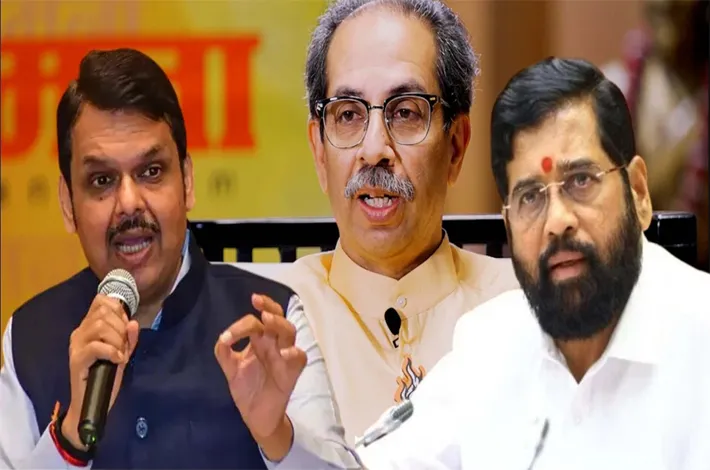
In a resounding triumph for the Bharatiya Janata Party (BJP)-led Mahayuti alliance, the results from Maharashtra's 29 municipal corporations have signalled strong public endorsement of Prime Minister Narendra Modi's development agenda. Home Minister Amit Shah took to X (formerly Twitter) to celebrate the victory and emphasized that this "historic success" validates the Mahayuti government's welfare initiatives under Chief Minister Devendra Fadnavis. At the same time, the battle for Mumbai's BMC was fiercely contested, with results showing a tighter race than anticipated. The BJP-Shinde faction surpassed the majority mark of 114 seats and ended up at 118 but fell short of the ambitious 130-150 seat predictions.
Chief Minister Devendra Fadnavis emerged as the election's central figure, crediting the win to a blend of "Hindutva plus Vikas" (Hindutva plus development). In his first public address at the BJP headquarters, Fadnavis outlined a formula he plans to replicate nationwide: prioritizing Hindu identity alongside infrastructure and welfare. He praised party workers and allies, invoking Modi's vision for Maharashtra's growth.
A section of the media hailed Fadnavis as the architect of the victory, establishing "Brand Deva" as a pan-Maharashtra force. They credited Fadnavis for single-handedly leading the campaign without central leaders' heavy involvement, securing 25 out of 29 councils and a historic BMC majority. They also praised reforms like overhauling BMC administration to crush resistance and ensure corruption-free governance, leveraging the corporation's Rs 85,000 crore budget for development.
The press also noted Fadnavis's decisive actions, such as banning mosque loudspeakers, deporting illegal Bangladeshis and demolishing illegal structures in Muslim-dominated areas as appealing to RSS and Hindu voters and at the same time not having any controversy. BJP leaders echoed this optimism, viewing the win as a rejection of dynastic politics. They criticized opposition families like the Thackerays and Pawars for losses in strongholds, predicting a reshaping of Maharashtra's trajectory under Fadnavis's vision.
An eminent psephologist outlined four key takeaways: voters' desire for a "triple-engine sarkar" aligning state, centre, and local bodies; Fadnavis's emergence as a towering leader; rejection of divisive narratives like "Mumbai for Marathis"; and Uddhav Thackeray's confinement to Mumbai's island city. He argued the Hindu vote consolidated around BJP's Hindutva-Vikas agenda, while Muslim votes splintered among parties like AIMIM, which expanded significantly. He added that Uddhav's shift away from aggressive Hindutva rhetoric allowed BJP to claim that space, evidenced by strike rates: BJP won over 50% against Shiv Sena(UBT), while UBT dominated Shinde Sena contests, signalling Marathi loyalty but Hindu consolidation for BJP.
A recurring opposition argument was encapsulated in the phrase “Ek rahe to safe, bante to katenge” (stay united and stay safe, split and get cut). Analysts and opposition voices repeatedly pointed out that had the Thackeray family factions (Uddhav, Raj, and Eknath Shinde) remained united along with Congress, the BJP would likely have been pushed out of power. The opposition, fragmented and divided, suffered significant setbacks, with Uddhav Thackeray's Shiv Sena (UBT) managing 65 seats, Congress at 24, AIMIM at 8, MNS at 6, NCP (Ajit Pawar) at 3, Samajwadi Party at 2, and NCP (Sharad Pawar) at just 1.
The fragmentation of votes — especially in minority-dominated pockets — proved particularly costly. AIMIM’s strong showing across Maharashtra, including significant wins in minority-concentrated areas like Chhatrapati Sambhajinagar (24 seats), Malegaon (20 seats), and others, indicated that Muslim voters were increasingly choosing parties based on perceived community-specific leadership rather than purely as an anti-BJP consolidation block. It was pointed out to a changing Muslim voting pattern: no longer tactical to defeat BJP, but based on clear representation.
Congress leaders expressed doubts on the electoral system, citing irregularities like indelible ink fading within a day, cash seizures worth over 12 crores, and missing voter names. One leader however celebrated Congress's 23-24 seats despite minimal campaigning, attributing it to committed voters, but warned of fragile democratic credentials. A BJP spokesperson countered aggressively, dismissing Congress’s allegations as "vote chori" excuses for "kaam chori" (work theft).
The debate exposed deep divides: BJP's triumphant Hindutva-development fusion versus opposition's charges of rigging and ideological dilution. With upcoming polls, Maharashtra's political saga promises more twists, but for now, BJP's ideological clarity has clearly rewarded them, leaving the opposition to regroup amid fragmentation.