16 September, 2026 | 12:18 PM


IndiGo chaos exposes cracks in India's aviation monopoly
08-12-2025 12:00:00 AM
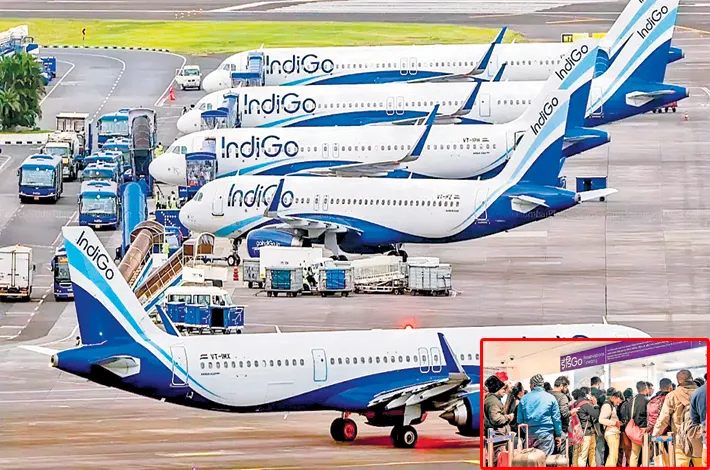
In a dramatic unraveling of India's aviation sector, low-cost carrier IndiGo has plunged the nation's skies into turmoil, canceling over 2,100 flights since December 1 and stranding lakhs of passengers at major airports. The crisis, dubbed the "IndiGo Disruption" by observers, has ignited widespread protests inside terminals, soaring airfares on rival airlines, and sharp political finger-pointing—particularly over revelations that IndiGo's parent company funneled millions in electoral bonds to the ruling Bharatiya Janata Party (BJP).
The meltdown began quietly but escalated rapidly. On December 5 alone, IndiGo axed more than 1,000 flights—over half its daily schedule—plunging its on-time performance to a dismal 8.5%. Airports in Delhi, Mumbai, Bengaluru, Hyderabad, and Chennai became scenes of desperation, with harried travelers sleeping on floors, clashing with security, and venting fury on social media under the hashtag #IndiGoCrisis. By Sunday, another 650 flights were grounded, though the airline vowed stabilization by December 10.
At the heart of the debacle are stringent new Flight Duty Time Limitation (FDTL) rules enforced by the Directorate General of Civil Aviation (DGCA), aimed at ensuring pilots and crew get adequate rest for safety. Weekly rest periods were extended from 36 to 48 hours, daily flying capped at eight hours, and night landings slashed from six to two per week. These measures, originally rolled out in March 2024 but delayed at airlines' behest, were meant to address fatigue-related risks but caught IndiGo flat-footed after 18 months of inaction on hiring.
IndiGo CEO Pieter Elbers attributed the chaos to a "system reboot" and external factors like weather and tech glitches, promising refunds and a return to normalcy between December 10-15. But critics, including the Airlines Pilots Association of India (ALPA), decry it as a deliberate ploy: mass cancellations to pressure regulators into rollbacks. On December 5, the government duly obliged, granting IndiGo a one-time exemption until February 10, allowing layovers to count toward rest and relaxing night-duty curbs—a move slammed as prioritizing profits over passenger safety.
A viral critique: From anti-corruption protests to corporate cronyism?
The crisis has supercharged online discourse, with popular YouTuber and commentator Dhruv Rathee's latest video—shared widely on X (formerly Twitter) by activist Jennifer Fernandes ( @nandtara )—framing it as the bitter fruit of unchecked monopolies under Prime Minister Narendra Modi's tenure. In the nearly three-minute clip, viewed over 4,000 times since Saturday, Rathee juxtaposes footage of irate crowds at terminals with clips of the 2011 Jantar Mantar anti-corruption protests, once led by a young Modi.
"From Jantar Mantar’s scripted 'anti-corruption' theatrics to Modi’s full-blown monopoly model, the arc is complete," Fernandes captioned the post, echoing Rathee's narrative. The video details how IndiGo's 65% market share, alongside Air India's 30%, has crushed competition—recalling a vibrant era of carriers like Jet Airways, SpiceJet, and Kingfisher. "If today a passenger stands up and says he wants to boycott IndiGo, it will not be possible," Rathee laments, blaming government policies for fostering duopolies across sectors.
Rathee's takedown doesn't stop at economics. He accuses IndiGo of "blackmailing" the state through orchestrated disruptions, forcing regulatory U-turns that endanger lives. Fernandes amplifies this, tying it to electoral bonds: "Electoral Bonds have come back to bite Modi with @IndiGo6E drawing first blood." Disclosures from the now-scrapped scheme reveal IndiGo's parent InterGlobe Aviation and promoter Rahul Bhatia donated around ₹56 crore—most encashed by the BJP—raising eyebrows over the swift exemptions amid the chaos.
Opposition fires salvos: "Ease of Doing Business or cronyism?"
The political storm has been swift. Congress spokesperson Sasikanth Senthil lambasted Modi's "ease of air travel" pledge as devolving into a "cease of air travel," questioning if BJP's "financial proximity" to IndiGo explains the "extraordinary leniency." "InterGlobe group entities bought around Rs 36 crore in bonds, and Bhatia ₹20 crore—most to BJP," Senthil noted at a presser, demanding accountability for safety lapses. The DGCA has issued show-cause notices to Elbers and COO Isidro Porqueras, demanding explanations within 24 hours. IndiGo's board, meanwhile, activated a crisis management group led by Chairman Vikram Singh Mehta. The government capped fares on unaffected routes and deployed extra trains to ease the backlog, but stranded passengers like those at Ranchi's Birsa Munda Airport continue to seethe.
As IndiGo scrambles to hire crew and refund tickets—ordered complete by Monday—the episode underscores deeper woes in India's aviation boom: a near-oligopoly where one carrier's stumble grounds a nation. For Fernandes and Rathee, it's a stark reminder that the "ensuing tragedy... witnessed by us all in real time" isn't just logistical—it's a fallout of power consolidated in few hands. With operations limping toward recovery, the question lingers: Will this "first blood" from electoral bond ghosts force real reform, or just more exemptions?