15 October, 2026 | 11:11 AM


A Journey of faith, endurance and inner transformation
12-07-2026 12:00:00 AM
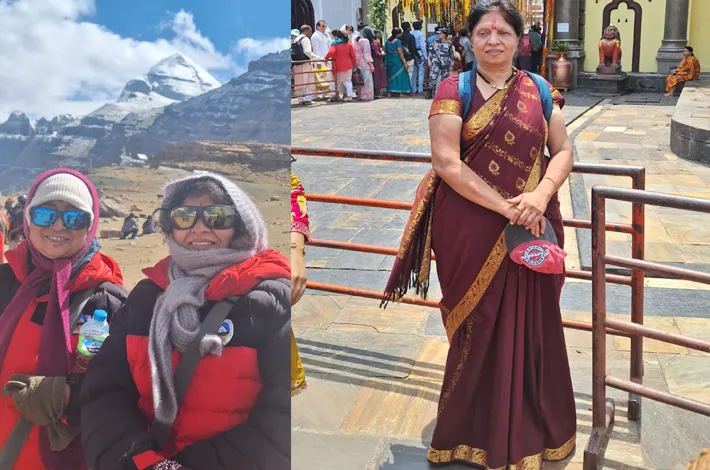
My Manasarovar Yatra 2026
Metro India News | Hyderabad
The year 2026 holds extraordinary significance for Tibetans as it is the sacred Fire Horse Year, an event that occurs only once every sixty years. I did not fully understand its importance when I first began planning my pilgrimage. Later, I learned that undertaking the Kailash Manasarovar Yatra during this auspicious year is believed to bestow immense spiritual merit. For me, this journey was never just another pilgrimage—it felt like a divine invitation. Many devotees believe that one does not simply decide to visit Mount Kailash. It is Lord Shiva who calls His devotees when the time is right. Looking back, I feel deeply blessed to have received that call.
Our preparations began several months before departure. I focused on regular walking, yoga, pranayama and breathing exercises to prepare my body for the high altitudes. I also learned that packing wisely was essential. Instead of carrying heavy winter clothing, multiple light layers, thermal wear, woollen gloves, caps and trekking shoes proved far more practical in the constantly changing Himalayan weather. Our group left Hyderabad on May 22, travelling via Delhi to Kathmandu.
We first visited the sacred temples of Pashupatinath, Guhyeshwari, Budhanilkantha and Doleshwar Mahadev before beginning the overland journey through Nepal's mountains. As we travelled through Nepal towards the Tibet border, every day became a lesson in patience and humility. Crossing the border involved hours of immigration procedures, health checks and document verification before we finally entered Tibet.The landscape changed dramatically as we crossed the vast Tibetan Plateau.
Endless grasslands, snow-covered mountains and high mountain passes stretched before us. Nothing, however, prepared me for my first glimpse of Mount Kailash. It is impossible to describe the emotions I experienced at that moment. The sacred mountain stood before us in majestic silence, covered in brilliant white snow. I felt as though time itself had stopped. Nearby, the crystal-clear waters of Lake Manasarovar reflected the surrounding peaks like a mirror.
Our plans to undertake the traditional three-day Kailash Parikrama were initially cancelled because of adverse weather and logistical difficulties. Later, permission was granted for a shortened one-day Parikrama on foot. The trek tested every ounce of physical strength. We walked across rocky trails, through snowfall and icy rain, often stopping every few dozen steps to catch our breath because of the reduced oxygen. Sherpas guided us throughout the journey while breathing exercises helped us continue.
When I finally saw Mount Kailash glowing under the silver moonlight and, the following morning, turning golden with the first rays of sunrise, I understood why millions regard this as the abode of Lord Shiva and Goddess Parvati. Those moments remain etched in my heart forever. The return journey also reminded us of the mountain's power. One member of our group developed severe altitude sickness and had to be evacuated to Kathmandu for treatment before making a full recovery. It reinforced the importance of respecting both nature and the challenges of high-altitude travel. Today, when I look back on the Kailash Manasarovar Yatra, I do not remember only the long roads, freezing temperatures or physical exhaustion. I remember the silence of the mountains, the purity of Lake Manasarovar, the devotion of fellow pilgrims and the overwhelming peace that gradually filled my heart.
People often ask me why they should undertake this pilgrimage. I find it difficult to answer because Kailash cannot truly be explained—it has to be experienced. The journey tests the body, humbles the mind and transforms the spirit. I returned home feeling as though I had been given a second birth. For me, Kailash is no longer merely a destination on a map. It has become a sacred presence that continues to live within me, reminding me every day that some journeys do not end when we return home—they begin there.
-Swarnabala Ganti
The author is a researcher in chemistry and consultant at SWARAM BIOCHEM