12 October, 2026 | 7:38 AM


A ‘she’ director who crashed through a concrete ceiling
16-03-2026 12:00:00 AM
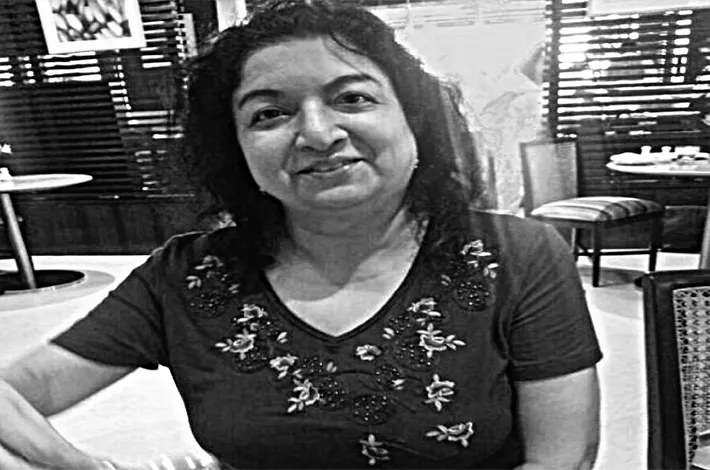
Sai Paranjpye brought to the films she made a different perspective. She saw to it that her female characters were never Bollywood stereotypes
Later this month, on March 19, Sai Paranjpye turns 88. Age hasn’t dimmed her shine or reduced her energy, as she kept an audience enthralled at a reading from her work in a show titled Darwal (Fragrance).
Dressed in a stylish kaftan, she stood for the first half of the show as she read from her memoirs; during the second half, she sat down and spoke about her plays and films. The show was sold out, which is not surprising; she has multitudes of fans of her films, plays, and writing, even though she has been away from the spotlight for several years.
Paranjpye always bristled when she was called a woman director, but the fact is that she heralded the entry of female filmmakers when she made Sparsh in 1980. Before then, there had been a few female film producers and a couple of directors, but through the 1960s and 1970s, there was a void. The industry’s male domination is no secret, but when Paranjpye crashed through, not the glass but the concrete ceiling, women had not made inroads into Bollywood as directors. The industry simply did not trust women with ideas or money—it is better today, but still a long way to go. She and others who followed—Aparna Sen, Kalpana Lajmi, Vijaya Menta, and Aruna Raje—got small budgets to make what were then labelled ‘parallel’ or ‘middle-of-the-road’ films.
Paranjpye was born to a Russian father, the artist Youra Sleptzoff, and an Indian mother, Shakuntala Paranjpye, an actress, writer, and social activist. After her parents’ divorce, she was raised in the home of her maternal grandfather, RP Paranjpye, a renowned mathematician and educationist, who served from 1944 to 1947 as India’s High Commissioner to Australia. She grew up in a progressive atmosphere, with varied influences—some of which she recounts in Darwal. Her first meeting with her father and the Russian side of her family is particularly moving. She had started writing as a child, and her book of fairy tales, titled Mulancha Mewa, was published when she was just eight.
After graduating from the National School of Drama, working at All India Radio and then Doordarshan, and after writing and directing plays, she was ready to make movies, even if mainstream Bollywood was not ready for her.
What she brought to the films she made was a different—not necessarily typical female—perspective. She saw to it that her female characters were never Bollywood stereotypes. Her first feature film, Sparsh, was a sensitive love story between a widow (Shabana Azmi) and the principal (Naseeruddin Shah) of a school for the blind, where she volunteers. Kavita’s widowhood does not define her existence; she may be hesitant, but she is open to the complex emotional journey of navigating a relationship with a prickly man, who hates any kind of pity or even acknowledgement of his blindness. The awards this film won helped get her next two projects made—the comedies Chashme Baddoor (1981) and Katha (1982). They were both marked with gentle humour and astute observations. In both these films, the female lead was played by Deepti Naval, who got the innocence and quirkiness of the characters as written by Paranjpye. Miss Chamko of Chashme Baddoor remains unforgettable.
In her show, she narrates a delightful incident about inviting Kamal Haasan to her home for the script narration of Katha. He was a huge star in the South already, and his imminent arrival sent her Tamil househelp into raptures. Her cat that lacked an ear was banished to the garage by the helper, lest the sight of him offend the star. Kamal Haasan turned the film down, not because he did not like the script, but because he did not want to do a two-hero project. The roles were eventually done by Naseeruddin Shah and Farouque Shaikh.
The fact also is that back then mainstream Bollywood did not know how to work with women in power. A film called Bicchu, to be produced by Dharmendra and directed by her, was launched and quietly shelved. Bollywood’s conservatism and Sai’s unique worldview could not have matched.
In Darwal, Paranjpye narrated hilarious incidents about the succession of cats she had as pets. Her love for felines led her to writing the characters of two cats (played by humans, of course) as a kind of chorus in her play Jaswandi.
She also speaks about her extensive travels to festivals as a filmmaker and as the chairperson of the Children’s Film Society, a role she relished. The output of her work has been prolific—plays, documentaries, features, TV shows, and books. Her sense of humour led her to be sometimes called Lady Pula (Pu La Deshpande was the legendary Marathi writer and humourist).
She said in an interview with Nandini Ramnath on scroll.in, “We Indians tend to take life too seriously. We constantly pontificate and get philosophical about every little thing. Having fun is frowned upon; it’s almost sinful. I have done serious things, but I will not let go of that thread that keeps me bubbling along and happy and merry.” And went on to add, “Women actually have a fantastic sense of humour, better than men’s. Men tend to have crass and predictable humour. Women see human foibles and minute details, and they can laugh at eccentricities and peculiarities. They are also more understanding. Go ahead and quote me and let me make some enemies.”
Work did slow down, but certainly not because of her age. Going by her stage show, her voice is firm, her wit is sharp, and her joie de vivre is undiminished. She has written two memoirs, but the stories she would still have to tell could fill more volumes.
DEEPA GAHLOT