13 October, 2026 | 11:27 PM


AI and Robots: Paving the way to sustainable abundance
20-12-2025 12:00:00 AM
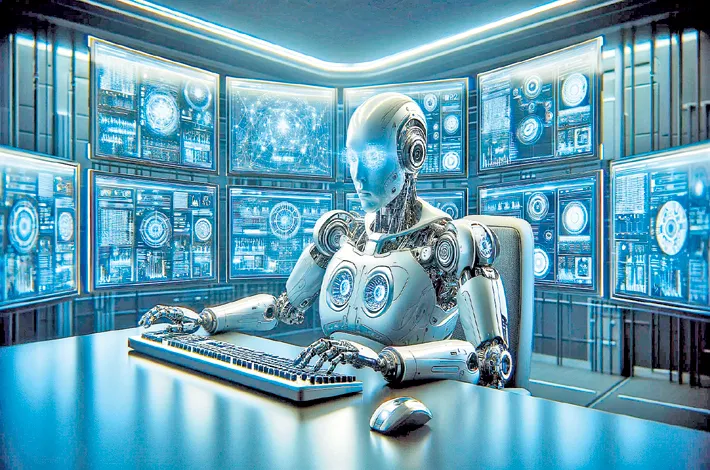
In a bold declaration on December 18, 2025, Elon Musk proclaimed, "The future is going to be AMAZING with AI and robots enabling sustainable ABUNDANCE for all!" This vision, shared via X (formerly Twitter), encapsulates Musk's optimistic outlook on how advanced technology could eradicate scarcity and usher in an era of universal prosperity. But how exactly will this unfold? At its core, Musk's prediction hinges on the exponential growth of productivity driven by AI-integrated humanoid robots, renewable energy, and intelligent systems. Drawing from Tesla's innovations, this article explores the mechanisms, enablers, and potential hurdles of this transformative future.
The foundation of Musk's argument lies in a simple economic equation: global output equals population multiplied by average productivity per person. Historically, productivity has been capped by human limitations—fatigue, skill gaps, and finite hours in a day. Enter humanoid robots like Tesla's Optimus, which Musk describes as game-changers capable of shattering these constraints. Unlike specialized industrial robots, Optimus is designed for general-purpose tasks, from assembling products in factories to performing household chores or even intricate surgeries. Musk estimates that a single Optimus could deliver five times the annual productivity of a human worker, operating tirelessly around the clock with superhuman precision.This isn't mere speculation.
Tesla's Optimus program, evolving from prototypes in 2021 to production-ready units by 2025, leverages the same neural networks powering Full Self-Driving (FSD) in Tesla vehicles. These AI systems enable robots to learn from real-world data, adapting to new environments without explicit programming. As production scales—starting with limited deployments in Tesla factories in 2025 and ramping to millions annually—the global robot workforce could balloon to billions. The result? An explosion in goods and services production, driving costs toward zero. Imagine a world where high-quality housing, food, healthcare, and education are as abundant as air, making poverty obsolete.
Sustainability is a critical pillar of this vision. Musk ties robotic abundance to Tesla's ecosystem of renewable energy solutions, including solar panels, Megapack batteries, and efficient mining operations. Robots would not only consume clean energy but also optimize its generation and distribution. For instance, Optimus bots could maintain solar farms, recycle materials with minimal waste, or even construct more robots, creating a self-sustaining loop. This addresses environmental concerns: unlike resource-intensive human labor, AI-driven systems prioritize efficiency, reducing carbon footprints and enabling a circular economy.
Musk envisions energy as the "true currency" in this post-scarcity world, where unlimited clean power fuels limitless production.Yet, the path to abundance involves more than hardware. AI's "embodiment" in physical forms like Optimus bridges the gap between digital intelligence and real-world application. Software AI already revolutionizes knowledge work—analyzing data, designing innovations, and optimizing logistics. When embodied, it tackles physical labor, from hazardous mining to precision agriculture. Combined, these technologies could lead to "universal high income," a step beyond universal basic income, where work becomes optional, pursued for fulfillment rather than necessity.
Musk foresees a society where "if you can think it, you can have it," with robots handling the drudgery, freeing humans for creativity, exploration, and leisure.Of course, challenges loom. Job displacement could exacerbate inequality if wealth from robotic productivity isn't redistributed equitably. Musk acknowledges potential disruptions, estimating abundance in 10 to 20 years, but critics highlight current limitations: Optimus demos still rely on teleoperation for complex tasks, and dexterity issues persist.
Regulatory hurdles, ethical concerns around AI autonomy, and geopolitical tensions over resource access could slow progress. Moreover, ensuring fair distribution requires global policies—perhaps through taxes on AI-generated wealth or international collaborations.Despite these obstacles, Musk's track record with Tesla, SpaceX, and Neuralink lends credibility. Optimus, he claims, could eclipse even Tesla's electric vehicles as humanity's most impactful invention. By solving the trifecta of AI, robotics, and energy, we inch toward a utopian horizon. The future Musk describes isn't just amazing—it's a paradigm shift from scarcity to surplus, where technology serves all. As we stand on the cusp of this revolution in late 2025, the question isn't if abundance will arrive, but how swiftly we embrace it.