13 October, 2026 | 1:14 AM


Resign, Turn Approver
13-10-2026 12:00:00 AM
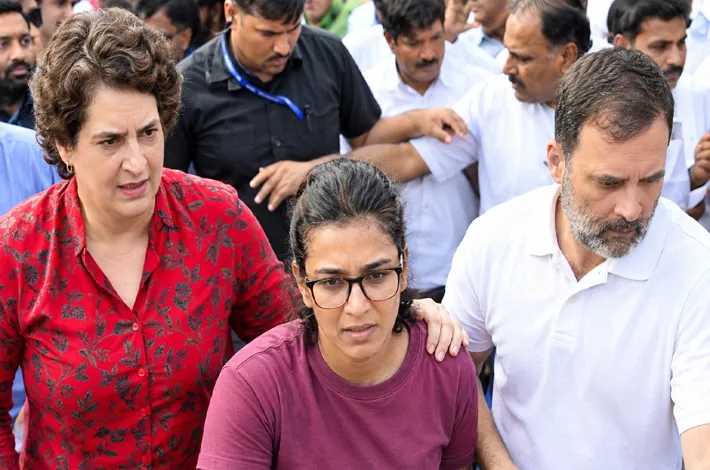
metro india news I New Delhi : Leader of the Opposition in the Lok Sabha Rahul Gandhi on Monday delivered a sharp message to Chief Election Commissioner Gyanesh Kumar during a special press conference at Indira Bhawan, urging him to resign and turn approver while alleging that Kumar is not the primary figure behind what the opposition calls “vote chori.”
Addressing the media ahead of an INDIA bloc march to the Supreme Court, Gandhi said he had been receiving messages and responded directly to Kumar: “Turn approver. You are not the main criminal or the mastermind. We are after the main masterminds. Resign and turn approver.” He described this as a service to the nation, claiming Kumar faced pressure from higher quarters and that stepping aside to reveal the truth would serve the country’s interest. Gandhi asserted that the opposition knows details of Kumar’s past and alleged corruption and is waiting.
“We know Gyanesh Kumar is unable to sleep at night; I am telling him directly ‘you will not survive as CEC,’” he stated. “Gyanesh Kumar, you have lost your sleep; we will not spare you.”
Congress leader Rahul Gandhi demanded the immediate resignation of Chief Election Commissioner (CEC) Gyanesh Kumar and a halt to the Special Intensive Revision (SIR) of electoral rolls, alleging widespread electoral irregularities. He linked the agitation to objections reportedly raised by Election Commissioners Sukhbir Singh Sandhu and Vivek Joshi over SIR-related decisions, describing the protests as a defence of the Constitution rather than a partisan battle.
“This protest is not about Rahul Gandhi or Narendra Modi. I am of no importance in this struggle,” he said, calling it a peaceful movement to protect democracy.
Gandhi criticised the heavy security deployment in Delhi, likening the capital to a fortress or prison. He questioned restrictions on people travelling to the city and alleged that trains and buses were intercepted and passengers forced to alight. He warned that protecting Kumar would only intensify the agitation, saying protesters wanted 20,000 to 30,000 security personnel on the streets to expose the government’s actions.
He claimed around 200 government officials, including those in the Enforcement Directorate, Central Bureau of Investigation and Foreign Ministry, were sharing information with the Opposition. He also alleged that nearly half the police force supported the agitation but was distressed by orders to use force against young protesters.
Gandhi announced that INDIA bloc MPs would approach the Supreme Court after Chief Justice of India Surya Kant advised him and Congress president Mallikarjun Kharge to pursue the legal route. They had earlier written to the CJI expressing concerns over electoral fairness. The planned march from the Connaught Place-Barakhamba Road junction was intended to mobilise students, civil society groups and citizens.
Gandhi alleged violence against peaceful protesters, including women and students, and criticised mass detentions by Delhi Police. He said the agitation, which he claimed had been building for 12-13 years, would continue until Kumar resigned and the Election Commission system was rectified.
The Opposition has linked the SIR exercise to alleged large-scale voter deletions and electoral manipulation. Gandhi maintained that protecting voting rights was essential to safeguarding the Constitution, vowing that the INDIA bloc would pursue both street protests and legal action.
‘March for Democracy’
Leaders of the INDIA bloc, accompanied by hundreds of supporters, activists and civil society members, began a “March for Democracy” on Monday afternoon towards the Supreme Court demand the resignation of Chief Election Commissioner Gyanesh Kumar along with a halt to the Special Intensive Revision (SIR) of electoral rolls.
Participants gathered earlier at the Constitution Club of India before moving towards the Barakhamba Road junction. From there, the procession headed in the direction of the apex court, with leaders travelling in air-conditioned buses while supporters walked alongside. Those at the forefront included Leader of the Opposition in the Lok Sabha Rahul Gandhi, Congress president and Leader of the Opposition in the Rajya Sabha Mallikarjun Kharge, Congress MP Priyanka Gandhi Vadra, Samajwadi Party chief Akhilesh Yadav, Rashtriya Janata Dal leader Tejashwi Yadav, Nationalist Congress Party (Sharadchandra Pawar) leader Supriya Sule, Shiv Sena (UBT) leader Sanjay Raut, CPI general secretary D. Raja, CPI(M) leader M.A. Baby, CPI(ML) Liberation general secretary Dipankar Bhattacharya and IUML leader E.T. Mohammed Basheer.
Other notable participants included Congress MPs Shashi Tharoor, Sachin Pilot and Mukul Wasnik, Trinamool Congress leader Sagarika Ghosh, and activists such as Yogendra Yadav, Nandita Narayan and All India Students’ Association (AISA) president Neha Bora. Crowds of political workers, students and citizens joined, filling stretches of central Delhi including parts of Barakhamba Road and Mandi House. Protesters carried national flags and placards while raising slogans focused on protecting democratic institutions and the electoral process.
Delhi Police halted the Opposition march demanding Chief Election Commissioner Gyanesh Kumar’s resignation at barricades on Bhagwan Dass Road, near the Supreme Court. Multilayer security arrangements involving Delhi Police, the CRPF and ITBP were deployed across central Delhi. Entry and exit at metro stations, including Barakhamba Road, Rajiv Chowk, Central Secretariat and Patel Chowk, remained restricted for much of the day. Rahul Gandhi and Akhilesh Yadav climbed atop a vehicle during the standoff.
Though police prevented the full procession from reaching the court, legal representatives filed a petition naming the Election Commission of India, Kumar and other Election Commissioners as respondents. The plea raised concerns over alleged irregularities and large-scale voter deletions during the Special Intensive Revision (SIR) of electoral rolls. The march followed Chief Justice of India Surya Kant’s refusal to meet an Opposition delegation, saying the issues were already before the court. He reiterated that the Supreme Court’s doors were open to citizens but stressed that its functioning and the movement of lawyers, staff and litigants must remain unhindered.
The protest followed several days of demonstrations by youth groups and organisations, including the Cockroach Janta Party (CJP). Opposition parties demanded suspension of SIR, Kumar’s resignation and greater reliance on paper ballots, alleging electoral irregularities.
The government and BJP rejected the allegations, maintaining that the Election Commission functions independently and SIR is a routine exercise. BJP workers staged counter-protests, accusing the Opposition of politicising institutions.
The demonstrations caused traffic congestion, with more than 30,000 security personnel reportedly deployed in sensitive areas for the third consecutive day. The developments highlighted growing political divisions over electoral integrity and institutional independence.