25 September, 2026 | 10:24 PM


Amaravati land pooling phase II, villages raise objections again
05-01-2026 12:00:00 AM
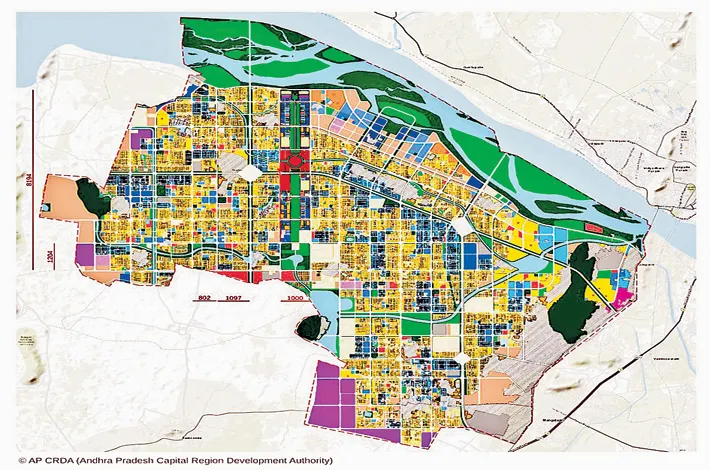
The second phase of land pooling for the development of Andhra Pradesh’s capital Amaravati has triggered fresh resistance in several villages around the capital region, with farmers expressing concerns over land security, livelihood prospects, and the fulfilment of past assurances. Even as apprehensions surface at the grassroots level, the state government has intensified its efforts to engage with villagers, promising accelerated infrastructure development and strict adherence to commitments made during the first phase of land pooling.
State Minister Narayana, who holds key responsibilities related to capital development, has taken the lead in directly addressing villagers’ concerns. He has repeatedly underlined that capital construction and village development will progress in parallel, in line with the directions of Chief Minister Nara Chandrababu Naidu. According to the Minister, nearly Rs. 900 crore worth of infrastructure works, including internal roads, drainage, drinking water supply, street lighting, and community facilities, are currently underway in villages located within the capital region.
However, despite these assurances, resistance has been visible in a few villages earmarked for Phase II land pooling. Farmers in these villages (Vykuntapuram, Pedamadduru, Endroy, Karlapudi, Vaddamanu, Harichandrapuram, and Peddaparimi) argue that the earlier phase witnessed prolonged delays in the development of promised amenities and fear a repeat if additional land is surrendered. Some residents have also voiced concerns over land values, compensation patterns, and the pace of capital construction, which slowed down in the intervening years.
Speaking to Metro India, Narsaiah of Karlapudi village said, “During the first land pooling, we were promised world-class infrastructure and timely development. Some works did come up, but many facilities were delayed for years. Now, when the government asks us to give more land, our concern is simple, will this time be different?”
Another farmer, Lakshmi Saraswati said, “When construction slowed down earlier, our confidence was shaken. If the government completes roads, drainage, and drinking water in our village first, people will naturally come forward to cooperate.”
In response, the government has adopted a strategy of direct dialogue and village-level consultations. Minister Narayana recently visited Ainavolu village, a capital-region habitation that has expressed reservations over Phase II pooling. Accompanied by local MLA Shravan Kumar, the Minister participated in a gram sabha, listening to objections and explaining the government’s roadmap in detail. Officials presented village-wise development plans, outlining how each habitation would be upgraded alongside the capital city.
Narayana assured villagers that all promises made during the original land pooling scheme would be honoured without exception, and stressed that farmers need not fear the loss of their livelihoods. “Capital development is not meant to sideline villages. It is meant to transform them,” he told residents, adding that the government aims to complete basic infrastructure in all capital-region villages within six months.
Officials say similar outreach programmes are being conducted across other villages, with departments tasked to document local demands and integrate them into time-bound execution plans. The government believes that visible progress on the ground, rather than mere assurances, will be key to winning the confidence of hesitant farmers.
As Amaravati’s revival gathers momentum, Phase II land pooling has emerged as both a challenge and a test for the government. How effectively it balances large-scale urban ambition with rural trust-building may ultimately determine the pace and stability of the capital’s next phase of growth.