1 October, 2026 | 9:18 PM


App‑based maids are reshaping urban households
04-03-2026 12:00:00 AM
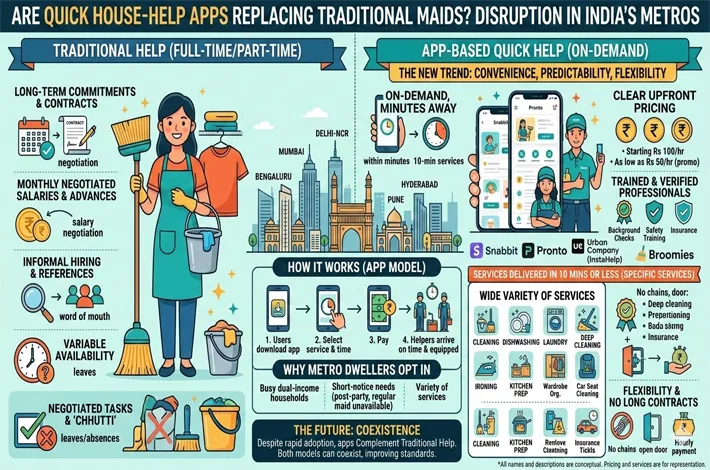
How it works
■ Users download the app, select the desired service, enter their address and preferred time, and confirm payment.
■ Helpers show up punctually, equipped with uniforms and tools for services such as surface cleaning, bathroom sanitization, or party‑after clean‑ups.
■ Payment is hourly, with no requirement for advance salaries or long‑term contracts.
Metro India News | Hyderabad
Are quick house‑help apps replacing traditional maids? Once a niche tech question, this idea is fast turning into a mainstream reality in India’s major cities. Platforms such as Snabbit, Pronto, Urban Company’s InstaHelp and Broomies are now promising trained domestic helpers at a customer’s doorstep within minutes. With rates starting as low as Rs 100 per hour and some services delivered in 10 minutes or less, this trend is disrupting the long‑standing full‑time maid or part‑time helper system.
Across Mumbai, Delhi‑NCR, Bengaluru, Pune and Hyderabad, urban residents, especially dual‑income households are increasingly opting for app‑based help for cleaning, dishwashing, laundry, deep cleaning, ironing and even kitchen prep. The appeal is convenience, predictability and flexibility, instead of negotiating monthly salaries and long commitments, users can book help on‑demand with just a few taps and clear pricing upfront.
For example, Urban Company advertises cleaning and household assistance at roughly Rs 100 per hour, whereas Snabbit’s pricing (during promotional campaigns) can bring effective costs down to around Rs 50 an hour for short visits. This price competitiveness has pushed consumers to experiment with on‑demand services far more than traditional arrangements.
The surge in demand for metro on‑demand service platforms can be attributed to several factors. Urban professionals, often juggling work and home responsibilities, have little time for traditional maid hiring, which typically requires interviews, reference checks, and lengthy negotiations.
These platforms also cater to short‑notice needs, such as post-party cleanups, emergency help when a regular maid is unavailable, or deep-cleaning before guests arrive, providing immediate assistance when required. Additionally, they offer a wide variety of services beyond basic sweeping and mopping, including kitchen chores, ironing, wardrobe organization, and even car seat cleaning, making them a convenient and versatile solution for busy city dwellers.
Technology meets trust
One of the biggest shifts is credibility. Unlike the informal arrangement with an ad‑hoc neighborhood helper, app platforms typically run background verification and training. Most service providers are trained in safety, equipped with identity checks, and often insured for minimal workplace risks, a level of trust that reassures urban users opting for strangers in their homes.
Despite rapid adoption, quick‑help apps haven’t entirely displaced long‑term, daily, live‑in maids. Traditional full‑time arrangements still persist for families requiring consistent, long‑term domestic support. However, the app model fills a complementary niche, offering reproducible quality, immediate availability, and transparent pricing.