22 September, 2026 | 2:26 AM


Bangladesh boils, economy in doldrums
28-12-2025 12:00:00 AM
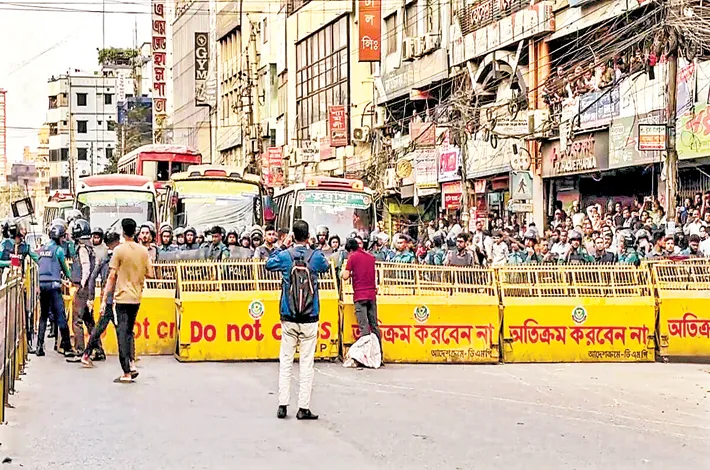
There has been political impasse and instability in Bangladesh for the past few months. Sheikh Hasina's government in the country was removed last year after protests and upheaval, which led to a provisional government.
Now it has been announced that national elections will be held in February 2026, which will determine the political direction of the country. This will strengthen the democratic process and give the country stable leadership.
This election is a big step towards the restoration of democracy and political stability in Bangladesh, which will strengthen investment and development prospects.
Social tension and violence
Widespread protest and outrage spread after the lynching of a youth from the Hindu community in some parts of the country.The police have also announced a reward for the search for the accused, indicating strict enforcement of law and order. Security has been stepped up along the India-Bangladesh border to avoid any untoward situation.
Economic challenges and opportunities
Bangladesh's economy is grappling with issues such as energy, inflation and employment, slowing economic growth. Economists have warned of "stagflation" i.e. low growth and high inflation.Despite this, if elections are conducted in a free and transparent manner, a stable government can attract investment, which will boost economic recovery and development.
India-Bangladesh relations
The historical and cultural ties between India and Bangladesh are very deep. India has always supported Bangladesh's peaceful democratic development.The move to increase security on the India-Bangladesh border in recent incidents is proof that India is taking the cross-border situation seriously.
Democratic and peaceful elections will not only benefit Bangladesh, but also strengthen India-Bangladesh bilateral cooperation. To conclude it’s difficult to say how the various parties react to the changing geopolitical situation in the region.
Prof. Mahesh Agnihotri Kura Raghu Veer