26 October, 2026 | 7:26 PM


Bill Changes Put ERP and ASP Readiness in Focus for Indian Enterprises
03-07-2026 11:37:21 PM
India, June 2026:
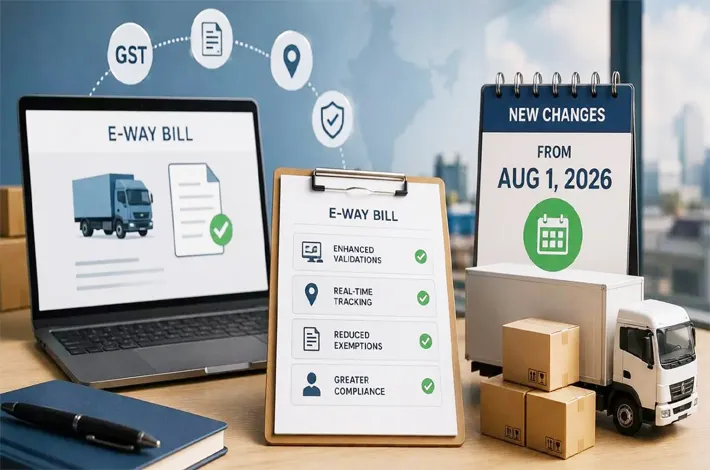
The recent GSTN advisory extending the implementation timeline for key Bill enhancements from 15 June 2026 to 01 August 2026 has brought ERP, ASP, and enterprise compliance readiness back into focus. The changes include mandatory capture of “Ship To GSTIN” in applicable Bill-To/Ship-To transactions, corresponding updates to e-Invoice and Bill by IRN APIs, and the introduction of a voluntary Bill closure facility.
While the revised timeline offers businesses additional preparation time, it also highlights a larger shift in GST compliance - from document-level reporting to transaction-level movement visibility. For enterprises, the impact goes beyond adding one more field in the Bill system. In applicable transactions, missing or invalid Ship To GSTIN details may result in Bill validation failures and additional operational effort, particularly in ERP-integrated and API-driven environments. In high-volume businesses, even small gaps in master data can lead to failed transactions, manual corrections, delayed movement of goods, and reconciliation issues across invoices, Bills, ERP records, and GST returns.
The change is especially relevant for businesses managing multi-location supplies, project-site deliveries, warehouse dispatches, third-party shipping, branch transfers, and complex Bill-To/Ship-To scenarios. Many such transactions depend on accurate consignee details, delivery-location masters, GSTIN mapping, URP treatment, and system-level validation between tax, finance, logistics, and dispatch teams. GSTN has also clarified that where a Ship To GSTIN is not available, taxpayers may use “URP” in the Ship To GSTIN field, wherever applicable. Businesses should therefore review not only GSTIN master data but also the transaction scenarios where URP treatment may be required. In addition, GSTN has introduced validation controls aimed at improving transaction-level accuracy.
These include validation of Ship To GSTIN, consistency checks between GSTIN and state codes, PIN code validations, and restrictions on using the same GSTIN for both Bill-To and Ship-To parties in applicable Bill-To/Ship-To transactions. As a result, businesses should review customer masters, delivery-location data, and ERP mappings well before the implementation date.“The revised implementation date should not be viewed as a delay in compliance, but as a readiness window. The real question for enterprises is whether their invoice data, dispatch data, ERP workflows, ASP integrations, and Bill APIs are aligned before the go-live date,” said a Cygnet.One tax technology expert.