23 October, 2026 | 12:29 PM


Sleemanabad tunnel completed
19-08-2026 12:00:00 AM
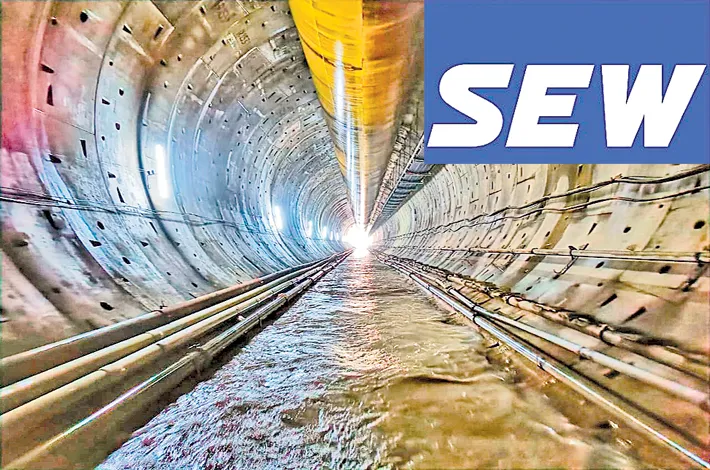
- 12-km engineering marvel brings Narmada waters to Vindhya region after 17 years
- To provide permanent irrigation to nearly 2.45 lakh hectares across 1,450 villages
- Water would be available without electricity or pumping but flows with gravity
metro india news I NEW DELHI/BHOPAL
In a major boost to water infrastructure in Madhya Pradesh, the 12-km Sleemanabad Tunnel under the Bargi Diversion Project has been completed after nearly 17 years of work. Built at an estimated cost of Rs 1,600 crore, the tunnel was excavated using advanced Tunnel Boring Machines (TBMs), making it one of India’s major water tunnel projects.
The gravity-fed system will divert water from Bargi Dam on the Narmada River near Jabalpur to the water-scarce districts of Katni, Rewa, Satna, Maihar and Panna. It is expected to provide permanent irrigation to nearly 2.45 lakh hectares across 1,450 villages, transforming agriculture and livelihoods in the Vindhya region.
Chief Minister Dr Mohan Yadav described the project as a vital lifeline for the region, which has long faced water scarcity despite its natural resources. The project will divert Narmada water eastward into the Son River basin and eventually towards the Ganga basin without electricity or pumping.
The main tunnel is 12.088 km long, supported by a 1.195-km approach tunnel. About 70% of excavation was undertaken using TBMs, with the rest completed through conventional drilling and blasting. Work progressed round-the-clock in three shifts.
Construction faced difficult geological conditions, including marble, limestone and dolomite formations, underground cavities, unstable rocks and water ingress of up to 25,000 litres a minute. Engineers used specialised grouting technology to stabilise the terrain while maintaining safety standards. The tunnel was constructed beneath highways, railway tracks, utilities and populated areas without structural damage or environmental degradation.
The turnkey contract was awarded to Hyderabad-based Patel-SEW Joint Venture. The project is designed for a 100-year operational life and high seismic resilience. Rehabilitation and compensation for affected families were also undertaken.
Officials said 96.56% of the overall physical work has been completed. Irrigation coverage is targeted to reach 87,433 hectares by December 2026 and 1,54,693 hectares by December 2027, eventually covering nearly 2.45 lakh hectares.
The tunnel is expected to bring water to farmers’ fields within the next six months, strengthening agricultural productivity, rural livelihoods and long-term water security in the Vindhya region.