13 October, 2026 | 10:51 AM


Brilliant Rise, Quiet fall of Progressive Writers Movement
15-04-2026 12:00:00 AM
venkat parsa I hyderabad
No other literary movement in India cast as wide and enduring an influence on national life as the Anjuman-e-Taraqqi Pasand Musannifin-e-Hind, or the All-India Progressive Writers’ Association (PWA). Formally launched in Lucknow on April 9, 1936, with Munshi Prem Chand delivering the inaugural address, the movement marks 90 years this year. It transformed Indian literature, culture, theatre and cinema in profound ways.
The Indian People’s Theatre Association (IPTA), formed in 1943 as its cultural wing, carried this vision into performance arts. Figures such as Khwaja Ahmad Abbas, Balraj Sahni, A.K. Hangal and Prithviraj Kapoor played key roles. IPTA’s influence on Hindi cinema was immense, making the Progressive Writers’ Movement a driving force behind the composite Indian culture that flourished in the early decades after Independence, especially during the Nehruvian era.
In the aftermath of Partition, India chose a path of secularism, democracy and socialism despite poverty, illiteracy and feudal remnants. As Jawaharlal Nehru described it, the country embarked on the “adventure of building a New India.” The Progressive Writers’ Movement resonated widely, gaining support even from those not formally associated with it. Eminent figures such as Allama Iqbal, Sarojini Naidu, Rabindranath Tagore and Hasrat Mohani endorsed its ideals.
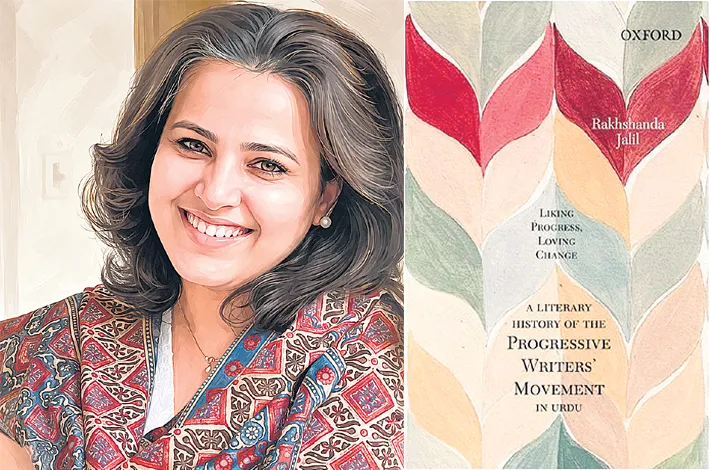
Dr. Rakhshanda Jalil, in her book Liking Progress, Loving Change: A Literary History of the Progressive Writers’ Movement in Urdu, traces its intellectual roots from the 1857 uprising to the 1930s, when a progressive outlook began shaping Urdu literature. She describes the movement as a kind of renaissance, where young intellectuals aligned themselves with national regeneration, marked by optimism and a spirit of change. The convergence of theatre, cinema and radio helped spread its message, raising awareness about social evils and promoting reform.
At its 1936 Lucknow conference, the PWA adopted a manifesto that challenged orthodoxy and called for literature rooted in social realities. It sought to move literature away from elitist confines and closer to the lives of ordinary people, focusing on hunger, poverty, inequality and colonial subjugation. The manifesto, developed between 1932 and 1935, was translated into Hindi by Prem Chand as Sahitya ka Uddeshya and published in Hans, while its English version appeared in Left Review. The movement quickly spread across India, inspiring writers from Faiz Ahmed Faiz in Lahore to Maqdoom Mohiuddin in Hyderabad.
A key contribution of the movement was its role in fostering composite culture. Urdu literature, often wrongly identified with a single community, was enriched by writers across religious backgrounds, including Prem Chand, Krishan Chander, Mulk Raj Anand, Rajinder Singh Bedi and Ramanand Sagar.
The movement’s influence extended strongly into Hindi cinema through poet-lyricists such as Sahir Ludhianvi, Kaifi Azmi, Jaan Nissar Akhtar, Ali Sardar Jafri, Majrooh Sultanpuri and Shailendra. Their socially conscious lyrics often elevated films, sometimes overshadowing their commercial performance. Sahir’s work in Guru Dutt’s Pyaasa, particularly the line “Jinhe naaz hai Hind par woh kahaan hain,” captured stark social realities and reportedly moved Nehru deeply.
Even into the 1970s, echoes of progressive ideals persisted. Anand Bakshi’s title song in Naya Zamana voiced themes of equality and shared human experience, reflecting the movement’s lingering influence.
However, like all movements, it eventually declined. Its strong association with socialism became a point of contention. While some, like Sahir Ludhianvi, leaned toward a more moderate, Fabian socialism akin to Nehru’s vision, others aligned with doctrinaire Marxism within the Communist Party of India (CPI). The CPI’s political positions—such as its stance during the Quit India Movement and its criticism of Nehru—created ideological rifts.
Over time, increasing alignment with partisan politics weakened the movement’s broad cultural appeal. By the 1956 Hyderabad conference, leaders such as Sajjad Zaheer and Abdul Alim declared that its objectives had largely been achieved, signaling a loss of momentum. Though it continued, including during its Golden Jubilee in 1986 under Mulk Raj Anand, it lacked its earlier vitality.
Despite its decline, the Progressive Writers’ Movement remains a landmark in India’s cultural and intellectual history—one that reshaped literature and the arts while articulating the aspirations of a nation in transition.