13 October, 2026 | 5:45 AM


Climate activist Sonam Wangchuk released after nearly six months
15-03-2026 12:00:00 AM
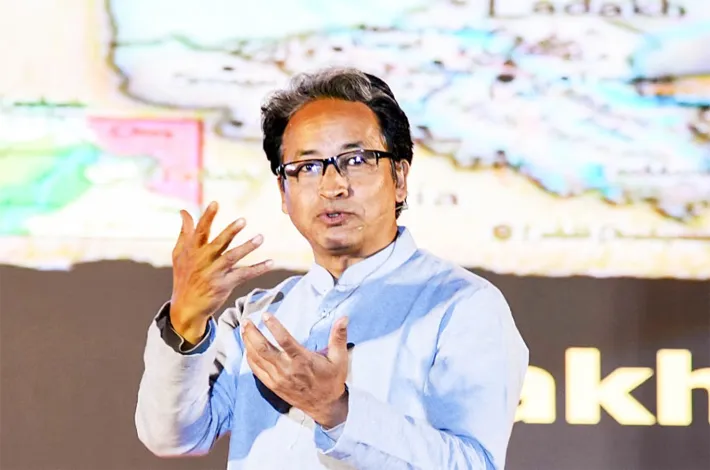
Wangchuk's detention in Jodhpur Central Jail drew widespread attention and criticism. His wife, Gitanjali Angmo, filed a petition challenging the detention's legality, citing health concerns and alleging it was politically motivated
Renowned Ladakhi climate activist and innovator Sonam Wangchuk was released from detention on Saturday after the Ministry of Home Affairs (MHA) revoked his detention under the stringent National Security Act (NSA) with immediate effect. The decision comes nearly six months after his arrest on September 26, 2025, amid protests in Leh that turned violent, and follows prolonged legal battles, including a habeas corpus petition in the Supreme Court.
Wangchuk, best known for pioneering ice stupas to address water scarcity in the arid Himalayan region and for his advocacy in the hit film 3 Idiots, was detained following demands for statehood for Ladakh and inclusion under the Constitution's Sixth Schedule for tribal protections. The protests, led by groups including the Leh Apex Body, escalated into clashes on September 24, 2025, resulting in deaths and injuries, which authorities attributed in part to provocative statements. The MHA stated that Wangchuk had "already undergone nearly half of the period of detention" under the NSA, which allows preventive custody for up to 12 months without trial.
"In furtherance of [fostering peace and stability], and after due consideration, the Government has decided to revoke the detention of Sonam Wangchuk with immediate effect," the ministry announced. It emphasized commitment to "an environment of peace, stability, and mutual trust in Ladakh" to enable "constructive and meaningful dialogue with all stakeholders.
"The release marks a significant development in the long-standing grievances of Ladakh residents since the region became a Union Territory in 2019 following the bifurcation of Jammu and Kashmir. Activists have argued that the move stripped Ladakh of constitutional safeguards, including protections for tribal lands and jobs, leading to repeated agitations.
Wangchuk's detention in Jodhpur Central Jail drew widespread attention and criticism. His wife, Gitanjali Angmo, filed a petition challenging the detention's legality, citing health concerns and alleging it was politically motivated.
The Supreme Court heard the case multiple times, questioning the government's translations of Wangchuk's speeches, urging reconsideration on medical grounds, and adjourning proceedings several times—most recently to mid-March. In February hearings, the Centre maintained Wangchuk was "fit, hale and hearty" despite periodic medical checks, rejecting early release while insisting the detention was justified to restore order.
The government earlier described Wangchuk as a "chief provocateur" whose actions contributed to violence, though he consistently advocated non-violent methods, including hunger strikes. He ended earlier fasts, such as one in 2025, after assurances of dialogue or to prevent escalation. Reactions to the release have been largely positive among supporters.
Journalist Rajdeep Sardesai tweeted, "Glad to see Sonam Wangchuk has been released. He was detained under NSA and spent close to six months in jail." Rights groups and Ladakhi organizations had made his freedom a precondition for talks.
The MHA's move is seen as an effort to de-escalate tensions and restart negotiations on Ladakh's demands. Analysts suggest it reflects a pragmatic shift, given ongoing Supreme Court scrutiny and the activist's symbolic status as an environmental innovator whose work has benefited border communities and the Indian Army.
Wangchuk's release could pave the way for renewed discussions on Ladakh's future governance, including demands for greater autonomy and environmental safeguards amid climate vulnerabilities in the Himalayas. As one of India's most prominent grassroots voices on sustainability, his return to civilian life is expected to reinvigorate advocacy for the region's fragile ecology and rights.