14 September, 2026 | 3:48 PM


Coal Import Cuts Saved India Rs 60,000 Crore: Kishan reddy
09-06-2026 12:00:00 AM
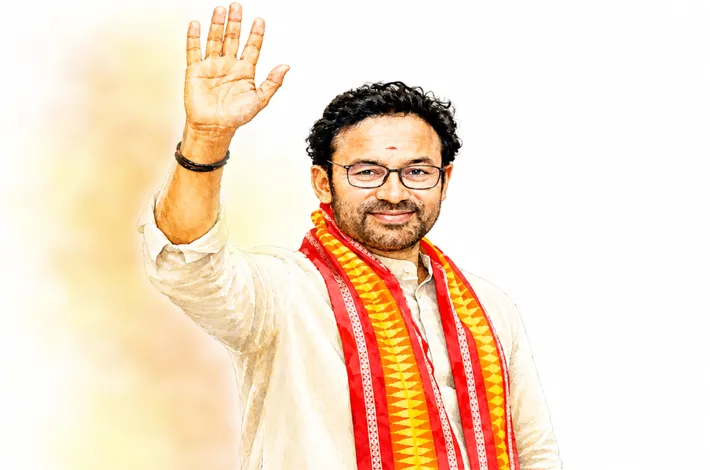
India has crossed 1 billion tonnes of coal production for two consecutive years, ensuring strong energy security and uninterrupted power supply.
■ Reduced coal imports have helped save nearly Rs 60,000 crore in foreign exchange, strengthening India's self reliance in the energy sector.
■The Centre is promoting coal gasification with a Rs 46,000 crore incentive package to produce fertilizers, hydrogen, chemicals and petrochemicals domestically.
■ Scientific mine closure and restoration of abandoned mines is being undertaken to convert exhausted mining areas into environmentally sustainable assets.
■ Transparent auctions, commercial mining and technology-driven reforms have boosted production, investments, employment and state revenues.
metro india news I hyderabad
Union Minister for Coal and Mines G. Kishan Reddy on Monday highlighted the transformative reforms and achievements in the coal and mining sectors over the last 12 years under the leadership of Prime Minister Narendra Modi, stating that India has emerged as a global leader in coal production, mineral development, energy security and resource governance. Addressing a press conference in Hyderabad, the Minister said the coal and mining sectors have become key pillars of India's journey towards self-reliance, economic growth and industrial development.
Record Coal Production and Energy Security
Kishan Reddy said India has achieved a historic milestone by crossing one billion tonnes of coal production for two consecutive years, making the country the world's second largest producer and consumer of coal. Coal currently contributes nearly 72 percent of India's electricity generation, ensuring uninterrupted power supply across the country.
He noted that coal production has increased significantly over the past decade due to transparent policies, improved governance and regular monitoring at the highest level. India currently maintains nearly 189 million tonnes of coal stock, sufficient to meet power sector requirements for around 80 to 85 days. This has helped eliminate the power shortages that were common in earlier years.
The Minister also emphasized that the coal sector supports millions of livelihoods, generating direct and indirect employment while serving as a backbone for industries such as steel, cement, fertilizers, chemicals and sponge iron.
Reducing Coal Imports and Saving Foreign Exchange
Highlighting the government's focus on energy self reliance, Kishan Reddy said India has substantially reduced coal imports despite growing domestic demand. During the last financial year, coal imports declined by around four percent, resulting in a saving of nearly Rs 60,000 crore in foreign exchange.
The government has strengthened domestic production, expanded commercial mining and improved transportation infrastructure through First Mile Connectivity projects and dedicated railway networks. These measures have reduced logistics costs, improved coal evacuation and enhanced overall efficiency.
He said the government's objective is to further reduce import dependence and ensure that India's vast coal reserves are fully utilized for national development and energy security.
Coal Gasification to Drive Industrial Growth
Describing coal gasification as a game changing initiative, the Minister said the Centre is promoting large scale conversion of coal into synthesis gas and other value added products. The government has launched an incentive scheme worth Rs 46,000 crore to encourage coal gasification projects across the country.
Coal gasification can produce ammonia, methanol, hydrogen, fertilizers, petrochemicals and various industrial feedstocks, reducing India's dependence on imports of these critical products. Both surface and underground gasification technologies are being encouraged, particularly for deep seated coal reserves that are difficult to extract through conventional mining.
According to Kishan Reddy, the initiative has the potential to attract investments of nearly Rs 4 lakh crore, create around one lakh jobs and save approximately Rs 3 lakh crore in foreign exchange over time. A series of roadshows are being organized across major cities, including Hyderabad on June 11, to attract industry and private players participation and accelerate project implementation.
Critical Minerals Mission for Future Technologies
The Minister said India has launched the National Critical Minerals Mission with an outlay of Rs 32,000 crore to secure the resources essential for emerging technologies, renewable energy, semiconductors, electric mobility and defence manufacturing.
He observed that while the twentieth century was driven by oil, the twenty first century would be shaped by critical minerals. Since India currently imports nearly 93 percent of its critical mineral requirements, achieving self reliance in this sector has become a strategic priority.
As part of the mission, exploration activities have been intensified, critical mineral blocks are being auctioned, and partnerships are being forged globally. Through KABIL ( Khanij Bidesh India Limited) initiative, India has acquired five lithium blocks in Argentina, where exploration activities have already commenced. The government has also introduced incentives for recycling, processing and research while exempting import duties on several critical minerals.
Special initiatives are underway to identify rare earth elements in states such as Odisha, Andhra Pradesh, Tamil Nadu and Kerala, strengthening India's long-term resource security.
Scientific Mine Closure and Sustainable Mining
Kishan Reddy said the government has launched an ambitious programme for the scientific closure and restoration of 147 abandoned coal mines including a few in Telangana. He noted that since Independence, many exhausted mines were left unattended after extraction, causing environmental and social challenges.
To address this issue, the Ministry has initiated scientific mine closure activities with a target of closing and restoring abandoned mines by 2028. Committees involving local communities, district administrations, public representatives and civil society organizations have been formed to oversee the process.
The restored mine areas are being converted into water bodies, green zones, solar parks and other productive assets. The Minister described mine closure as a major environmental initiative that would demonstrate India's commitment to sustainable mining and ecological restoration.
He also highlighted the growing use of technology, artificial intelligence, digital monitoring systems and surveillance mechanisms in mining operations to improve efficiency, transparency and environmental compliance.
Kishan rebuts Revanth’s Metro Phase-2 claims
Union Coal and Mines Minister G. Kishan Reddy strongly rejected Chief Minister A. Revanth Reddy’s allegations of non-cooperation by the Centre, asserting that the Union government has consistently supported Telangana, including the Hyderabad Metro Rail project.
Responding to the CM’s remarks, Kishan Reddy said it was the Centre that facilitated the refinancing of Hyderabad Metro Rail’s debt obligations. He pointed out that Indian Railway Finance Corporation (IRFC), a Navratna public sector enterprise under the Ministry of Railways, recently signed a ₹13,527 crore term loan agreement with L&T Metro Rail Hyderabad Ltd for refinancing the project’s debt.
On the proposed Hyderabad Metro Phase-2, the Union Minister clarified that several procedural formalities remain to be completed before the project can be considered by the Union Cabinet. He explained that a dedicated wing examines and vets all new Metro proposals in the country, followed by customary technical and financial evaluations.
Kishan Reddy also noted that the Centre had extended support for Metro Phase-1. Referring to the incomplete JBS to Falaknuma corridor, he said the project could not be fully executed due to land acquisition issues, though the Centre never sought to politicise the matter.
Addressing questions on Singareni Collieries, the Union Minister said he had worked over the past two years to reduce operational costs and improve employee welfare. He highlighted that accident insurance coverage for Singareni workers was increased from ₹30–40 lakh to around ₹1.25 crore, a model now being adopted across government and public sector institutions.