1 October, 2026 | 8:14 PM


Commodity prices to rise 16%, fuel inflation, slow growth
01-05-2026 12:00:00 AM
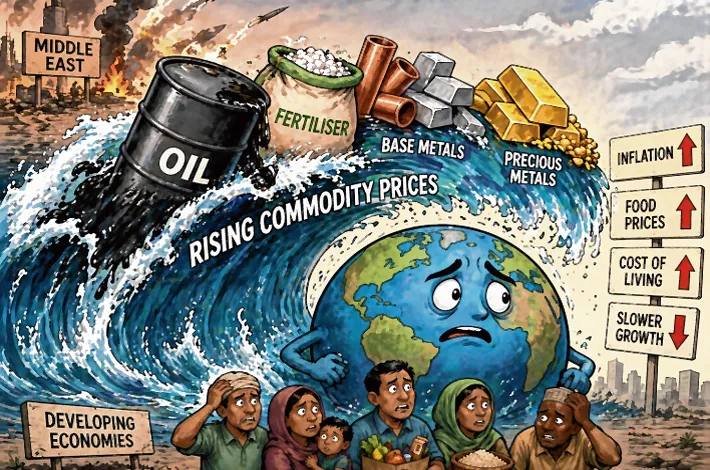
Surging global commodity prices driven by Middle East tensions threaten higher inflation, weaker growth, and rising food insecurity risks in 2026 worldwide
FPJ News Service
MUMBAI
A sharp escalation in global commodity prices is set to ripple through the world economy in 2026, as energy markets absorb the shock of intensifying conflict in the Middle East.
In its latest outlook, the World Bank Group forecasts overall commodity prices to rise by 16% this year, driven by a surge in energy, fertiliser and metals costs—an upheaval likely to reignite inflationary pressures and restrain growth worldwide.
Energy markets remain at the centre of the disruption. Prices are projected to climb 24%, with Brent crude expected to average $86 a barrel in 2026, up from $69 in 2025. The escalation follows severe supply disruptions linked to attacks on infrastructure and shipping constraints in the Strait of Hormuz, through which roughly 35% of global seaborne crude oil trade passes. At the peak of the crisis, global oil supply is estimated to have fallen by nearly 10 million barrels per day—one of the largest shocks on record.
The effects extend far beyond fuel. Fertiliser prices are forecast to rise 31%, led by a steep 60% increase in urea, threatening farm profitability and future crop yields.
Food systems, already fragile, face renewed strain, with global agencies warning that tens of millions could be pushed into acute food insecurity if disruptions persist. Industrial commodities are also under pressure. Base metals such as copper, aluminium and tin are expected to reach record highs, reflecting sustained demand from data centres, electric vehicles and renewable energy. Precious metals, meanwhile, are forecast to rise 42%, as investors seek safe-haven assets amid geopolitical uncertainty. The cumulative impact is a broad inflationary wave.
Developing economies are now projected to see inflation averaging 5.1% in 2026, a full percentage point higher than earlier expectations, while growth is set to moderate to 3.6%. For many nations, particularly commodity importers, rising input costs threaten to erode household incomes and widen external imbalances. Senior economists warn of compounding risks.
American economist Indermit Gill described the crisis as unfolding in “cumulative waves”, with energy shocks feeding into food prices and ultimately tightening financial conditions.