24 October, 2026 | 4:47 AM


Could India emerge as ideal mediator in West Asia war?
19-03-2026 12:00:00 AM
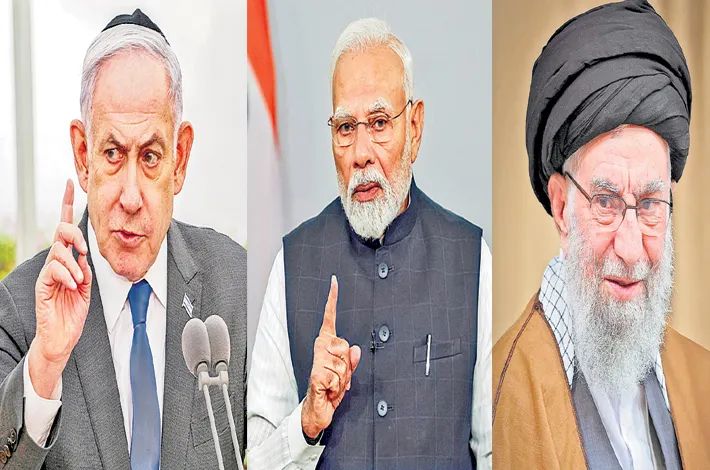
As the war between the United States, Israel, and Iran intensifies—with ongoing airstrikes, missile barrages, and significant casualties—several international voices have highlighted India's unique position. Finland's President Alexander Stubb has publicly called for India to step in and broker a ceasefire, citing Prime Minister Narendra Modi's engagement with Tehran and the ability to maintain critical supply lines like LPG amid the turmoil.
Similarly, a former UAE ambassador to India emphasized that a single phone call from Modi to Iranian and Israeli leaders could potentially de-escalate tensions, underscoring India's respected standing across the region. Former Pentagon advisor Douglas McGregor has echoed this sentiment, describing India as a crucial intermediary capable of calming the situation due to its balanced relationships. These suggestions portray India not as a passive observer but as a country with the diplomatic leverage to influence multiple parties in a deeply layered conflict involving proxy forces, global oil routes, and major powers.
Yet the situation on the ground remains highly volatile. Israel has claimed responsibility for airstrikes that killed Iran's security chief Ali Larijani and other high-ranking figures, including Basij militia leaders, though Iran has not fully confirmed all details. The United States faces internal divisions, exemplified by the resignation of top counterterrorism official Joe Kent, who cited no direct threat from Iran and alleged external pressures—pointing to Israel and its influential lobby—as driving factors behind U.S. involvement. Kent's departure highlights visible cracks in American leadership over the war's rationale and direction.
India's position is indeed distinctive. It maintains strong defence and technological ties with Israel, deep historical and energy relations with Iran—including investments like Chabahar port—and strategic partnerships across the Gulf states, alongside growing closeness with the United States. Few nations can engage all sides without immediate accusations of bias. External Affairs Minister S. Jaishankar has repeatedly called for de-escalation, but access does not equate to decisive influence in such a high-stakes environment.
The debate over India's potential role canters on risks and rewards. Stepping in could elevate India's global stature as a peacemaker, aligning with Prime Minister Modi's vision of an era of peace rather than war. Success might project India's soft power and diplomatic adeptness, especially given recent phone diplomacy with GCC countries, Iran, Israel, the U.S., and Russia. However, failure carries substantial costs: reputational damage, disruptions to energy supplies, threats to the Indian diaspora in the region (estimated at around 10 million in GCC countries), and potential entanglement in a conflict where neutrality offers no guaranteed safety—as seen with attacks on mediators like Qatar.
A retired Army Major General viewed the international faith in India as validation of its multi-alignment policy and neutrality. He argued that India has the potential to mediate if invited by all parties, emphasizing back-channel diplomacy as a low-risk starting point—facilitating communication between Iran, the U.S., and others without open commitment. He noted that overt mediation might be doubtful without mutual agreement, but India remains a better option than alternatives like China or Oman, which face their own limitations or suspicions.
A foreign affairs expert a foreign affairs expert, concurred that India should avoid involvement unless explicitly invited by both (or all) sides, prioritizing national interests such as securing the diaspora and energy needs. He advocated a "not my monkey, not my circus" approach initially, but recognized opportunities if neutral bodies like the UN endorse India's role. He highlighted the broader stakes: prolonged war could trigger global recession, surging oil prices, and reduced remittances from the Gulf, severely impacting India. If an opening arises, India could leverage its non-binary foreign policy to act as a "Vishwa Mitra" (global friend), projecting peace amid dire economic consequences.
A former ambassador offered a sobering U.S.-centric perspective, doubting India's capacity for active mediation given Iran's existential crisis and leadership turmoil following assassinations. She described the conflict as having moved beyond diplomacy into a phase of survival for Iran, with the U.S. and Israel pursuing degradation of capabilities rather than immediate talks. She noted limited European and Asian support for the U.S.-Israel campaign, proposals for limited de-escalation (e.g., UN-brokered shipping through the Strait of Hormuz), and Iran's reluctance to relinquish pressure points without guarantees against further military action.
Ultimately, it all converges on the need for persuasion—perhaps convincing President Trump that objectives have been met (e.g., degraded missile and nuclear capabilities)—as a path to halt operations. India's leverage lies in goodwill, balanced ties, and economic interconnections, but any involvement would require careful calibration to avoid overextension. As the conflict rages into its third week, the question persists: Should India seize this diplomatic opening despite the risks, or prioritize safeguarding its own interests in an increasingly unstable region? The stakes for global stability—and India's rising role—could not be higher.