29 October, 2026 | 12:40 AM


Deep fakes: The digital consent threat
29-10-2026 12:00:00 AM
HEMA SINGULURI I hyderabad
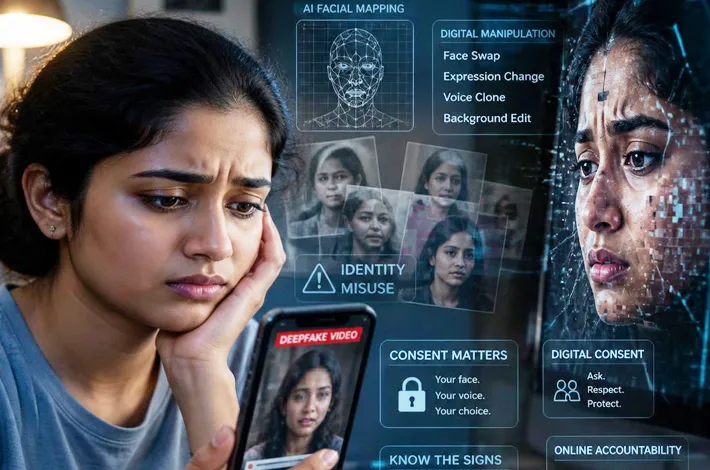
The growing use of artificial intelligence (AI) to create realistic fake videos and images is raising serious concerns over digital consent, with women increasingly becoming targets of manipulated content. From fabricated intimate videos to misleading celebrity clips, deepfakes are making it harder to distinguish genuine footage from digital deception.
Recent incidents have brought the issue into focus. An AI-morphed video involving a Telugu film song featuring Jr NTR and Janhvi Kapoor triggered online condemnation. Hyderabad Police Commissioner V.C. Sajjanar also expressed concern over an AI-generated image of himself circulating on social media.
From edits to convincing fakes
Deepfakes, once requiring advanced editing skills, can now be created using accessible AI tools and simple prompts. They threaten privacy through non-consensual intimate imagery, facilitate corporate fraud using cloned voices, spread political misinformation and enable identity theft. They may also be used to bypass facial recognition systems. Women reportedly account for around 99% of non-consensual deepfake targets, particularly in fabricated pornography.
Detection becoming harder
Sai Krishna, Principal Cyber Security Senior Tech Consultant, says identifying manipulated content has become increasingly difficult as technology advances. Earlier, irregular facial structures, poorly refined edges and unnatural blinking exposed fake videos. Such clues are now less reliable.
He suggests examining videos for distortions, inconsistencies in wind and hair movement, and other environmental anomalies. However, these are only indicators, not definitive tests. AI-content detection tools, including Google's SynthID-related technology and services such as Sensity and Deepfake Analysis Unit India, may help identify manipulated material.
Krishna warns that easily accessible AI models have made the creation of explicit content alarmingly simple. He advises victims to report abuse through the National Cyber Crime Reporting Portal and relevant women-and-child safety channels. Complaints against platforms' grievance officers can be escalated through the Grievance Appellate Committee at gac.gov.in.
The cost of being targeted
Aishah Patan, a first-year BA Psychology student at St. Mary's College, says social media can no longer be trusted blindly because anyone's face can be used without consent. She highlights the damage to women's reputations and peace of mind, alongside the burden of proving fabricated content false.
Rupesh Reddy, a 26-year-old software employee from KPHB, says the damage to women's dignity and mental well-being remains real even when videos are fake. Society must stop questioning victims and hold those who create and circulate such content accountable, he argues.
Jayashree, a 20-year-old mass communication intern, calls for stricter laws, swift action against offenders and greater digital awareness to protect privacy and dignity. Krishna advises people to manage their online presence carefully and limit publicly available personal information and photographs. Even seemingly harmless social media trends can encourage users to share more personal material than they realise.