17 October, 2026 | 2:58 PM


Degrees are not enough: Colleges race to build future-ready graduates
15-07-2026 12:00:00 AM
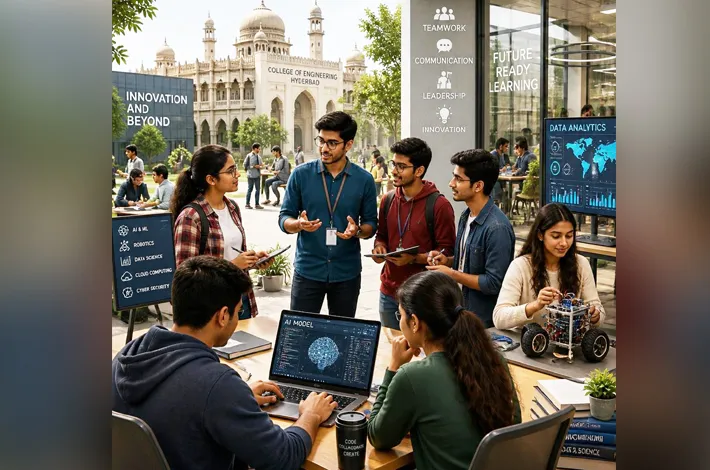
Soft skills, AI exposure and practical learning emerge as the new pillars of career success in Telangana’s education ecosystem
HEMA SINGULURI | Hyderabad
A degree may open the door, but skills decide how far a graduate can travel. In Hyderabad, a city known for its technology giants, startups, and research ecosystem, the meaning of education is undergoing a major transformation. Students entering the workforce are discovering that technical knowledge alone is often no longer sufficient for long-term career success. The ability to communicate, adapt, solve problems, and continuously learn new technologies has become equally important.
This shift is especially visible among B Tech students. Engineering education is moving beyond classrooms and examinations, with colleges focusing on practical training, industry exposure and soft skills development to prepare students for a rapidly changing job market.
The new definition of employability
Companies today are looking for professionals who can combine technical expertise with workplace readiness. Whether it is interacting with clients, presenting ideas, working in teams or understanding real-world challenges, engineers require strong communication and interpersonal abilities.
Soft skills have become a major factor in career growth. This is why many colleges are introducing dedicated soft skills programmes along with technical education. The objective is to create professionals who are not only knowledgeable but also confident and industry ready.
AI changing the shape of higher education
Hyderabad’s position as a global technology destination has accelerated the adoption of artificial intelligence and emerging technologies in education. With thousands of technology companies operating from the city, demand is increasing for graduates skilled in artificial intelligence, machine learning, data analytics, automation and cloud technologies.
AI is no longer limited to computer science students. The technology is influencing multiple sectors, meaning graduates from engineering, business, healthcare and other fields’ need basic AI understanding to remain relevant.
Recognizing this change, Telangana’s higher education ecosystem is gradually updating curricula to include emerging technologies and industry-focused learning.
Hyderabad builds an AI education pipeline
The state’s AI-focused initiatives aim to create a technology ecosystem that begins at school level and continues into universities.
A major step in this direction is the partnership between Amazon and Telangana to introduce AI education in government schools. This programme plans to introduce structured AI lessons for Classes 6 to 9, train more than 28,000 teachers and provide refurbished laptops to government schools. The broader vision is to strengthen Telangana’s position as a leading artificial intelligence hub.
However, challenges remain. The digital divide continues to affect equal access to technology education. Many government school students lack reliable internet connectivity, creating differences in learning opportunities between urban and underserved areas.
Building AI infrastructure is another challenge. High-performance computing facilities, advanced hardware and deep-tech laboratories require significant investment, which can be difficult for smaller institutions.
In addition to these, while institutions are upgrading curricula and investing in new technologies, long-standing financial challenges continue to affect higher education despite improvements in education infrastructure, fee reimbursement delays remain a concern for students and colleges. Pending payments have created financial pressure for institutions and affected students who depend on government support. Stakeholders continue to seek a faster and more transparent reimbursement process.
Preparing students for tomorrow’s careers
Hyderabad’s education journey is moving towards a skill-based future. The graduates who succeed will not only be those with degrees but those who can combine technology knowledge, practical experience, communication skills and the willingness to keep learning. In an era shaped by artificial intelligence and rapid innovation, adaptability itself has become the most valuable skill.
Portfolio-based hiring gains momentum
Another significant shift is the growing importance of portfolios over marksheets. Recruiters increasingly evaluate candidates based on GitHub repositories, live projects, hackathon participation, research publications, internships and open-source contributions rather than academic scores alone. Students who can demonstrate practical problem-solving through real-world applications often enjoy a competitive advantage during placements. This trend is encouraging colleges to integrate capstone projects, innovation challenges and multidisciplinary collaborations into the curriculum, allowing graduates to build a strong body of work even before completing their degrees.
Internships becoming a key hiring criterion
Internships have become an essential bridge between classroom learning and the workplace. Employers increasingly prefer graduates who have gained practical industry exposure through internships, live projects or apprenticeships, as these experiences help students develop professional skills, understand workplace expectations and apply theoretical knowledge to real-world challenges. Many colleges are therefore strengthening industry partnerships to ensure students graduate with meaningful hands-on experience alongside their academic qualifications.
The rise of industry-integrated learning models
Beyond traditional internships and classroom-based education, colleges are increasingly exploring deeper industry integration through collaborative learning models. Companies are now becoming active participants in shaping academic programmes by contributing to curriculum design, offering real-world case studies, conducting specialized training sessions and supporting faculty development. This approach helps reduce the gap between academic knowledge and workplace expectations by exposing students to current industry practices while they are still in college. As technology cycles become shorter, continuous collaboration between educational institutions and industries is expected to play a crucial role in ensuring graduates remain aligned with evolving professional demands.
Entrepreneurship becoming a parallel career path
Beyond traditional campus placements, entrepreneurship is emerging as a viable career option for engineering graduates in Telangana. With Hyderabad's vibrant startup ecosystem and growing industry-academia collaborations, students are increasingly being encouraged to develop products, file patents and transform innovative ideas into startups. Incubation centres, mentorship programmes, hackathons and innovation labs help young entrepreneurs gain access to funding, industry experts and market opportunities. As a result, colleges are gradually evolving from being centres of education alone into innovation hubs that nurture job creators alongside job seekers.