23 October, 2026 | 3:16 AM


Does Every Journalist Have a Journey?
05-07-2026 12:00:00 AM
Lalita Iyer Musings
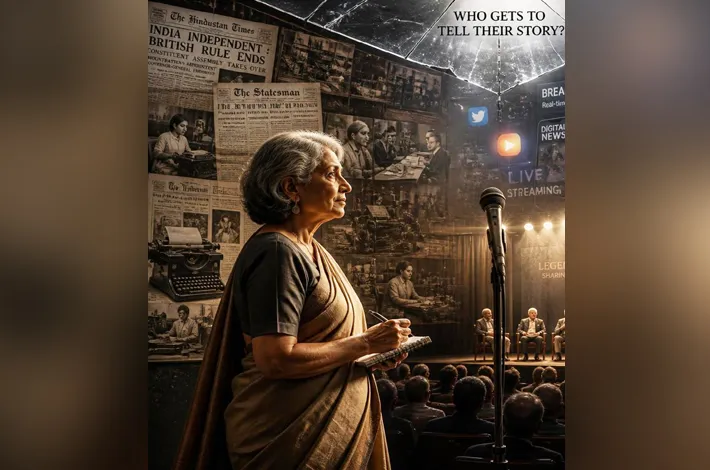
Primarily because I am a woman, and those who talk on stage are often men. The glass ceiling for women in this field is still wobbly, tentative and brittle. Many will immediately reel out the names of famous women journalists, encouraged by their presence on television
Yes! Some are vocal and want to share. The majority are quietly shy, but they too might have stories to tell. After all, you are in the media, and everything happens every day. But only a select few are heard, for they are the select few who are chosen to talk about their lives. Is it because their lives are more interesting than ours? It is a matter of perspective.
Primarily because I am a woman, and those who talk on stage are often men. The glass ceiling for women in this field is still wobbly, tentative and brittle. Many will immediately reel out the names of famous women journalists, encouraged by their presence on television. All I am saying is that just because you see a face continuously in your drawing room, you think all barricades are down. No. There are still divides. There is rural versus urban. Then there are local dialects versus English. Then there is the reporting duty assigned to you. There are divides.
But I digress.
Will I—or more women with journalistic experiences—ever get a chance to share our journey on stage? Sure. If I like. If we want to. We can create the forum.
Will I, or will we, have an audience? And that is the point. Who will decide if I or we are interesting or not? I thought I would. It is not that simple, though.
But allow me to quote from Deccan Chronicle's Hyderabad Chronicle, which carried, almost literally, the very idea I had been mulling over:
"The idea of living a simple, ordinary life is increasingly being overshadowed by the pursuit of a 'life extraordinaire', with a constant craving for visibility and recognition." Sometimes the above urge comes like a flutter when you are listening to much-heard friends.
But this is after recognising that their reach is far and beyond because of various reasons. Primarily, they are men. Then there is their ability to reach out and mingle with all and sundry, their outspokenness, their ability to politicise an event, their willingness to sacrifice their time for others, and their ability to take on leadership roles.
Tell me, why wouldn't you have stories to tell, especially if you are in your late sixties? If you have been in print journalism—as a reporter and as a sub-editor—for more than a decade, worked in newspapers till the turn of the last century (gosh! That makes it sound really way back then!), and perhaps a little into this century. Actually, till social media took over.
Television gave print journalists a good run, but print—a newspaper, a magazine—still had some shelf life because of the depth of coverage and analysis. But the moment instant news took over, print journalism totally lost its flavour (with a few loyal readers whose day still begins with a dose of lead and bad English).
Now comes the question of deciding whose memories are worth remembering and worth talking about. On a scale of one to ten.
There were more male journalists in those days, especially in language journalism, and, as though by birthright, they took over reporting. They travelled, roughed it out, went on location, and reported the news as it was. Women journalists did the same. In fewer numbers. In fact, perhaps a little more—we never talked about it. And we did not wear it like a badge. We simply did our job, happy to get a byline. This too happened with journalists in the English media.
Whereas the male journalists sat with colleagues, discussed it over elbow-bending, and gained mileage. Does all this sound envious? Does it sound like a yawn?
Why am I sharing this litany? Because the other day I attended a meeting where a few old friends and colleagues—men—reminisced on stage about who they were, what made them, and their fifty years in journalism.
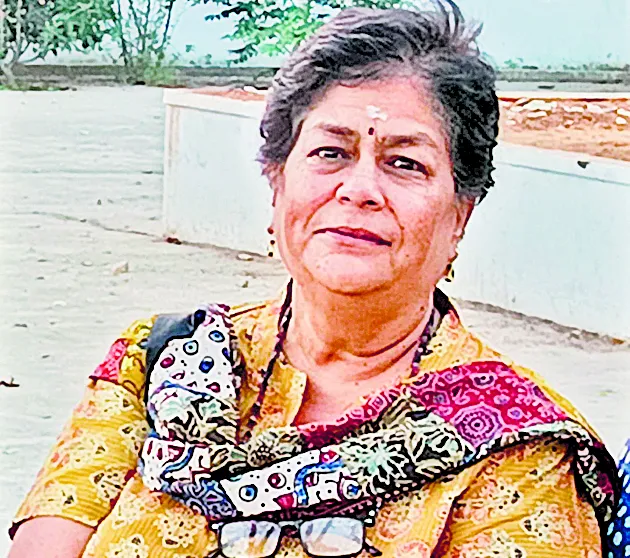
– Lalita Iyer
Senior Journalist