14 October, 2026 | 7:46 PM


ED questions Anil Ambani, is corporate India all ok?
01-03-2026 12:00:00 AM
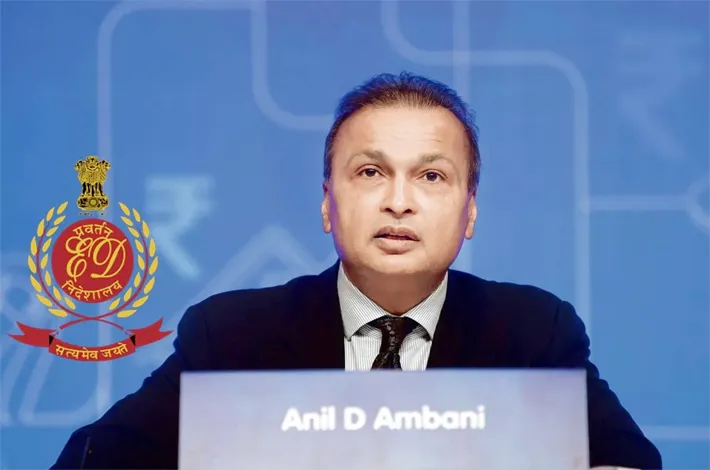
Industrialist Anil Ambani appeared before the Enforcement Directorate (ED) for the second time in an ongoing investigation under the Prevention of Money Laundering Act (PMLA). The questioning relates to a massive alleged bank fraud and financial irregularities involving Reliance Communications (RCOM) and other group entities, where loans totalling approximately Rs 40,185 crore remain outstanding.
The ED's probe stems from a Central Bureau of Investigation (CBI) FIR filed under the Prevention of Corruption Act, focusing on loan defaults between 2010 and 2012. Nine banks have classified these loan accounts as fraudulent. According to the agency's findings, funds obtained by one group entity were allegedly diverted to repay borrowings of other entities, transferred to related parties, and invested in mutual funds—actions that reportedly violated loan sanction terms.
In a significant development, the ED recently attached Ambani's luxury residential property 'Abode' in Mumbai's upscale Pali Hill area, valued at Rs 3,716.83 crore. This 17-storey building was reportedly aggregated into the RiseE Trust, a private family trust involving Ambani's family members, in what the agency describes as an attempt to shield the asset and preserve wealth while making it appear that Ambani is not directly involved. With this attachment, the total value of seized assets linked to Ambani and his group now exceeds Rs 15,700 crore, including prior attachments totalling around Rs 12,000 crore and three Enforcement Case Information Reports (ECIRs) filed.
This episode has created lot of ripples in political as well as corporate circles. A BJP leader defended the Anil Ambani- Rafale partnership deal as a government-to-government contract between India and France, with no private involvement initially, and clarified Reliance's joint venture was separate for manufacturing. He argued no cases or investigations existed against Ambani at the time, dismissing opposition’s allegations as unfounded.
A corporate lawyer agreed the situation warranted deeper scrutiny, likening it to scams like Vijay Mallya or Nirav Modi. He stressed that under Prevention of Money Laundering Act, the burden is on the accused to prove funds weren't laundered, and praised a section of the media for exposing suspicious elements like waived guarantees at SBI. He noted the multi-layered structures and trusts indicated intent to evade accountability, potentially implicating family members. He predicted a prolonged ED investigation, with documents spilling out, and emphasized political angles given the public sector banks' involvement.
An economist recalled Ambani's pre-2014 debts, including to Shanghai Electric, and noted much was public knowledge. He attributed the rescue by Indian banks to the old "phone banking" system under previous regimes, crediting the IBC for increasing transparency and enabling asset attachment.
He argued the system is now catching up, making it harder for Ambani to wriggle out. An economist criticized the lack of due diligence by governments and banks across regimes, questioning how Ambani thrived despite red flags. He highlighted Ambani's PR clout with a section of media and accused it of ignoring the story due to PR influences. He called for accountability in lending practices, warning that scale and complexity shouldn't shield the powerful from justice.
Fund diversion emerged as another critical facet, where Ambani reportedly obtained loans for specific purposes—like addressing cash flow mismatches or operational expenses—but redirected them to personal investments, Hollywood ventures, or even travels linked to controversial figures like Jeffrey Epstein.
This tactic mirrored those used by global financial criminals, according to the host, who criticized the banking system's lax oversight. Documents indicated that major banks granted massive loans without requiring personal net worth certificates or chartered accountant verifications, prompting calls for scrutiny of the banks' due diligence.
Another senior Supreme Court lawyer criticized the ED's handling, noting that lesser individuals would face immediate arrest under the Prevention of Money Laundering Act (PMLA). He highlighted Ambani's history, from the 2G scam under the Manmohan Singh government to securing defense deals like the Dassault Rafale offset contract in 2015, suggesting political benevolence across regimes. He argued that Ambani's entry into defense, despite lacking experience and being indebted to Chinese banks, raised national security concerns, and questioned why the government hadn't intervened in Dassault's choice of partner.
In conclusion, the episode painted a damning picture of systemic rot, calling for swift justice. The debate exposed deep divides on political accountability, leaving viewers to ponder whether India's fight against corruption applies equally to the powerful.