28 September, 2026 | 8:27 AM


Edn, jobs, and handlooms take centre stage in AP Assembly
25-09-2025 12:00:00 AM
kiranmai tutika I amaravati
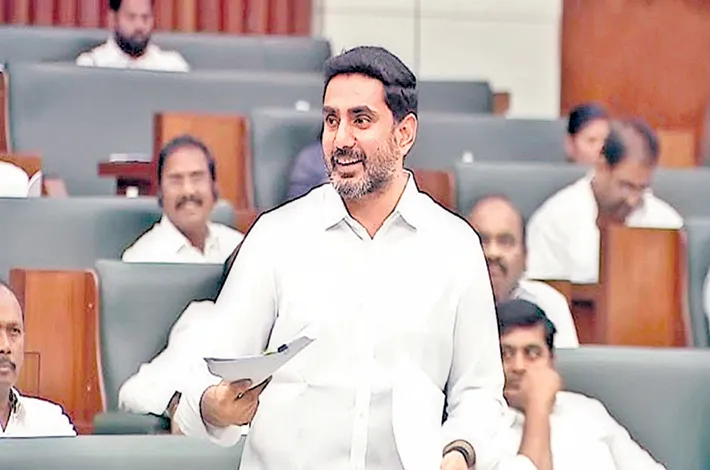
In a session underscoring the government’s focus on education, employment, and grassroots welfare, Andhra Pradesh Education, IT, and Electronics Minister Nara Lokesh on Wednesday announced three major initiatives: a proposed university for Chittoor district, appointment of 16,000 teachers under Mega DSC, and a legislators’ working group to revive the handloom sector.
Replying to members’ questions during the fifth day of Assembly proceedings, Lokesh balanced future goals with criticism of the previous regime, emphasizing the coalition’s reform agenda.
To Chittoor MLA Gurazala Jaganmohan Rao, Lokesh confirmed plans to establish a government university in Chittoor, complementing the existing language-specific Dravidian University and private Apollo University. “Every district must have a general education university, as per the Chief Minister’s vision,” he said.
Addressing Tuni MLA Yanamala Divya, Lokesh announced that a junior college will be set up in every mandal within two years. “The earlier High School Plus model lacked teachers. We reversed it, improved admissions by 40%, introduced midday meals for Intermediate students, and now provide competitive materials,” he said.
Lokesh also highlighted the Mega DSC recruitment as a landmark move. “No DSCs were conducted in the past five years. The Chief Minister’s first signature was on this file, enabling 16,000 teacher appointments. Certificates were verified meticulously. Tomorrow, CM Naidu and Deputy CM Pawan Kalyan will hand over appointment letters at a large event expected to draw 32,000 people,” he said, inviting all MLAs to attend.
On the handloom front, Lokesh announced a working group to direct government uniform orders to weaver societies. Responding to Nagari MLA Gali Bhanuprakash, he said, “APCO failed to deliver on time earlier. Rules must change so weavers can compete with private firms.” Vigilance inquiries have been ordered into irregularities from 2019–24.
Lokesh said transparency saved ₹200 crore in student uniform procurement last year, with a five-year savings target of ₹1,000 crore. He cited Mangalagiri Weavers’ Studio’s 40–50% income rise through design partnerships as a replicable model.
He reaffirmed the government’s commitment to delivering 200 units of free power to weavers and pushing structural reforms. “Handloom is not just tradition — it’s livelihood. Protecting it is a shared responsibility,” he concluded.