14 October, 2026 | 1:04 AM


EVMs: A Necessary Reform Against Booth Capture
14-10-2026 12:00:00 AM
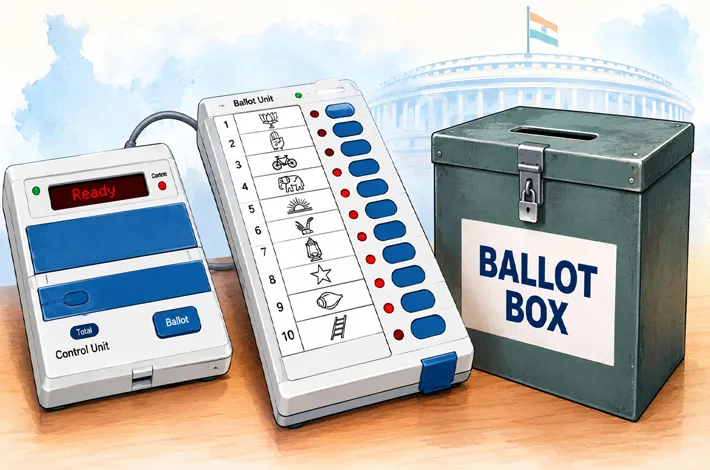
metro india news I hyderabad : India’s shift to Electronic Voting Machines (EVMs) marked a decisive break from the era of physical ballot-box rigging. In the decades before widespread EVM adoption, booth capturing by political musclemen was endemic in regions such as Rayalaseema in Andhra Pradesh, large parts of Uttar Pradesh, Bihar and Madhya Pradesh. Professional gangs were hired to seize polling stations, stuff ballot boxes or intimidate voters.
EVMs, introduced in phases from the late 1990s and used nationwide by the early 2000s, eliminated the physical paper trail that enabled large-scale capture. Coupled later with Voter Verifiable Paper Audit Trail (VVPAT) units, the system made wholesale booth-level fraud far harder. Election Commission data and independent analyses have consistently shown a sharp decline in such incidents, restoring a measure of integrity to the polling process that paper ballots alone could not guarantee.
Special Intensive Revision: Cleaning Rolls, but at What Cost?
Special Intensive Revision (SIR) of electoral rolls is not new. Similar intensive exercises have occurred in the past to purge deceased voters, duplicates, migrants and those who never resided at the listed address. The current nationwide SIR, launched in Bihar in June 2025 and expanded thereafter, aims to remove ineligible entries—including potential foreign nationals and bogus voters—while adding genuine ones. Official figures show substantial pruning: in Bihar, the electorate fell from 7.89 crore on 24 June 2025 to a final 7.42 crore by 30 September 2025, a net reduction of about 4.7 million (roughly 6 per cent) after 65 lakh names were removed at the draft stage and further adjustments during claims and objections.
In West Bengal, the exercise produced larger absolute and percentage reductions. Pre-SIR figures stood near 7.66 crore; after deletions, adjudication of disputed cases and final adjustments, the electorate contracted by several million, with reports citing net reductions in the range of 8–11 per cent depending on the precise stage of reporting. Across multiple states and phases, draft-stage exclusions ran into crores, with categories dominated by “permanently shifted,” deceased, absent/untraceable and duplicates. Proponents argue this strengthens democracy by preventing multiple voting and the inclusion of non-citizens.
Still, implementation has drawn sharp criticism for lacking scientific rigor and procedural fairness. Large numbers of eligible citizens reportedly found themselves deleted before key polls in Bihar and West Bengal. Many lacked ready documentation linking them to legacy rolls from the early 2000s or faced difficulties proving continuous residence.
Appellate tribunals and judicial adjudication processes have restored a high percentage of challenged names where heard—figures from one RTI-derived analysis showed over 90 per cent restoration in decided West Bengal appeals—but the sheer volume of petitions means delays measured in months or longer. Critics contend that legitimate voters were effectively disenfranchised, reduced to second-class status pending resolution, while the scale of flagged ineligible entries (running into crores nationally) underscores both the need for cleanup and the risk of over-deletion.
Appointment of the Chief Election Commissioner and Institutional Trust
Parallel questions surround the selection of Chief Election Commissioner Gyanesh Kumar and the two Election Commissioners. The Chief Election Commissioner and Other Election Commissioners (Appointment, Conditions of Service and Term of Office) Act, 2023, altered the earlier interim arrangement directed by the Supreme Court in the Anoop Baranwal case. That arrangement had included the Chief Justice of India on the selection committee alongside the Prime Minister and Leader of the Opposition.
The 2023 law replaced the CJI with a Union Cabinet Minister nominated by the Prime Minister, giving the executive a 2:1 majority. The legislation was passed amid opposition walkouts. Kumar became the first CEC appointed under the new statute in February 2025. Legal challenges to the Act and specific appointments remain pending before the Supreme Court, with petitioners alleging procedural shortcomings in search-committee shortlisting and transparency.
Opposition parties, former election commissioners, technocrats and civil-society groups have cited the combination of large-scale SIR deletions, reported internal dissent within the Commission over certain SIR-related orders, and the altered appointment process as evidence of eroded institutional neutrality. Calls for the resignation of the present CEC and Commissioners have intensified, framed as necessary to restore public confidence in a constitutional body. The ruling dispensation maintains that SIR is a long-overdue purification exercise conducted transparently with political-party participation at the booth level, and that EVMs remain secure and auditable.
The Credibility Challenge Ahead
The message that the Election Commission may be compromised has gained traction, particularly among younger cohorts—Gen Z and Gen Alpha—who encounter these debates primarily through digital platforms. Former CECs and technology experts have urged a pause or redesign of the current SIR methodology in favour of more technology-driven, transparent verification systems that minimise both inclusion of ineligibles and exclusion of genuine voters. Pure electoral rolls are essential; so is an accessible, time-bound remedy for those wrongly deleted. The tension between these imperatives will shape the credibility of India’s electoral institutions for years to come. Balancing rigorous cleanup against the fundamental right to vote remains the central test.
From Presiding Officer to Professional Non-Voter
Picture this: a senior citizen who has dutifully punched ballots for half a century, and who once bossed the booths as Presiding Officer in the late ’80s for both Parliament and Assembly elections. Now? He can’t even vote. His wife, living under the same roof, same address, same everything, still gets the privilege. The Booth Level Officer summons him for a “hearing.” Our hero shows up—on time, three separate times—armed with every scrap of paper the BLO demanded. Silence follows. Radio silence. The young BLO currently deciding his democratic fate wasn’t even a twinkle in his parents’ eyes when this gentleman was already running the show as PO. Democracy, it seems, has a peculiar sense of humour—and a very short memory.
When PV’s Votes Were Too Popular for Comfort
Flash back to the days when P.V. Narasimha Rao was already Prime Minister but needed a Lok Sabha seat. He contested the by-poll from Nandyal (vacated by Congress’s G. Pratap Reddy) because, after Rajiv Gandhi’s tragic end, PV found himself PM without being a member of either House. Andhra Pradesh Chief Minister N.T. Rama Rao, in a rare burst of Telugu solidarity, refused to field a TDP candidate. “Let our Telugu Bidda win unopposed,” he declared. The result? A one-sided farce so lopsided that the Chief Electoral Officer reportedly ordered the Returning Officer to stop opening ballot boxes mid-count. Why? Because PV was in danger of crossing 90 per cent—and that, apparently, would have forced an embarrassing re-poll. Nothing says free and fair like “please stop counting, he’s winning too hard.”
Of course, United Andhra Pradesh (and plenty of other states) had its own colourful election traditions. Political party musclemen would occasionally waltz in, snatch ballot papers, and cast them en masse—efficiency, if not elegance. In the 1977 Lok Sabha elections, while Congress was getting hammered nationwide, Andhra stayed loyal: 41 out of 42 seats for the Congress, with only Neelam Sanjiva Reddy of the Janata Party managing to sneak through from Nandyal. Allegations flew thick and fast that a generous percentage of votes had been “assisted” and another sizeable chunk of voters simply weren’t allowed near the booth. Different decade, same old democratic magic.