14 October, 2026 | 1:11 AM


Gen Z in AP, Telangana strikes chord with Delhi protests
14-10-2026 12:00:00 AM
HEMA SINGULURI & KIRANMAI TUTIKA
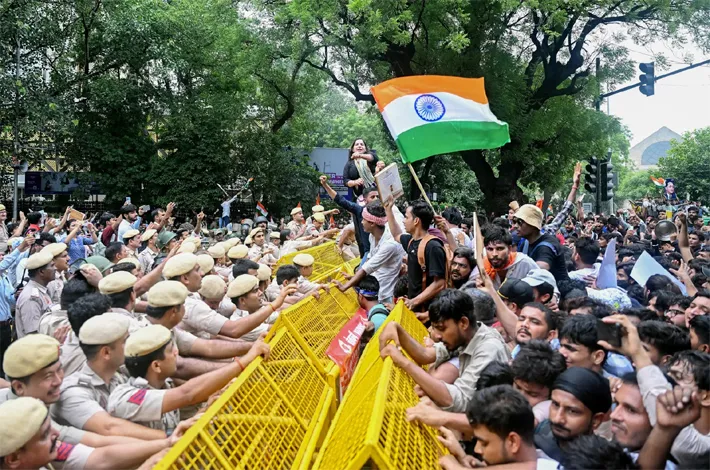
I hyderabad / amaravati : Nearly 1,500 km away, Delhi’s youth-led protests are resonating with Gen Z in Andhra Pradesh and Telangana, where students and young professionals are tracking demonstrations on social media and relating them to concerns over unemployment, democratic rights and accountability. The movement is led by Cockroach Janta Party (CJP), founded by Abhijeet Dipke in May 2026.
Named after a Chief Justice’s remark comparing jobless youth to “cockroaches”, the protesters turned the term into a badge of identity. Initially sparked by exam paper leaks and unemployment, the protests reportedly led to the Union Education Minister’s resignation and have since demanded the removal of Chief Election Commissioner Gyanesh Kumar over alleged voter roll deletions.
Young people in both States view the movement as a fight for jobs, electoral transparency and democratic accountability, while stressing peaceful dissent. In Andhra Pradesh, the mood is one of anxious solidarity. For a generation navigating competitive examinations, uncertain recruitment prospects and the pressure to secure stable employment, the protests have revived questions about whether the system is delivering on its promises to educated young Indians.
The protests have also attracted attention for their distinctly Gen Z character. Rather than relying exclusively on conventional political speeches and demonstrations, young protesters have used memes, satire, music and digital campaigns to communicate their grievances.
When asked about the Delhi protests and his opinion, 20 year old Santosh, an engineering student of Chalapathi College in Guntur, said that he was aware of the protests related to electoral votes deletion and the youth seeking resignation of CEC. “It’s a united youth protest for our future to elect better and for the right to do so. I totally support the youth call and would term it like once in a generational revolution.”
Another student Shanmohan from SRM university Amaravati, admires the movement's style. “The revolution is truly admirable and I feel bad for not taking part in it directly but glad to extend my support to my fellow youngsters.” Across the border in Telangana, the response has been more explicitly political, with students questioning the functioning of democratic institutions and the treatment of dissent.
Sughra Hussain, a second-year BA Psychology student at St. Mary’s College, said she fully supported the demonstrations at Jantar Mantar. “We have grown up witnessing the misuse of power, corruption, a lack of accountability and institutions being questioned for their actions,” she said. Hussain argued that elected representatives and public institutions must remain answerable to citizens. Calling for transparency over alleged electoral irregularities, she said “Electors hold the ultimate power in a democracy; leaders exist solely to represent us and remain accountable.”
She called for evidence-based investigations into allegations of voter manipulation and maintained that democratic participation must continue beyond elections, with citizens retaining the right to question those in power. S. Jhanvi, a 25-year-old corporate employee, viewed the protests as an important platform for young people to express concerns and demand justice. She said social media had made the present generation more informed, vocal and capable of spreading awareness rapidly.
However, she cautioned against allowing legitimate dissent to be undermined by violence or misinformation. “Protests should remain peaceful, and people should focus on facts, mutual respect and meaningful solutions rather than violence or misinformation,” she said.
For Gen Z in Andhra Pradesh and Telangana, the developments in Delhi represent more than a confrontation between protesters and the authorities. They have become a test of whether democratic institutions can address young people’s grievances through transparency, dialogue and accountability.
The central question is not whether protests can compel political attention, but whether that attention will produce tangible outcomes. For a generation demanding a greater say in its future, the right to question authority remains as important as the promise of being represented by it.