22 October, 2026 | 6:46 AM


FinMin urges PPI adoption for future govt procurement contracts pricing
17-08-2026 12:00:00 AM
Contractors could see payment revisions better aligned with changing input costs, reducing inflation-related pricing mismatches
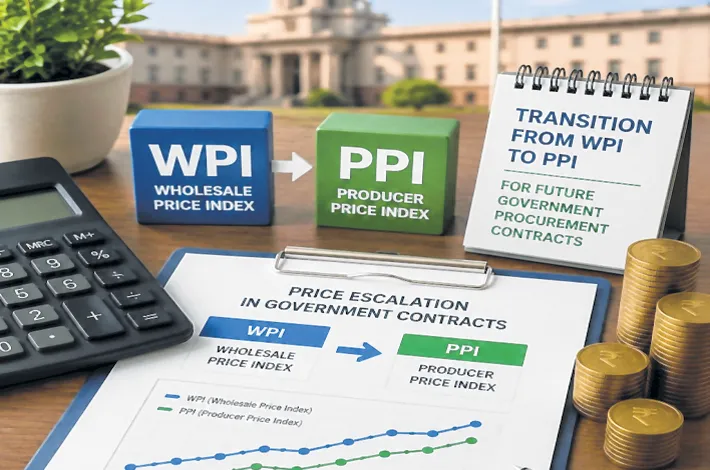
The Finance Ministry has urged ministries and departments to adopt the Producer Price Index (PPI) instead of the Wholesale Price Index (WPI) for price escalation clauses in future government procurement contracts once the new index becomes available. PPI is more internationally accepted than WPI. “Ministries/departments are encouraged to adopt PPI in place of WPI in all price escalation clauses of future contracts, once PPI becomes available,” it said.
Contract pricing: Price escalation, or rate variation, clauses allow payments to be adjusted when costs of key inputs such as materials, labour and fuel change during project execution. The mechanism helps distribute inflation-related cost changes between the government and contractors. The Commerce Ministry began releasing monthly PPI data for goods and services in June, paving the way for WPI inflation numbers to be phased out over the next five years. The move follows practices in advanced economies and recommendations from the International Monetary Fund, which has advocated India’s transition from WPI to PPI.
Index coverage: The output PPI for goods covers representative products transacted across the economy. Manufactured products carry the largest weight at 69.93%, followed by agriculture, forestry and fishing at 22.16%, electricity at 4.49%, and mining and quarrying at 3.42%. The first phase of the services PPI covers seven segments — banking, securities transactions, insurance, pension fund management, railways, air passenger services and telecom. The Commerce and Industry Ministry has said remaining services will be incorporated in the next phase. No weights have yet been assigned to the services PPI because the seven categories currently included do not represent the entire services sector.