7 October, 2026 | 12:35 AM


Gen Z’s bitten by micro dramas
07-10-2026 12:00:00 AM
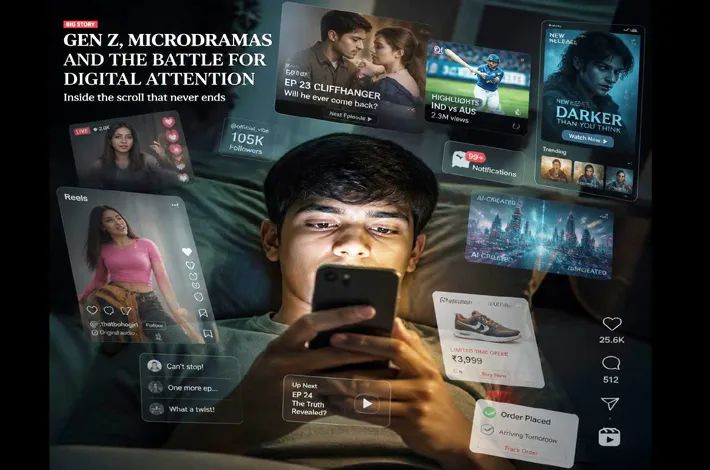
Metro India News | HEMA SINGULURI :
The next big battle in entertainment may not be happening on television or even on conventional OTT platforms. It is happening inside the phone, one swipe at a time. Microdramas short, vertically shot fiction designed for mobile screens have moved well beyond their early niche status. Omdia estimates that the global market generated about $11 billion in revenue in 2025 and could reach $14 billion by the end of 2026. In the US, mobile users already spend more daily time on microdrama apps than on Netflix, Disney+ and Amazon Prime Video, according to Omdia's analysis of Sensor Tower data.
The formula is built for constant engagement: series run across dozens of episodes, with each instalment lasting just one or two minutes and ending by raising a new question. Shot vertically in a 9:16 format, they fit seamlessly into mobile scrolling alongside Reels and Shorts. The format originated in China, where microdrama revenue surpassed domestic theatrical box-office earnings by 2024.
Kuku TV, Story TV and JioHotstar's TADKA are among the platforms chasing viewers with mobile-first stories, while AI, regional languages and personalized recommendations are increasingly becoming part of the competition. TADKA crossed 100 million users, according to JioStar, and more than 42% of its viewership comes from people under 24.
Online reaction captures the strange appeal. Viewers describe some shows as cheesy, exaggerated or poorly acted, yet admit that the relentless twists make them difficult to abandon. One Reddit user described being pulled into a microdrama rabbit hole after encountering a clip on Instagram.
Another reaction cuts deeper: “Attention isn't shrinking. Tolerance for weak storytelling is.”
That sentiment challenges the idea that Gen Z simply cannot concentrate. Young viewers may reject a slow opening but still binge an entire long-form series when the story earns their attention.
Scroll, stop, watch
The battle is no longer just for screen time. A BCG–Snap study estimates India’s 377 million Gen Z consumers account for 43% of consumer spending, worth around $860 billion, much of it influenced rather than personally earned. Brands see an opportunity: discover content on Instagram, follow the cliffhanger, binge, encounter products or creators, and ultimately buy.
For Gen Z, it may feel like ordinary scrolling.
For the entertainment industry, it is becoming one long commercial journey.