7 October, 2026 | 12:40 AM


Moral responsibility, forgotten principle?
07-10-2026 12:00:00 AM
The Unasked Questions
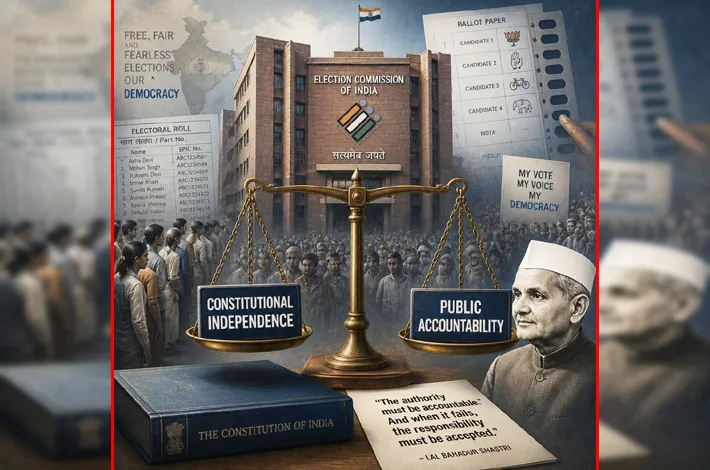
The protests demanding Chief Election Commissioner Gyanesh Kumar’s resignation on October 2 made me think of Lal Bahadur Shastri. It was his birth anniversary too. We remember him with admiration as the Railway Minister who resigned following the Ariyalur railway accident in 1956, accepting responsibility for a tragedy he had not personally caused.
We continue to praise him for that decision. But we seem reluctant to expect anything similar from those holding public office today. Calls for resignation are usually met with questions about personal involvement and proof of wrongdoing. Unless the person is directly implicated, we are told, there is no reason to resign.
This confuses responsibility with culpability. Shastri believed that, as Railway Minister, he had to accept responsibility for the functioning of the Railways. That was the significance of his decision.The questions confronting Gyanesh Kumar go further. They concern decisions taken within the institution he heads, objections recorded by his fellow commissioners and whether the Commission’s own safeguards were bypassed. We cannot reduce these to unfortunate lapses somewhere down the administrative chain.
According to an Indian Express investigation, summarised by Scroll, Election Commissioners Sukhbir Singh Sandhu and Vivek Joshi recorded at least 14 objections over ten months to decisions and communications issued without their knowledge or approval. The issues included voter registration, deletion and restoration of names, appeals and control over electoral databases. Sandhu reportedly described a change to Form 6, used for voter registration, as “unauthorised and illegal”.
These objections cannot be dismissed as opposition accusations. The Commission’s description of them as normal internal deliberations does not adequately answer the questions raised. If commissioners record that decisions were issued without their approval, simply saying that differences are normal is hardly an explanation. A court may still have to decide whether the disputed actions were illegal. But why should that prevent us from asking Kumar to accept responsibility for decisions taken under his authority. Accountability in public office cannot depend entirely on the outcome of a court case.
The present government also has questions to answer. Under its 2023 appointment law, the selection committee consists of the Prime Minister, a Cabinet minister nominated by him and the Leader of Opposition. This gives the government a two-to-one majority in selecting those who will oversee elections in which the ruling party is a contestant. The concern about independence is obvious.
The government also amended the rules in December 2024 to restrict public access to electronic polling records. This was before Kumar became CEC, and he cannot be held responsible for that decision. But the government must answer for its choice to limit public scrutiny of the electoral process.
Of course, the CEC is not a minister. He holds a constitutional office and is protected against arbitrary removal. We cannot have an election commissioner removed whenever the government or a political party dislikes his decisions.
The CEC’s constitutional independence is meant to protect him from government interference. It also places on him the responsibility to resist that interference and uphold the Commission’s independence in practice. It cannot become a shield against scrutiny of his own conduct.
The Election Commission’s work directly affects our right to choose a government. It must therefore explain its decisions, make information available and correct errors. Asking citizens to trust the institution without addressing their concerns about electoral rolls will not restore confidence.
There are reasonable arguments against demanding a resignation after every administrative failure. Institutions are large, and no individual can supervise everything. But those heading them are responsible for ensuring that systems and protocols are in place, procedures are followed, warnings are addressed and corrective actions initiated. Repeated objections from fellow commissioners make it difficult to argue that these matters were beyond the leadership’s knowledge.
Resignation has also become harder because it is almost always treated as an admission of guilt. Political opponents celebrate it as a victory, while the public debate moves quickly from accepting responsibility to declaring someone guilty. That may explain why people cling to the office. It does not mean we should give up expecting them to accept responsibility.
Removing Kumar alone will not resolve every concern. The disputed decisions must be examined, wrongful exclusions corrected and the government’s role scrutinised. But the need for wider reform cannot become an excuse for avoiding individual accountability. Shastri resigned for a tragedy he had not personally caused. When serious objections to decisions taken under the CEC’s own authority are recorded by colleagues within the institution, what more must citizens establish before accountability begins?
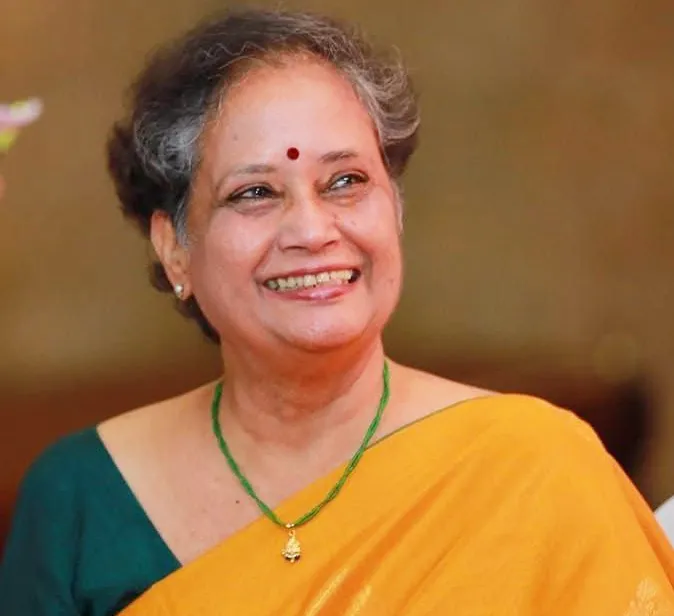
(A L Sharada
is a sociologist and
the former director of
Population First)