12 November, 2026 | 12:01 AM


Gen Z redefines travel
12-11-2026 12:00:00 AM
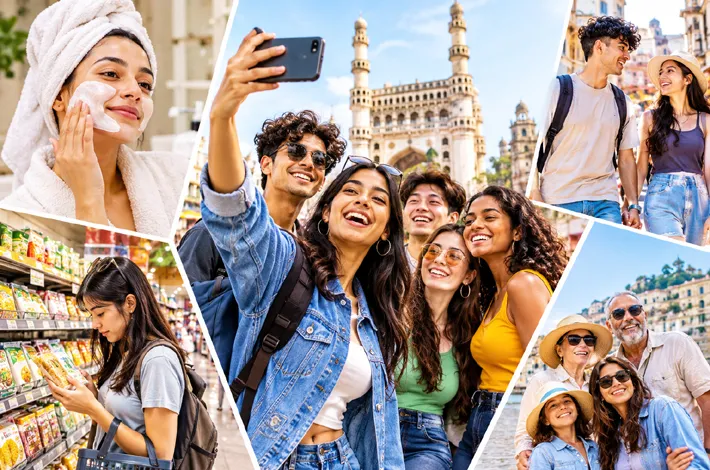
Beauty, Connection, and Everyday Discovery
metro india news I hyderabad : Generation Z is rewriting the travel playbook, prioritizing experiences that blend personal identity, digital fluency, and genuine connection over traditional sightseeing. A Skyscanner 2026 Travel Trends report and Destination NSW analysis outline seven major shifts already reshaping destinations and marketing strategies worldwide.
One of the most striking is the rise of “Glowmads.” Beauty has become a primary travel motivator. Forty per cent of Gen Z travellers plan to seek beauty treatments or skincare stores abroad next year—far higher than older cohorts. TikTok beauty content frequently sparks itineraries, turning clinics, pharmacies, and specialty shops into must-visit stops. For many, a trip is incomplete without returning with new routines or products that signal self-care and status.
Equally prominent is “Catch flights and feelings.” Seventy-four per cent of Gen Z respondents say they travel to meet people beyond their local social or dating circles.
Supporters argue that AI can supplement human relationships by offering emotional support and opportunities to practise social skills.
AI collaboration is also becoming routine in workplaces, where young employees use it for writing, analysis and idea generation, often treating it as a teammate. Educational attitudes are mixed, with greater acceptance of AI tools than of unrestricted social media use among younger students.
As 2026 progresses, policymakers, technologists and families are debating age-appropriate usage, transparency and mental-health implications. While AI companionship does not signal the end of human relationships, it reflects how Gen Z is redefining meaningful connections in an increasingly uncertain world.
Gen Z embraces AI companions
Almost half of Generation Z report having formed meaningful relationships with artificial intelligence, according to VML’s Future 100 report and related 2026 analyses. What began as using AI tools has evolved into companionship, collaboration and emotional support, raising questions about intimacy, work and the meaning of real relationships.
Sometimes called the “Synthetic Generation”, these young people use AI chatbots, image generators and personalised agents as brainstorming partners, confidants, creative collaborators and productivity coaches. For a generation facing economic pressures, housing instability and social isolation, AI offers constant availability without the complications of human relationships.
Gen Z users increasingly share personal goals, discuss daily stresses and co-create content and art with AI. The “Try-ator” culture, which encourages anyone to experiment with creativity using AI, has lowered barriers to artistic expression. Some young people also prefer AI conversations because they involve less judgment and social pressure.
Experts note that the distinction between virtual and real is blurring. Four in ten Gen Z respondents globally agree that “it’s all real to me”. This extends beyond entertainment to relationships, as synthetic personalities acquire cultural significance and brands explore ways to engage audiences attached to non-human entities.
However, critics warn about dependency, data privacy and the erosion of human connections. With loneliness remaining high among young adults, researchers question whether AI companionship addresses isolation or merely masks it.
One-third report feeling freer and more open in new environments. Travel doubles as both adventure and relational opportunity, with apps, group tours, and destination events facilitating connections that might feel constrained at home.
“Shelf discovery,” or supermarket tourism, is another unexpected standout. Nearly one-third of Gen Z travellers intend to visit foreign supermarkets specifically to sample foods unavailable at home. Japanese 7-Eleven egg salad sandwiches have become a TikTok phenomenon, exemplifying curiosity about everyday culture rather than only landmark experiences. Grocery aisles, convenience stores, and local markets are now legitimate attractions.
Multigenerational travel is also climbing. Fifty-two percent of Gen Z travellers plan trips with parents, 28 per cent with grandparents, and 37 percent with multiple generations. Affordability plays a role, yet many emphasize deeper family bonds and shared memories as the stronger drivers. Destinations that accommodate mixed-age groups—flexible activities, varied accommodation, and intergenerational programming—stand to benefit.
Additional trends include a preference for experiences that challenge body and mind, growing international cultural tastes, and a blend of digital planning with offline immersion. Gen Z remains highly influenced by short-form video, yet once on the ground they seek authenticity that photographs well and feels meaningful offline.