12 November, 2026 | 12:01 AM


Politics of spectacle still affordable?
12-11-2026 12:00:00 AM
In drought-hit times
CL Rajam :
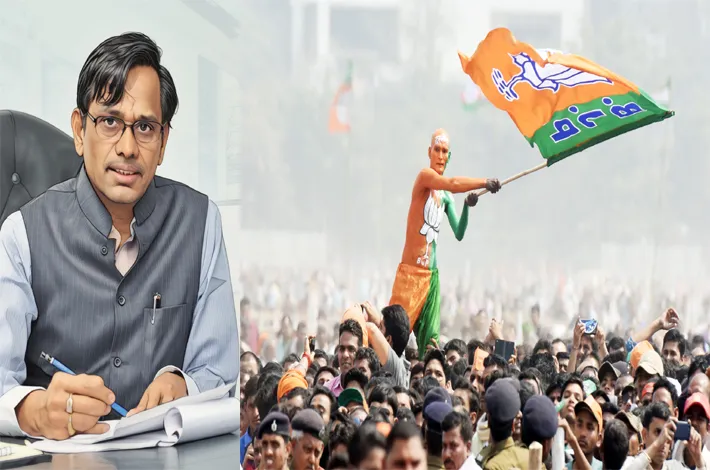
As parts of country in general and Telangana state in particular confront a deficient monsoon and deepening agrarian stress, a practical question arises amid fiscal pressures on several states: with rural communities struggling for water, livelihoods and relief, how necessary are the large public rallies, walkathons and show-of-strength meetings that political parties continue to organise? Each major event routinely runs into at least two crores of rupees—and often substantially more—once payments to attendees, transport, stage construction, logistics and related expenditure are accounted for. That cost, in the end, is borne by the public through diverted attention, opportunity costs and the broader strain on already stretched government resources.
With the next major electoral cycle still roughly two years away, there is a strong case for restraint. A temporary curb on mega-rallies and large public meetings by all parties for the coming year would free administrative energy and public focus for more pressing priorities. Digital platforms, electronic media and print outlets already provide parties with multiple channels to communicate their positions and critique. The compulsion to demonstrate organisational muscle through crowded maidans, hired crowds and elaborate stages looks increasingly hard to justify when farms are parched and state finances are under pressure.
The arithmetic is straightforward. Reports of payments around Rs 1,000 per person to ensure attendance, combined with fleets of vehicles, temporary infrastructure and security arrangements, push the bill for a single large gathering into crores. Multiply that across parties and months, and the cumulative outlay becomes significant. Attendees drawn from farms, small businesses or daily-wage work lose productive days. The wider economy loses output at a moment when every available resource should support drought response, water conservation, employment generation or targeted relief.
This pattern echoes the deeper critique offered by P. Sainath in Everybody Loves a Good Drought. The book’s title itself draws from a conversation with a peasant activist in Palamu: “We have a great drought going here. The big people are making much money out of it… The money that comes in as relief makes the powerful richer than they were.
It’s quite a good business. We like a good drought here.” Sainath showed how drought and rural distress can become industries in themselves—generating contracts, visibility and intermediary profits—while the poorest continue to absorb the real hardship. Political spectacle can operate in a parallel register: high-visibility events that mobilise networks and generate activity even as the structural problems of water scarcity, debt and livelihood insecurity receive less sustained attention.
Sainath also cautioned against treating poverty merely as episodic drama. “Too often, poverty and deprivation get covered as events. That is, when some disaster strikes, when people die.Still, poverty is about much more than starvation deaths or near famine conditions. It is the sum total of a multiplicity of factors… Land, health, education, literacy, infant mortality rates and life expectancy… Debt, assets, irrigation, drinking water, sanitation and jobs count too.” Large rallies risk becoming another form of event-driven theatre—loud, photogenic and temporary—while the slower processes of rural distress continue largely out of frame.
The present monsoon shortfall has already produced widespread dry conditions, crop losses and demands for support packages in multiple states. Relief measures, input subsidies and calls for broader assistance compete with other fiscal commitments. In that environment, repeated multi-crore political gatherings represent a clear opportunity cost. The same organisational capacity and public bandwidth could be directed toward more durable responses—groundwater recharge, efficient water use, timely employment schemes or transparent delivery of assistance.
Defenders of large meetings will argue that democracy requires visible mobilisation, that face-to-face politics retains unique energy, and that digital outreach cannot fully substitute for the atmosphere of a crowd. Those points carry weight. Still scale, frequency and context matter. When attendance is routinely incentivised with cash or transport, and when stages and logistics become competitive displays, the distinction between genuine political expression and costly theatre narrows. In a drought year the contrast is especially stark: images of stressed farmers and drying fields sit uneasily beside images of packed grounds and expensive infrastructure.