12 November, 2026 | 12:01 AM


10 + 2 from next academic year: CM
12-11-2026 12:00:00 AM
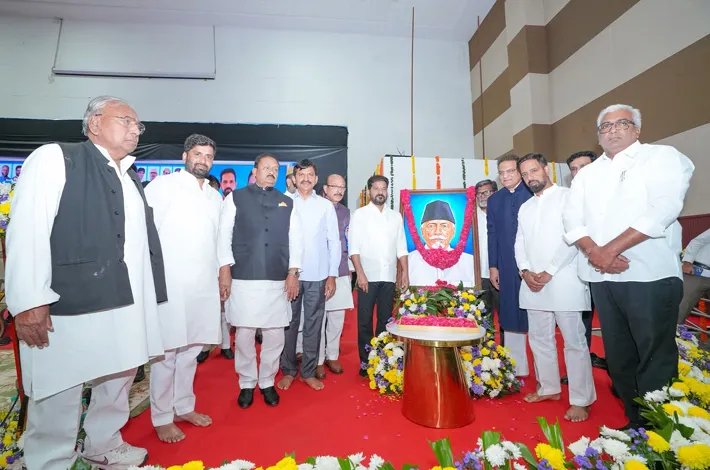
metro india news I hyderabad : Chief Minister A. Revanth Reddy on Wednesday directed senior education department officials to take necessary steps for implementing the 10+2 education system from the next academic year, 2027-28, as part of comprehensive reforms in the state’s education policy.
The review meeting, held at the MCR HRD Institute in Hyderabad, was attended by Chief Secretary Sanjay Jaju, government adviser K. Keshava Rao and other senior officials. Revanth Reddy, who also holds the education portfolio, stressed that the government has decided to introduce reforms aligned with modern needs, with quality education for students as its foremost priority. He emphasised that the transition must ensure no student faces any disadvantage.
Under the current structure in Telangana, Classes 11 and 12 are offered as Intermediate education through junior colleges governed by the Board of Intermediate Education, separate from the school system that ends at Class 10 (SSC). The proposed 10+2 model would integrate higher secondary education more closely with secondary schooling, a system already followed in many other states. Officials were instructed to prepare the groundwork for this shift while prioritising education from nursery through Class 12.
Revanth Reddy said the government is focusing on skill development after Class 12 to better prepare students for employment and further studies. He directed that Classes 9 to 12 be treated as higher education, with specialised education provided during these years. Necessary infrastructure must be developed to support the changes, he added. The Chief Minister reiterated the government’s resolve to upgrade government schools to standards comparable with private institutions.
The directions come against the backdrop of ongoing efforts to strengthen public education. The education budget has risen substantially under the current government. From Rs 19,093 crore allocated in 2023-24 under the previous administration, allocations increased to Rs 21,292 crore in 2024-25, Rs 23,108 crore in 2025-26 and Rs 26,647 crore in 2026-27, marking a cumulative rise of Rs 7,554 crore over three years. The government has expressed an ambition to eventually raise education spending toward 15 per cent of the state budget.
Official data and claims highlight mixed trends in enrolment.
Revanth Reddy has stated that enrolment in government schools rose by 86,000 since he assumed charge of the education department. Pre-primary sections were introduced in government schools for the first time, benefiting around 64,000 children. In government junior colleges, Class 11 admissions for 2026-27 crossed 85,000, a 14 per cent increase, taking total enrolment in Classes 11 and 12 to 1,64,730 students.
UDISE+ figures for 2025-26 show overall student enrolment in the state rising to approximately 76.8 lakh, up 2.9 per cent from the previous year, even as the total number of schools declined to 41,762. Average enrolment per school increased. Government schools, however, have faced pressures, with earlier data indicating a drop of 1,969 government schools in 2025-26 while private schools grew. Long-term trends show private school enrolment rising significantly while government school numbers and shares have faced challenges. Secondary-level dropout rates remain relatively lower than the national average.
Earlier in 2026, the Telangana Education Commission submitted a detailed policy document recommending structural changes, including performance-based teacher evaluations, greater emphasis on English as a medium of instruction, merger of boards in some proposals, and conversion of selected schools into full-fledged Telangana Public Schools offering education from nursery to Class 12. The government has already launched initiatives such as Telangana Public Schools, Young India Integrated Residential Schools, breakfast schemes with milk, comprehensive student kits, and infrastructure upgrades.
Concerns over the gap between students passing Class 10 and those continuing into intermediate education have also figured in previous reviews. Officials were earlier asked to examine models from other states that track and mentor students continuously from Classes 9 to 12. The latest directions build on this focus by seeking continuity and specialised pathways in the higher secondary stage.
Revanth Reddy underscored that reforms must improve learning outcomes and expand opportunities. Infrastructure development, teacher support and alignment of curriculum with contemporary requirements, including skills, form core elements of the approach. The government aims to make public schools attractive enough for parents to choose them over private options, addressing long-standing issues of enrolment preference and quality perception.
The review signals accelerated movement toward a more integrated schooling structure. Officials are expected to work out detailed arrangements, identify infrastructure needs and ensure a smooth transition so that students receive uninterrupted quality education from the foundational years through specialised higher secondary learning and skill orientation. The emphasis remains on student-centric reforms that prepare the next generation for modern economic and academic demands while strengthening the public education system across Telangana.