1 October, 2026 | 6:56 AM


HMRL mulls over driverless pods
28-03-2026 12:00:00 AM
Driverless pods to transform last-mile travel
HEMA SINGULURI I hyderabad
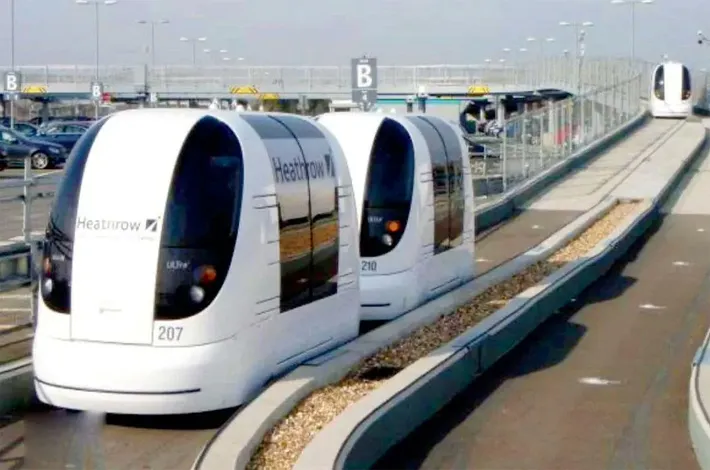
Hyderabad Metro Rail Limited (HMRL) is planning driverless pods to connect metro stations with nearby areas, making last‑mile travel easier for commuters. Initiated by HMRL, this informs commuters about a future transport option that could make reaching home or office from metro stations quicker and significantly more convenient, especially according to the project’s Chief Project Manager.
HMRL has embarked on a bold initiative to introduce an automated personal rapid transit (PRT) system, a network of small, battery‑operated pods designed to fill the gap between metro stations and commuters’ final destinations. These pods, each able to carry four to six passengers, will run without drivers and could collectively serve up to 10,000 passengers per hour, according to official plans.
The move is part of a broader effort by the Telangana government to improve last-mile connectivity, easing the daily struggle faced by commuters who otherwise depend on buses, autos or private vehicles after exiting the metro. The system is intended to link metro stations with residential neighborhoods, business hubs and IT corridors, starting with a pilot stretch that connects Raidurg, Hi-Tec City, the Financial District and Kukatpally.
Ananda Mohan, Chief Project Manager said, “The success of the PRT system hinges on a broad set of operational and commuter experience mainly accessibility and convenience. Mohan emphasized that these criteria make PRT “far superior to a bus or an auto” in terms of comfort, reliability and safety, noting that “cost-wise, it may be comparable with an auto ride, but more expensive than a bus fare.”
Technical challenges and project design
The Chief Project Manager also acknowledged construction challenges such as soil investigation, pier and foundation works, station building construction, and shifting utilities where necessary. Securing permits from statutory authorities and ensuring seamless integration with existing metro and bus services are expected to demand careful planning.
The initial pilot is planned on an 8-km corridor between Raidurg and Kukatpally, chosen for its high travel demand between residential and commercial hubs. The estimated construction cost for the PRT network is around Rs 80–90 crore per kilometer, with a public-private partnership (PPP) model projected for procurement and operation. The concessionaire, working with a future Fare Fixation Committee, will decide on fare pricing based on financial modelling and commuter price sensitivity.
Post-pilot, HMRL will explore expanding the PRT network to areas like AS Rao Nagar and others, with station locations to be finalized following detailed origin–destination surveys and feasibility studies. Amenities such as lifts, escalators and pedestrian access will be included at pod stations, and safety certification from accredited agencies is planned before operations begin.