17 September, 2026 | 8:32 PM


Impeachment against judge: Test for judicial independence?
11-12-2025 12:00:00 AM
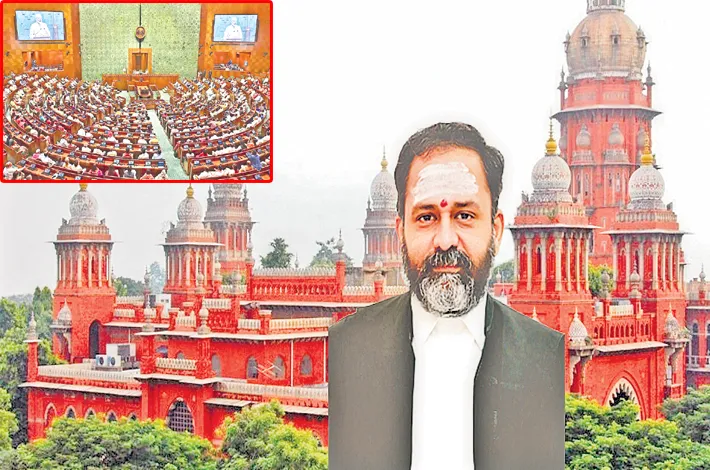
A Madras High Court judge finds himself at the centre of a political storm after permitting Hindu devotees to light a ceremonial lamp on a sacred hill in Madurai, prompting opposition parties led by the Dravida Munnetra Kazhagam (DMK) to initiate impeachment proceedings. Justice G.R. Swaminathan's order has ignited debates on judicial independence, religious rights, and political motivations ahead of Tamil Nadu's assembly elections.
The controversy stems from a recent High Court ruling allowing devotees to perform the ritual at the "Deepastambham" (lamp pillar) on Thiruparankundram hill, a site revered by Hindus but also home to a nearby dargah. The judge specified that the lighting must occur at a lower point, maintaining a 50-meter distance from the dargah to respect prior precedents from 2014 and 2017 division bench judgments.
Despite this, the DMK-led Tamil Nadu government and its allies argue the order involves procedural lapses, including overriding higher benches, premature admission of a contempt petition, and involving the Central Industrial Security Force (CISF) in implementation without adequate infrastructure.
In response, opposition MPs, including those from the DMK and INDIA bloc allies, submitted an impeachment notice to the Lok Sabha Speaker, signed by over 100 members. Impeachment, a rare and extreme measure under Articles 124 and 218 of the Indian Constitution, is typically reserved for proven misbehaviour or incapacity, such as corruption or gross misconduct. Critics, including the Bharatiya Janata Party (BJP), view this as an attempt to intimidate the judiciary rather than a legitimate challenge to the ruling.
Former BJP Tamil Nadu state unit chief K. Annamalai strongly defended the judge in an interview, asserting that the impeachment is politically motivated. He expressed his angst that for the first time a political party (DMK) wants to paint a picture of a judge in a certain way only because they did not like the particular judge's verdict on Thiruparankundram issue.
He emphasized that the current petition differs from past cases, as devotees sought permission only for the lamp pillar, not the hill's summit near the dargah. Annamalai accused the DMK of misinterpreting precedents and using the issue for minority vote consolidation, stating, "The DMK is only using this issue to rake up the minority consolidation.
In the process, what the DMK is trying to do, they're trying to trample the judiciary under its feet." Another Tamil Nadu BJP spokesperson accused the DMK of contradicting its own court submissions — admitting in court that the Deepastambham was historically used for the ritual, yet calling it a “mere survey stone” in public for political mileage.
A DMK spokesperson, supporting the party’s stance, accused Justice Swaminathan of habitual divisive judgments and operating outside constitutional frameworks. "He has his own agenda-on a Sanatan Dharma perspective," the analyst said, referencing the judge's public statements and pending petitions against him. He argued that the impeachment is a constitutional right, not intimidation.
Countering this, a BJP spokesperson analyst dismissed the claims as falsehoods, stating the DMK, with 120 opposition MPs rallying around it, is clearly is eyeing the Muslim and Christian vote bank." She referenced the 2017 division bench ruling that courts should not interfere in temple rituals, questioning how the judge's order violates this.
A Madras High Court advocate who has followed the case closely, was scathing and said that the 1923 Privy Council judgment and subsequent rulings grant Hindus full religious rights on the entire hill except the dargah and a 15-ft pathway. Choosing not to perform certain rituals for decades does not extinguish those rights, he made it clear and accused the state of manipulating records (including back-dating a Section 144 order) and refusing to implement a binding High Court order simply because it dislikes the verdict. “If the government wants the law obeyed by citizens, it must first obey the court itself,” he said.
A Samajwadi Party leader , whose party joined the impeachment effort defended the move as upholding constitutional integrity. His contention was that when a particular judge who has sworn on the constitution says that this constitution is a copied constitution from the relic of 1935(recollecting a previous remark made by Justice Swaminathan in a private event), does he deserve to be sitting at the bench, citing alleged caste bias and RSS links. However, critics questioned the SP's involvement, suggesting it was an attempt to appeal to minorities nationwide.
With Tamil Nadu assembly elections just over a year away and the DMK facing anti-incumbency on multiple fronts, opposition parties unanimously allege the row is being deliberately escalated for minority consolidation. The BJP and sections of the AIADMK claim the impeachment notice — which everyone acknowledges lacks the numbers to succeed — is symbolic: a strong message to judges handling religious as well as politically sensitive cases. As the Supreme Court prepares to hear the appeals, the impeachment notice awaits admission by the Lok Sabha Speaker, which would trigger a three-member panel investigation.
Legal experts note that only a handful of judges have faced impeachment in India's history, none successfully for a disputed verdict alone. The episode has sparked broader concerns about judicial autonomy, with many viewing it as a sign of nervousness ahead of the Supreme Court's verdict or a ploy for electoral gains. What began as a dispute over where to light a one-minute ceremonial lamp on a single day has rapidly spiralled into one of the sharpest confrontations between the Tamil Nadu government and the judiciary in decades, with serious implications for judicial independence, communal harmony, and the state’s bitterly polarized politics.