29 September, 2026 | 2:21 AM


India’s ethanol targets under pressure as grain supplies continue lagging
13-05-2026 12:00:00 AM
Commodity Desk
MUMBAI
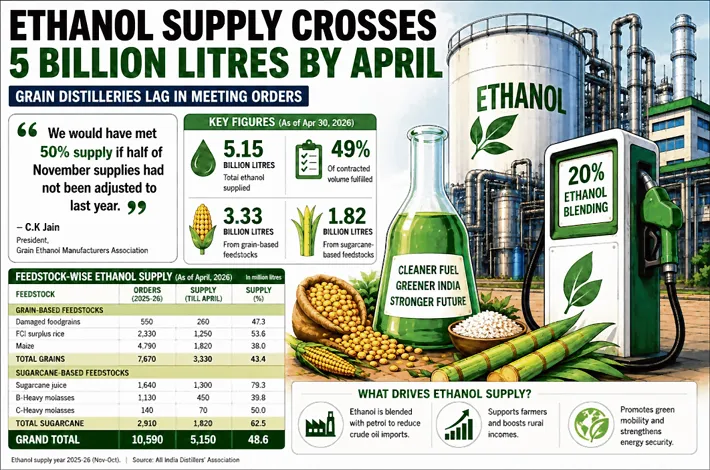
India’s ethanol supply to oil marketing companies crossed the 5-billion-litre mark by April in the current ethanol supply year, but grain-based distilleries are struggling to keep pace with supply commitments, highlighting operational and accounting challenges in the country’s ambitious blending programme.
According to data from the All India Distillers’ Association, distilleries supplied 5.15 billion litres of ethanol as of April 30, accounting for nearly 49% of the 10.59 billion litres contracted for the 2025-26 ethanol supply year, which runs from November to October. Of the total supplies, grain-based feedstocks contributed 3.33 billion litres, while sugarcane-based units supplied 1.82 billion litres. Despite supplying higher absolute volumes, grain-based distilleries fulfilled only 43% of their contracted orders of 7.67 billion litres.
In contrast, sugarcane-based distilleries achieved over 62% order fulfilment against contracted volumes of 2.91 billion litres. Industry executives attributed the shortfall partly to adjustments made by oil marketing companies during the initial months of the supply year.
A significant portion of ethanol supplied in November by grain-based distilleries was reportedly accounted against the previous supply year to bridge earlier shortages and operational gaps. Grain Ethanol Manufacturers Association President C.K. Jain said nearly half of the grain-based ethanol supplied in November had been adjusted to the previous year’s books.
Of the 636 million litres supplied during the month, around 310 million litres were carried forward to offset earlier deficits. Similar adjustments were also made for sugarcane-based ethanol, though on a much smaller scale. The supply trend also reflects the seasonal advantage enjoyed by sugarcane-based distilleries during the first half of the ethanol year, which coincides with the sugarcane crushing season. Availability of sugarcane juice and B-heavy molasses remains strong during this period, enabling faster deliveries.
However, industry experts expect sugar-based supplies to moderate in the second half of the year as crushing activities slow. Among grain feedstocks, ethanol produced from FCI surplus rice recorded the highest fulfilment level at nearly 54%, while maize-based ethanol lagged significantly at 38%. Damaged foodgrains achieved a supply rate of over 47%.
With the country already implementing 20% ethanol blending in petrol, industry participants are now awaiting fresh procurement tenders from oil marketing companies to accelerate supplies in the coming months.
(With inputs from Informist)