20 September, 2026 | 7:29 PM


‘Jalasiri’ program launched as water levels fall
25-07-2026 12:00:00 AM
Metro India News | NIRMAL
Nirmal district has recorded a nearly 50 per cent rainfall deficit during the June–July period this year. As a result, water levels in irrigation projects, tanks, wells and borewells have fallen sharply. Groundwater levels across the district have dropped to depths of 7 to 9 metres, compared with the normal range of 3 to 5 metres during years of adequate rainfall, according to officials. To tackle the worsening groundwater situation, the government has decided to implement the ‘Jalasiri’ program of the Telangana government across all 400 gram panchayats and Nirmal Municipality.
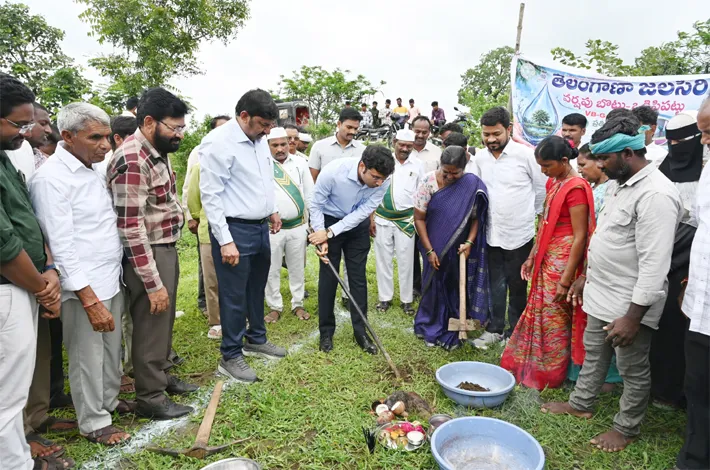
The campaign is built around the slogan of creating "one soak pit for every house, one village pond for every village, and one farm pond for every agricultural field." District Collector Bhavesh Mishra formally launched the Jalasiri programme on Thursday in Kubheer mandal. He inaugurated the construction of a farm pond in the agricultural field of a local farmer by performing traditional rituals before the commencement of the work.
As part of the programme, awareness campaigns are being conducted to ensure that wastewater flowing from hand pumps and overhead storage reservoirs is channelled into recharge pits instead of being allowed to go to waste. The irrigation, agriculture, electricity and District Rural Development Agency (DRDA) departments are jointly coordinating the implementation of the conservation works across the district. Village panchayats have also begun constructing soak pits at locations where wastewater from hand pumps accumulates, particularly at the outskirts of villages.
Officials believe that allowing wastewater to percolate into the ground will help replenish groundwater reserves and prevent further depletion. At the same time, electricity department has also cautioned farmers that excessive dependence on groundwater irrigation could lead to increased power consumption, potentially creating difficulties if electricity demand rises during the agricultural season.