17 October, 2026 | 12:35 AM


Kapra lake revival brings relief to residents
17-10-2026 12:00:00 AM
T P Venu I hyderabad
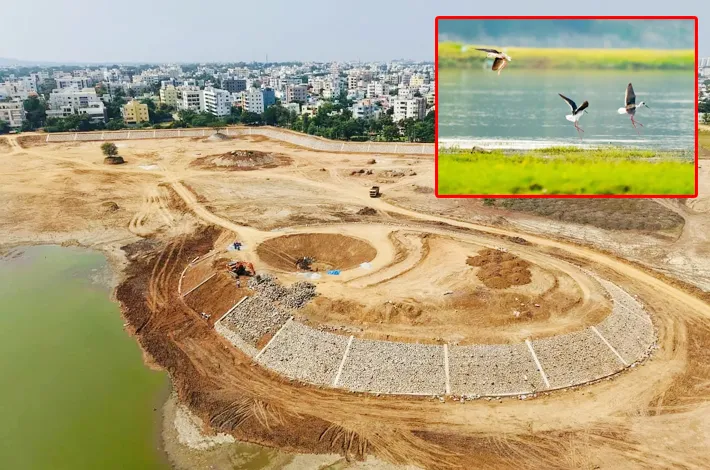
Residents living around Kapra Lake are heaving a sigh of relief as revival works gather pace, raising hopes of restoring the water body’s ecological balance. For the Kapra Lake Revival Group (KLRG), which has been campaigning to save the lake for a decade, the Hyderabad Disaster Response and Asset Protection Agency’s (HYDRAA) decision in February to revive it came as welcome news.
Ajita Maru, who has been at the forefront of the campaign, said the initial plans raised concerns among activists. “It brought us joy initially, but HYDRAA wanted to remove the water. We were able to convince them that Kapra Lake is one of the few wetland lakes in the country and attracts a number of birds,” she said.
For years, Kapra Lake had been used as a dumping ground for construction debris and for Ganesh idol immersion, putting pressure on its fragile ecosystem. Sandya Nair, a pathologist and resident of Sainikpuri, said the lake also held deep cultural significance for local communities.
“Kapra Lake is very dear to us as every year we perform Karkidaka ‘Vavu Bali’ rites in memory of departed souls,” she said.
Meena Ravindran of KLRG said residents had organised clean-up programmes for years to protect the lake. The ongoing revival works have brought considerable relief, particularly with the removal of around 400 truckloads of plaster-of-Paris (PoP) material left behind by Ganesh idol immersion.
In previous years, people travelled from as far as Patancheru to immerse idols at Kapra Lake. The restriction on huge idols this year marks a significant step towards reducing the environmental burden on the water body, she said.
HYDRAA has earmarked Rs 35 crore for the development of Kapra Lake, with more than 50 per cent of the work completed. HYDRAA Commissioner A.V. Ranganath said Kapra Lake is among 14 lakes being developed under the agency’s second phase of rejuvenation of water bodies in Hyderabad.
Home to 470 bird species
Kapra Lake attracts birds throughout the year, including migratory species arriving from distant regions such as Australia and Europe. Environmentalists believe its restoration could strengthen its role as an important habitat for avian life.
Deepa Shailendra said the lake’s return to its former glory would attract more birds and significantly improve the natural ecosystem.
Beyond biodiversity, the revival is expected to offer practical benefits, including flood mitigation, groundwater recharge and the restoration of aquatic life. For residents and environmental activists, the ongoing work represents renewed hope for a lake that has long been central to the neighbourhood’s ecological and cultural life.