30 September, 2026 | 9:37 AM


Karnataka Plans to go back to paper ballot for local body polls
08-09-2025 12:00:00 AM
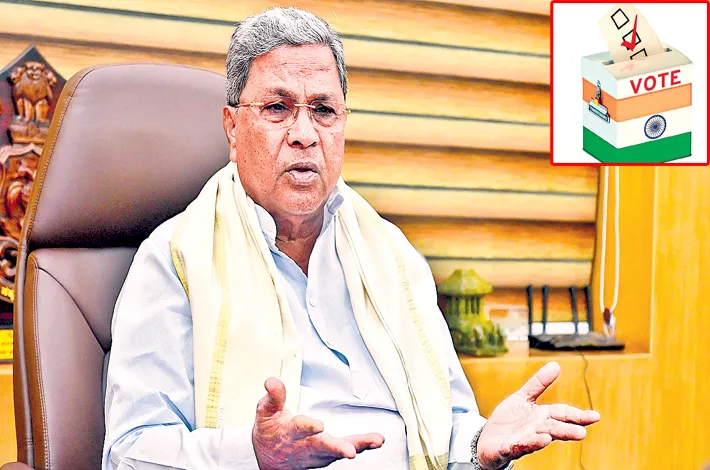
The cabinet has advised the State Election Commission (SEC) to prepare voter lists for these elections. The decision marks a departure from the use of EVMs, which have been the standard for Indian elections
Battle of the Ballot
- Paper ballots offer tangible benefits, such as direct voter verification and a physical vote record. However they come with significant drawbacks, including slower vote counting, potential for human error and the high cost and complexity of printing and managing millions of ballots.
- In contrast, EVMs provide faster results, reduce human error, and include technical security features to prevent manipulation. However, concerns about hacking and incomplete VVPAT implementation have fueled distrust.
- BJP accused the Congress of regressive policies driven by electoral losses, while Congress spokesperson countered that widespread distrust in EVMs, coupled with alleged discrepancies in past elections, necessitates a return to transparent methods.
- In the 2024 ADR vs. ECI case, the Supreme Court rejected a plea to revert to paper ballots, affirming that EVMs are secure, efficient, and user-friendly with no substantial evidence of manipulation.
In a significant move, the Karnataka state cabinet has recommended reverting to paper ballots for local body elections, citing a loss of public confidence in Electronic Voting Machines (EVMs). State Law and Legislative Affairs Minister HK Patil announced the decision, emphasizing that paper ballots would restore trust in the electoral system. The cabinet has also advised the State Election Commission (SEC) to prepare voter lists for these elections. The decision marks a departure from the use of EVMs, which have been the standard for Indian elections since their full implementation in the 2004 general election. India’s first elections in 1951-52 relied entirely on paper ballots, a practice that continued until the 1990s when EVMs were gradually introduced, starting with trials in Kerala in 1982. Congress leaders highlighted erosion of trust in EVMs as the primary reason for the shift. Critics of EVMs have raised concerns about potential hacking and insufficient Voter Verified Paper Audit Trail (VVPAT) implementation which allows voters to verify their votes. The Congress argues that paper ballots are familiar to voters of all ages and require no specialized technology.
Paper ballots offer tangible benefits, such as direct voter verification and a physical vote record. However they come with significant drawbacks, including slower vote counting, potential for human error and the high cost and complexity of printing and managing millions of ballots. In contrast, EVMs provide faster results, reduce human error, and include technical security features to prevent manipulation. However, concerns about hacking and incomplete VVPAT implementation have fueled distrust. In the 2024 ADR vs. ECI case, the Supreme Court rejected a plea to revert to paper ballots, affirming that EVMs are secure, efficient, and user-friendly, with no substantial evidence of manipulation.
However, the move has sparked debate. Critics, including the Bharatiya Janata Party argue that returning to paper ballots is regressive. BJP leader and former Chief Minister Jagdish Shettar called it “the worst decision taken by the Siddaramaiah government,” alleging it undermines the efficiency of EVMs, which reduce voting and counting times, minimize human error, and are environmentally friendly due to less paper use. He accused the Congress of attempting to revert to outdated practices to manipulate elections, referencing historical issues like booth capturing and electoral malpractices prevalent before EVMs. Another BJP spokesperson accused the Congress of regressive policies driven by electoral losses, while Congress spokesperson countered that widespread distrust in EVMs, coupled with alleged discrepancies in past elections, necessitates a return to transparent methods. Congress also cited significant vote mismatches in recent elections, including 5,54,598 uncounted votes across 362 constituencies and 35,93 excess votes in 170 constituencies, as evidence of systemic issues.
Karnataka State Election Commissioner confirmed the SEC’s readiness to conduct elections using paper ballots, noting that Karnataka’s aging EVMs need replacement. Deputy Chief Minister DK Shivakumar defended the decision, asserting the government’s legal authority to choose between EVMs and paper ballots. He dismissed BJP’s objections, questioning their concern and emphasizing the Congress’s belief in the ballot system. A senior journalist, suggested Karnataka’s decision could serve as an experiment to evaluate paper ballots’ efficacy. He noted that even BJP leaders had previously questioned EVM reliability and had even written books doubting the EVM system.
Congress leaders argue that Karnataka’s lack of a booth-capturing culture and modern surveillance could prevent law and order issues. However, critics warn of potential election fraud and inefficiencies, questioning whether the move signals a broader retreat from technological advancements. As Karnataka prepares for local body polls with paper ballots, the move raises critical questions: Is this a step toward transparency or a regressive policy? Will it inspire other states to reconsider EVMs, or could it revive old electoral malpractices? The debate continues as Karnataka tests a voting system from a bygone era.