5 October, 2026 | 6:25 AM


Kova Bun unites people
14-02-2026 12:00:00 AM
The Medaram Jathara Kova Bun Controversy Sparks Cross-Community Solidarity
In the biennial Medaram Jathara, Asia's largest tribal festival dedicated to goddesses Sammakka and Saralamma, draws millions of devotees every two years. Held from February 9 to 12, 2026, this year's event, attended by over 10 million pilgrims, was meant to celebrate tribal heritage, faith, and cultural unity. However, a seemingly minor incident involving a humble street vendor selling "Kova Bun"—a popular sweet bun stuffed with khova (thickened milk solids)—escalated into a statewide controversy that exposed communal tensions but ultimately showcased an inspiring wave of solidarity across caste, religion, and regional lines.
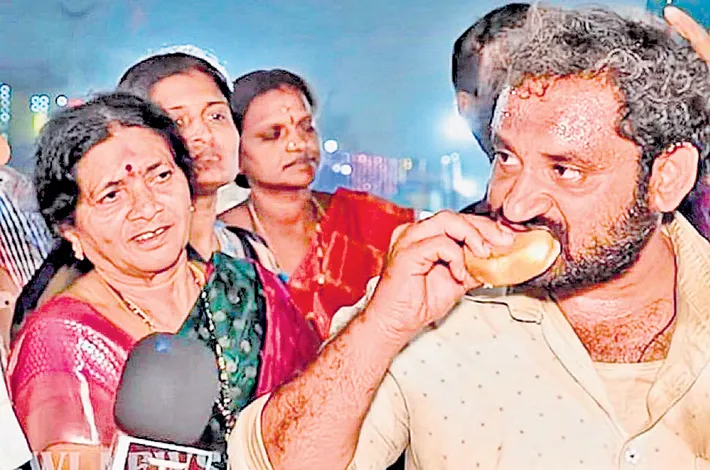
The episode unfolded on the bustling fairgrounds, where temporary stalls and mobile vendors cater to the throngs of visitors. A small-time trader from Kurnool, identified as a Muslim daily wage worker who travels on a bicycle or Luna moped to sell snacks at crowded events, had set up shop offering Kova Buns for just 20 rupees each, often sold in pairs. These affordable treats, similar to other street foods like panipuri, are prepared fresh daily and meant to be consumed quickly, without formal manufacturing or expiration dates typical of packaged goods. The vendor, whose livelihood depends on such seasonal sales—including spots outside government offices like the Telangana Secretariat—explained that ingredients like tamarind juice are reused across days, but the buns themselves are made anew each morning and sold out by evening.
Enter the self-styled YouTube journalists, a group of content creators who approached the vendor under the guise of investigative reporting. In a viral video that quickly amassed thousands of views, they bombarded him with pointed questions: "Where is the manufacturing date? The expiration date? The company address? Will these spoil in two days?" The interrogation didn't stop at product quality; it veered into threatening territory. Accusations flew that the buns were adulterated or unsafe, implying the vendor was "playing with people's lives." More alarmingly, the YouTubers injected a communal angle, reportedly stating, "Since you are Muslim, you are not eligible to sell here; we will call the police, tie you up, and beat you." This escalation transformed a routine vendor check into an alleged attempt at blackmail and harassment, with the creators seemingly aiming to generate sensational content by stoking religious divisions—a tactic some critics labeled as "food jihad," a term used in social media discourse to describe perceived religiously motivated food tampering.
The vendor's response was heartbreaking. Visibly distressed and unable to articulate detailed answers amid the pressure, he pleaded his case, emphasizing his honest, hand-to-mouth existence. "I sell wherever there's a crowd," he said in the video, his face reflecting helplessness as the interrogators pressed on. Witnesses and later reports described the scene as rowdy, with the YouTubers' behavior crossing into intimidation, far from journalistic ethics. Journalist Shiva Reddy of Signal TV Telugu, in a widely shared analysis, condemned the incident, pointing out the hypocrisy: Why target a vulnerable small trader when larger issues plague the fair, such as overpriced recycled jaggery sold at triple rates without MRPs, or unsanitary practices in big hotels and bakeries offering similar undated items like masala buns or egg puffs for 100-200 rupees? Reddy argued that true media responsibility involves addressing systemic wrongs without bullying the weak, and he highlighted how the episode diverted attention from government lapses in festival facilities.
What followed was a remarkable outpouring of support that transcended societal divides. Social media platforms, including X (formerly Twitter), erupted with condemnation of the YouTubers' actions. Users from diverse backgrounds—Hindus, Muslims, tribals, upper castes, and people from urban Hyderabad to rural Andhra Pradesh—rallied behind the vendor. Hashtags like #SupportKova BunSeller and #StopFoodJihad trended, with posts emphasizing humanity over division. One viral thread read: "This is not about religion; it's about a poor man earning a living. Shame on those exploiting faith for views." Political figures, activists, and ordinary citizens shared stories of similar street vendors, urging focus on real festival problems like overcrowding, poor sanitation, and even unrelated allegations of assaults at the event.
This unity was particularly poignant in a region often polarized by caste and religious lines. Tribal communities, the festival's core attendees, joined voices with migrants from other states, underscoring Medaram Jathara's ethos of inclusivity. Minister Dhanasari Anasuya (Seethakka), a local MLA overseeing the event, faced her own challenges but indirectly benefited from the public's shift toward empathy. Analysts noted that the backlash forced a broader conversation on "fake journalism," where YouTubers prioritize clicks over facts, often amplifying minor issues into communal flashpoints.
The controversy also sparked debates on food safety versus livelihoods. While some defended the need for quality checks, others argued that informal vendors shouldn't be held to corporate standards, especially at fairs where temporary setups are the norm. The vendor, in a follow-up interview, revealed shocking facts about his struggles, including low profits and constant mobility, evoking widespread sympathy. Calls for action against the YouTubers grew, with demands for police investigation into harassment claims.
In the end, the Kova Bun episode at Medaram Jathara became a symbol of resilience. What started as an attempt to divide through blackmail and prejudice ended in a powerful affirmation of unity. As one supporter posted on X, "In a world quick to hate, Telangana chose compassion." This incident reminds us that festivals like Medaram are not just about devotion but about bridging divides, proving that shared humanity can overcome orchestrated discord. As the dust settles, the vendor continues his trade, bolstered by a community that stood firm against injustice