30 September, 2026 | 10:51 AM


Maize gains on ethanol demand, wheat trades mixed across mkts
12-05-2026 12:00:00 AM
Procurement momentum improves nationwide as seasonal trade activity weakens amid fluctuating arrivals and export uncertainty
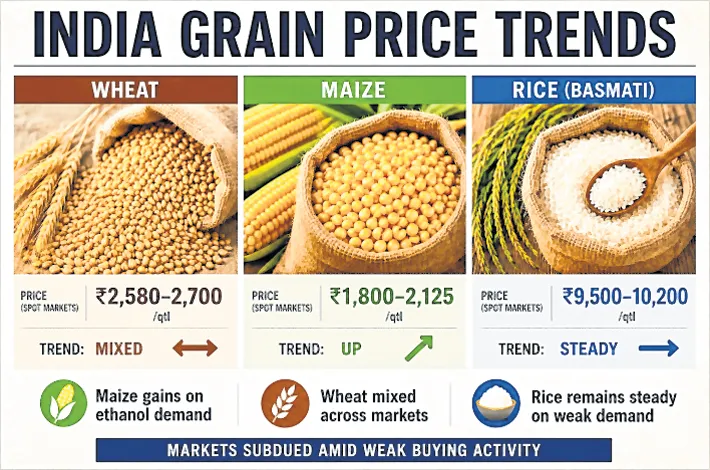
Wheat prices showed mixed trends across major Indian spot markets on Monday, while maize prices moved higher due to stronger ethanol sector demand and rice prices remained largely stable amid subdued market activity.
In Indore, Madhya Pradesh, wheat prices declined by ₹20 to ₹2,580 per 100 kg due to weak buying interest. Traders said several millers and buyers stayed away from the market because of the summer season and ongoing wedding-related travel.
However, government procurement of wheat continued to gather pace and is expected to surpass last year’s levels.
According to Food Corporation of India data, government agencies procured 27.67 million tonnes of wheat as of Thursday, only 3% lower year-on-year.
The procurement gap has narrowed sharply from late April due to strong buying in Punjab and Haryana. In the previous 2025-26 rabi marketing season, government procurement stood at 30.04 million tonnes.
A significant portion of the current procurement has taken place under relaxed quality norms following crop damage caused by unseasonal rains and hailstorms in March.
The government allowed farmers to sell wheat containing up to 15% shrivelled and broken grains, compared to the earlier limit of 6%. Meanwhile, wheat prices in Vashi, Navi Mumbai, remained steady at ₹2,700 per 100 kg. Traders expect muted market activity to continue till June, keeping prices range-bound.
Maize prices in Indore rose ₹25 to ₹2,125 per 100 kg. Traders attributed the rise to fluctuations in demand and arrivals. However, fresh arrivals from Bihar’s summer maize crop are expected soon, which may pressure prices in the coming weeks.
In Davanagere, Karnataka, maize prices increased by ₹30 to ₹1,800-₹2,050 per 100 kg. Demand from ethanol manufacturers amid higher ethanol blending targets supported prices.
Arrivals in the market also increased by 500 bags to 1,500 bags.Rice prices in Vashi stayed unchanged as domestic and export demand remained weak.
Traders said buyers had already stocked up on basmati rice earlier amid hopes of easing tensions in West Asia, but uncertainty in the region has kept fresh demand subdued.