21 September, 2026 | 12:37 AM


Mantras increasing lifespan- Myth or science?
21-09-2026 12:00:00 AM
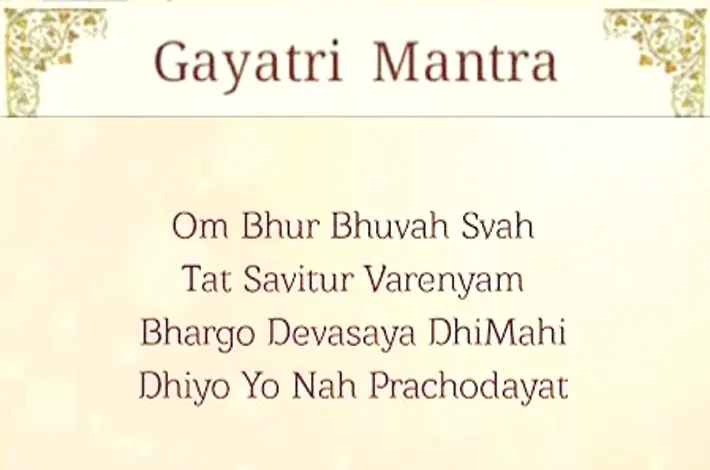
Metro India News | Hyderabad : Can ancient mantras add years to a human life? For many people the question sounds purely spiritual. Modern physiology, however, has spent decades studying something more concrete: the frequency of the voice, the rhythm of the breath, and the way both act on the nervous system. When those rhythms slow and stabilize, the body shifts from fight-or-flight toward rest, repair, and better heart-brain coordination. That is the scientific thread running through practices such as the Gayatri mantra, the Mahamrityunjaya mantra, and the long recitation of Om.
The Gayatri mantra, from the third mandala of the Rigveda, is traditionally described as a protector of those who recite it—from ignorance, fear, and life’s turbulence. Word by word it invokes Om, the three worlds (earth, mid-space, and the luminous realm), the inspiring solar principle Savitr, the radiance that burns away darkness, and a collective prayer: may that light guide our intellects. Unlike many personal petitions, it uses “nah”—ours—asking wisdom for all. Researchers in India, including teams associated with AIIMS and IIT Delhi, have examined chanting with EEG and related brain measures.
Long exhalation and vocal vibration stimulate it. The chemical messenger acetylcholine—once called “Vagusstoff” after Otto Loewi’s 1921 discovery—then slows the heart and widens vessels, turning on the “rest-and-digest” state. Slow, even breathing at about five and a half to six breaths a minute is the same resonant rate used in heart-rate-variability training. A well-known 2001 study in the BMJ by Luciano Bernardi showed that both yoga mantras and the Latin rosary naturally settle respiration near six breaths per minute and improve cardiovascular rhythms.
At that pace, one Gayatri recitation of roughly ten seconds fits six cycles a minute; one hundred and eight repetitions take about eighteen to twenty minutes. The Mahamrityunjaya mantra (“Tryambakam yajamahe…”) from the seventh mandala of the Rigveda is classically a prayer for protection of life. Low-frequency vocal vibration and reduced stress can ease chronic inflammation. Meditation research more generally has linked long-term practice with telomere maintenance and telomerase-related gene activity; attributing that specifically and uniquely to this one hymn overstates what trials have isolated.
None of this is sectarian. Mantra here is a biological tool: anyone who can pronounce the syllables clearly—women, men, children, elders—can use it. A quiet, well-ventilated place helps because the practice needs full, clean breath. Ten to fifteen minutes in the morning is enough to evoke what Herbert Benson called the relaxation response and to keep the nervous system from living all day in emergency mode. National brain-research and medical groups in India have described bio-acoustic resonance from rhythmic Vedic recitation; Italian work on mantra breathing remains one of the clearest demonstrations that the cadence itself is medicine.
Science has not proved that a syllable adds years the way a drug trial proves a molecule. It has shown that voice, breath, and attention can change the same systems that decide how hard the heart works, how inflamed the body stays, and how steadily the mind ages. In that narrower, measurable sense, the old claim that certain sounds protect life is no longer only a matter of faith.
-Dr. Anilkumar Tembareni, Hanumakonda