20 October, 2026 | 6:58 AM


Maya and the Mango Tree raja
08-08-2025 12:00:00 AM
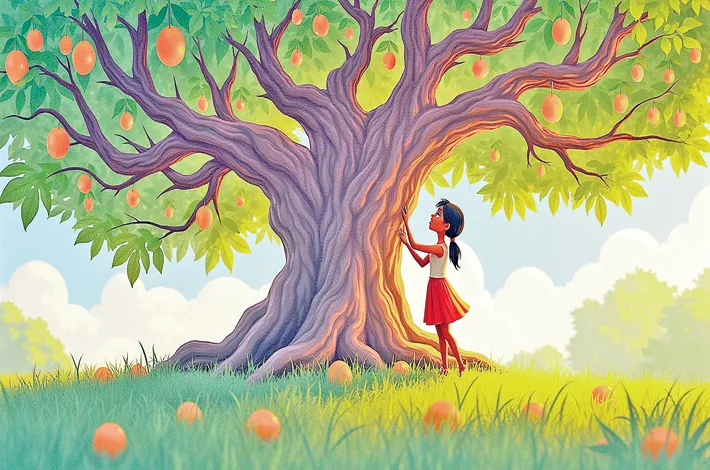
In a quiet village tucked away in the lush, green folds of Kerala, where coconut palms swayed like dancers in the breeze and the air smelled of rain and ripe jackfruit, lived a girl named Maya. She was ten years old, with eyes as bright as the morning sun glinting off the backwaters and a laugh that could make even the grumpiest mynah bird chirp along. Maya’s home was a small, tiled-roof house with a veranda where her Amma wove jasmine garlands, and her Appa mended fishing nets under the shade of a sprawling mango tree.
The mango tree was Maya’s kingdom. Its gnarled branches stretched wide, offering cool shade and sweet, golden fruit in the summer. She called it “Raja,” because it stood tall and proud, like a king watching over the village. Every afternoon, when the sun hung heavy and the village dozed, Maya would climb Raja’s branches, her bare feet gripping the rough bark. From the highest branch, she could see the glint of the river, the paddy fields swaying in the wind, and sometimes, if she squinted hard, the distant blue haze of the Western Ghats.
One monsoon morning, as rain pattered softly on the banana leaves, Maya noticed something peculiar. A tiny, shivering sparrow had taken shelter in Raja’s branches, its feathers ruffled and one wing drooping. Maya, who had a heart as big as the tree itself, couldn’t bear to see it suffer. She slipped on her rubber chappals, grabbed an old umbrella, and ran out to the tree.
“Hello, little one,” she whispered, peering up at the sparrow. “You’re safe here with Raja and me.” The sparrow blinked at her, its eyes like tiny black beads. Maya decided to name it Chinnu, because it was small and delicate, like the tinkling bells on Amma’s anklets.
Getting Chinnu down wasn’t easy. The rain made the branches slippery, and Maya’s frock kept catching on twigs. But she was determined. She climbed carefully, humming a tune her grandmother used to sing about a clever crow and a cunning fox. When she reached Chinnu, she gently cupped the sparrow in her hands, feeling its tiny heart flutter against her palms. Back on the veranda, she made a nest from an old biscuit tin, lining it with soft cotton from Amma’s sewing basket.
“Amma, Chinnu’s hurt!” Maya called, bursting into the kitchen where her mother was stirring a pot of sambar. Amma’s eyes softened as she saw the sparrow. Together, they cleaned Chinnu’s wing with warm water and tied a tiny splint using a matchstick and thread. Appa, who had been listening to the radio, chuckled. “You’re a proper doctor now, Maya,” he said, ruffling her hair.
For days, Maya tended to Chinnu. She fed it bits of soaked rice and whispered stories about Raja, the mango tree, who she swore could listen. “Raja’s seen everything,” she told Chinnu. “He’s been here longer than Appa’s Appa. He knows when the rains will come and when the fish will swim close to the shore.” Chinnu seemed to listen, its head cocked to one side.
As the monsoon faded and the sun returned, Chinnu’s wing grew stronger. One morning, Maya woke to find the sparrow hopping around the veranda, testing its wings. Her heart swelled with pride, but a tiny ache tugged at it too. She knew Chinnu would soon fly away, back to the wide sky and the other sparrows that chirped in the paddy fields.
That afternoon, as Maya sat under Raja, eating a juicy mango, Chinnu fluttered to her shoulder. “You’re ready, aren’t you?” she said, her voice wobbling. She opened her hands, and Chinnu took off, circling Raja’s branches before soaring toward the river. Maya watched until it was a speck against the blue sky, her eyes stinging with tears. But then she smiled, because Raja’s leaves rustled as if to say, “You did well, Maya.”
Life in the village went on. The fishermen returned with their nets full of silver fish, the temple bells rang at dusk, and the air filled with the scent of Amma’s jasmine garlands. But Maya felt a little empty without Chinnu. She spent more time with Raja, telling him about her day, about the new calf at the neighbor’s house, and the funny things her friend Vimala said at school.
One evening, as the sky turned the color of ripe guavas, Maya noticed something new in Raja’s branches. A nest, no bigger than a coconut shell, woven from twigs and grass. And there, perched proudly, was Chinnu, with two other sparrows beside her. Maya gasped, her heart leaping like a fish in the river. “Chinnu, you came back!” she cried, clapping her hands.
From then on, Chinnu’s family made Raja their home. Every morning, Maya would wake to their cheerful chirping, and she’d climb the tree to check on them, her laughter echoing through the village. Raja, the old mango tree, seemed to stand a little taller, as if proud to shelter Maya’s friends.
Years later, when Maya was grown and had children of her own, she’d bring them to the same mango tree, now even older but still strong. She’d tell them about Chinnu, the sparrow who taught her that love means letting go, but also that the things you love often find their way back. And as the children listened, wide-eyed, Raja’s leaves would rustle softly, as if sharing the story too, in the quiet, timeless way of the trees that watch over the villages of South India.