7 September, 2026 | 10:34 AM


OBCs under-represented despite majority, says Ex-DGP
13-07-2026 12:00:00 AM
Metro India News | CHENNAI
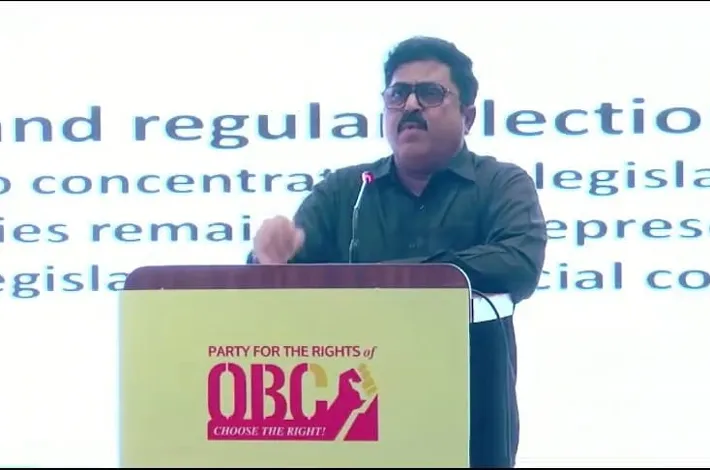
Former Director General of Police and social justice advocate Dr. J. Purnachandra Rao, IPS (Retd.), has alleged that India faces a serious "representation deficit" in its legislatures, with Other Backward Classes (OBCs) and several socially disadvantaged communities remaining under-represented despite constituting a majority of the population.
Speaking at a symposium on the "Importance and Ramifications of Caste Census on OBC Communities", organised by the Party for the Rights of OBCs (PFROBCs) at EN Shesha Mahal in Royapettah, Dr. Rao said political representation in several States was concentrated among a few dominant communities.
Referring to Andhra Pradesh, he claimed that the Reddy and Kamma communities, together making up around 8% of the population, held 62 of the 175 Assembly seats, while Backward Classes, accounting for nearly 52% of the population, had only 40 MLAs. Citing data from the last 16 Assembly elections, he said members of the two communities won 1,207 of the 2,903 Assembly seats, whereas BCs secured only 498 seats. He further claimed that more than 100 BC communities had never been represented in the State Assembly.
Drawing a comparison with Telangana, Dr. Rao alleged that the combined representation of the Reddy, Velama and Kamma communities was disproportionately higher than their population share, while BCs remained significantly under-represented. He also expressed concern over the lack of political representation for BC Muslims despite their sizeable population.
Describing India's political system as a "half democracy", Dr. Rao said women, OBCs, Muslims and several other disadvantaged communities continued to have inadequate representation in Parliament and State legislatures. He said democracy would become truly representative only when legislative institutions reflected the country's social composition more equitably.
Calling for greater political mobilisation, he urged OBC organisations to build independent communication networks, digital platforms and leadership institutions instead of relying solely on mainstream media.
Earlier, speakers at the forenoon session called for a coordinated nationwide democratic movement demanding that the Union Government provide a separate caste code for OBCs in the second phase of the ongoing Population Census to generate authentic caste-wise data for policymaking. The meeting was presided over by V. Rathna Sabapathy, Founder and President of PFROBCs. Speakers included Dr. Suraj Yadav, Ashok Vardhan Shetty, IAS (Retd.), and Gowd Kiran Kumar, who said a separate caste code was essential for accurate enumeration of backward communities in the Census.