3 October, 2026 | 8:23 AM


OU in freefall
03-04-2026 12:04:31 AM
- Foreign student enrolment has also drops to 10 per cent
- Curriculum revisions in 43 depts pending
- Contract and part-time faculty now outnumber regular staff
- Rankings slipped from 38th position in 2017 to 64th in 2023
metro india news I hyderabad
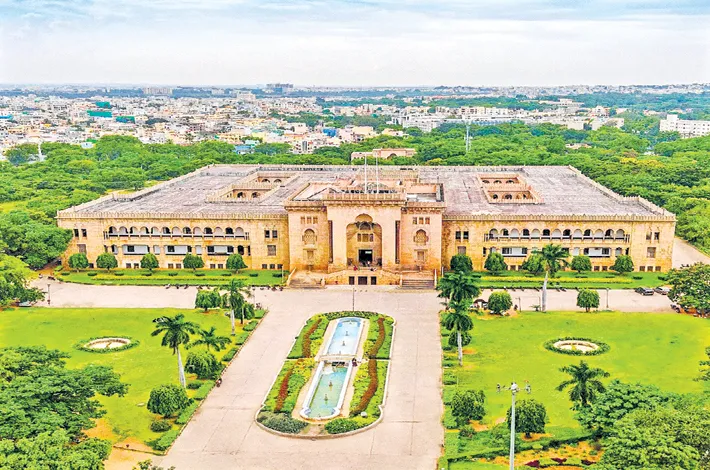
Osmania University, once a symbol of academic excellence, is now grappling with a deepening crisis, as serious lapses in planning, staffing, and research have begun to erode its standing. A recent audit by the Comptroller and Auditor General of India has flagged declining standards, poor implementation of institutional plans, and a consistent fall in national rankings.
Despite preparing a Vision Document in 2018, the university failed to translate it into a time-bound action plan by 2023, missing key academic and administrative targets. Foreign student enrolment has also dropped sharply, far below the ambitious 30 per cent target. Financially, the university continues to depend heavily on state government funding, with minimal progress in generating internal resources.
Academic governance has weakened over time. Key bodies such as the Academic Senate and College Development Council have not functioned effectively, while delays in forming the Finance Committee have hampered decision-making. Curriculum revisions in as many as 43 departments remain pending, impacting the quality of education. Infrastructure gaps persist, including inadequate hostel facilities and incomplete development works. Research output has also suffered due to delays and underutilisation of grants.
Speaking to Metro India, Dr. Manchala Lingaswamy, Assistant Professor (Part-Time), expressed concern over the situation, stating that the absence of proper recruitment for over a decade has severely impacted academic quality.
He pointed out that contract and part-time faculty now outnumber regular staff, while many permanent faculty members are tied up in administrative duties. Frequent syllabus changes with each Vice-Chancellor and the lack of industry-oriented courses are affecting student outcomes and employability.
Data reveals the scale of the crisis. Faculty vacancies increased from 26 percent in 2017 to 38 percent in 2021, while non-teaching staff shortages touched 34 percent by March 2023. Of the 1,267 sanctioned posts, 936 remain vacant. Rankings have slipped significantly—from 38th position in 2017 to 64th in 2023—and from 23rd to 36th among universities nationwide. Delays in research projects have further impacted innovation and patent output.
A senior faculty member noted that international student strength has now dropped to nearly 10 percent. He stressed the need for substantial investment, including Rs 1,000 crore for infrastructure, alongside stronger focus on research and academics.
Echoing similar concerns, RL Murthy of the Telangana Unemployed JAC said recruitment has been largely ignored, with only about 30 percent of faculty holding permanent positions. He alleged that continued neglect of state universities benefits private institutions. Research scholars, he added, face financial strain, spending up to Rs 5–6 lakh on PhDs with limited institutional support.
Experts warn that without urgent reforms, including recruitment, dedicated research funding, fellowships of at least Rs 25,000, and a separate budget for state universities, Osmania University risks a deeper decline and could lose its historic legacy.