14 October, 2026 | 6:18 PM


Plea to uphold constitutional morality
02-03-2026 12:00:00 AM
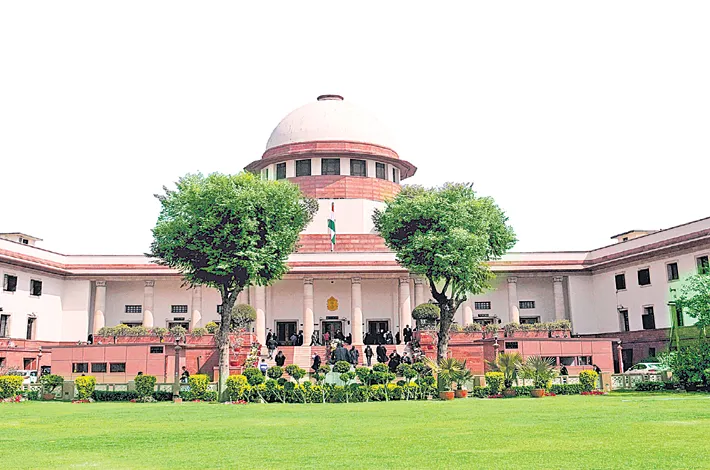
Impleadment application in Supreme Court
In a significant development before the Supreme Court of India, Dr. Namburi Kanakadurga, a 66-year-old leader representing the Telangana Tiruppan Alwar Ammal (SC/ST) Devotional Community, has filed an application for impleadment as a Party Petitioner. Dated February 26, 2026, this plea pertains to the ongoing Review Petition (Civil) No. 3358 of 2018, arising from the landmark Writ Petition (Civil) No. 373 of 2006, titled Kantaru Rajeevaru vs. Indian Young Lawyers Association & Ors. The case is being heard by a Nine-Judge Constitution Bench, which is deliberating on profound questions related to religious freedom and denominational rights under the Indian Constitution.
The original petition stems from the contentious Sabarimala temple entry judgment delivered on September 28, 2018, which has sparked debates on the balance between individual rights and traditional religious practices. The Bench has framed seven key constitutional questions, including the scope of freedom of religion under Article 25, the interplay between Articles 25 and 26, and the locus standi of non-members to challenge religious practices through Public Interest Litigation (PIL). However, Kanakadurga's application focuses narrowly on Question (iv): the scope and extent of the term "morality" under Articles 25 and 26, and whether it encompasses "constitutional morality.
"As the President of the Tiruppan Alwar Ammal Community, Kanakadurga positions herself as a guardian of Hindu Deity rights and denominational autonomy. She argues that her community holds a historic "motherly duty" (Ammal duty) to protect these rights, drawing from their SC/ST heritage and past struggles for temple entry. The community, she claims, was granted access to temples through the grace of Deities like Shri Padmanabha Swamy, and has since engaged actively with constitutional authorities.
It flows into the Constitution through Articles 26 (protecting denominational rights) and 363 (barring judicial interference in pre-Constitutional treaties and covenants with princely states like Travancore).Kanakadurga contends that Dharma governs both rulers and the governed, encapsulated in the phrase "Dharmam Kshatrasya Kshatram." She criticizes the Sabarimala judgment for disrupting this equilibrium by overlooking these binding limits. In her view, constitutional morality is not an abstract notion but a fidelity to solemn pledges that restrict judicial review and legislative interference in religious matters.
She warns that without recognizing this, religious denominations aiming to eradicate Deity worship could misuse Article 26 protections, undermining national unity and fraternity. The application draws heavily on historical and doctrinal sources to bolster these arguments. Key references include the Instrument of Accession of princely states, where Ruler Deities like Shri Padmanabha Swamy accepted constitutional limits, and the 1993 Kanchi Mahaswami Souvenir, which details Sri Kanchi Kamakoti Paramacharya's role in drafting Article 26 to include protections for sub-sects.
Kanakadurga also invokes scholarly works, such as articles on Rama Rajya as part of the Constitution's basic structure, and judicial observations from cases like Atul Mishra v. Union of India, which affirm fraternity as a constitutional dharma.In a broader context, Kanakadurga links constitutional morality to the principle of "One Earth, One Dharma, One Family, One Future," emphasizing civilizational continuity. She argues that this morality reflects India's unique constitutional framework, distinct from systems like Pakistan's Article 2A, which incorporates theological sovereignty.
By preserving these boundaries, she asserts, the Constitution upholds religious freedom while ensuring dignity, unity, and integrity—core values threatened by overreach in religious governance. The application's annexures provide robust support, spanning 135 pages. These include articles like "Constitution, Dharma, and the Sacred Land of Shri Rama" (Annexure A1), excerpts from the Kanchi Mahaswami Souvenir (A2), and a series of letters to high officials (A3–A13). Other materials feature book excerpts from Case for Ram (A14), notes on correcting the Sabarimala judgment via Article 143 reference (A15), and editorials from outlets like PGurus and VAK (A16–A18).
These documents underscore the community's consistent advocacy and the historical underpinnings of their claims. The implications of this Bench's decision extend far beyond Sabarimala, potentially reshaping the governance of religious institutions, including major public temples. Kanakadurga stresses that a proper interpretation of morality must reinforce limits on judicial review, preventing erosion of denominational autonomy and pre-Constitutional arrangements under Article 363. She highlights the risk of destabilizing the constitutional order if these principles are ignored, advocating for answers that prioritize fraternity and national harmony.
A timeline of events illustrates the application's historical depth: from the 1947 Objectives Resolution and 1947 government assurances, through the 1950 Constitution's enforcement, to the 2018 Sabarimala judgment and recent milestones like the 2024 Constitutional Pranaprathishta of Shri Ram Lalla. Key community actions include letters from 2021 onward and support from ancient royal families, culminating in the February 26, 2026, filing.In her final prayer, Kanakadurga seeks limited impleadment to assist the Court, requesting at least one hour to present submissions aligned with the Objectives Resolution, Preamble, and Articles 26 and 363.
She urges the Bench to interpret morality as Constitutional Morality (Dharma), a binding force that safeguards Deity rights and promotes a cohesive national fabric. This intervention, she argues, is essential to restore and preserve the Framers' vision of a righteous constitutional order.