14 October, 2026 | 5:24 PM


The Bengal battle- which direction is the voter’s mood?
02-03-2026 12:00:00 AM
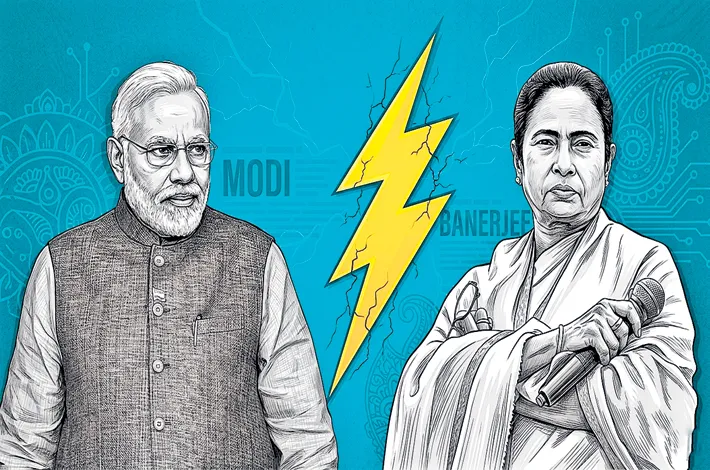
The upcoming West Bengal Legislative Assembly elections, scheduled for April–May 2026, are shaping up to be a high-stakes contest in one of India's most politically vibrant states. With Chief Minister Mamata Banerjee and her Trinamool Congress (TMC) aiming for a fourth consecutive term, the race pits her against the Bharatiya Janata Party (BJP), which has been steadily building its presence since dramatically increasing its seats from 3 to 77 in 2021. The discussion about the polls has to take into consideration the charged atmosphere in West Bengal, describing Banerjee as one of the most feisty opposition leaders nationally. Some voices even suggest Mamata Banerjee could emerge as the face of the INDIA alliance to challenge Prime Minister Narendra Modi.
A professor of political science in a university of West Bengal emphasized that Banerjee remains central to the election narrative, particularly in rural Bengal. He noted her recent Supreme Court appearance—dressed in her signature gown—created strong optics of resisting the BJP. Organizationally, the TMC still holds an edge in political mobilization, aided by phenomena like "post-SIR" developments (referring to the Special Intensive Revision of electoral rolls, a contentious issue in early 2026). The BJP, he argued, lacks strong ground-level strength despite national backing.
A columnist offered a contrasting view, critiquing Banerjee's brand of politics as built on "buffoonery" and volatile reactions that would "cancel" others but somehow normalize for her. Drawing from personal visits to Kolkata, he described a shift: in 2021, people avoided political talk out of fear, but recently, many openly expressed desire for change. He pointed to visible BJP flags and rallies in parts of the city, suggesting growing support for the BJP, potentially at the expense of Banerjee's base, including some Muslim voters exploring alternatives.
An author countered this sharply, arguing that West Bengal voters often mislead pollsters or outsiders about preferences due to a long-standing culture of caution. Opinion polls frequently falter here because people conceal true intentions. He dismissed claims of BJP strength, noting the party's reliance on Modi-centric campaigns—such as songs featuring Modi speaking Bengali—rather than a prominent local Bengali face. Banerjee, he said, has masterfully positioned herself since 2019 as "Bengal's daughter," defending Bengali pride and identity against perceived threats. Her narrative frames her as protecting Bengal's rights, evident in Supreme Court arguments.
On alternatives to Banerjee is one topic debated fiercely. The Professor highlighted BJP's organizational weaknesses and lack of a credible state face, noting faded euphoria from 2021 when many hoped for change. Issues like post-poll violence then boosted TMC, but now anti-incumbency lingers. Minority votes, particularly Muslim (over 27% of the population), show discontent over OBC reservation changes, Waqf issues, and Banerjee's recent "soft Hindutva" moves—like temple projects and support for puja committees. Emerging forces like the Indian Secular Front (ISF) could dent TMC in south Bengal districts, he opined.
A pro BJP section of Bengali media pushed back, insisting the appeal lies in Modi's national governance model—development, anti-corruption —over local faces, as seen in BJP successes elsewhere without declared CM candidates. They argued Banerjee's "crass" style lacks Bengal's cultural refinement, and voters seek national-level change. Another section however reinforced that Bengal politics thrives on personality cults, from Jyoti Basu to Buddhadeb Bhattacharjee to Banerjee herself. Voters accept her theatrical style—consistent since the 1970s—as "normal" for her. Anti-incumbency exists, but without a viable alternative vision from BJP (e.g., no concrete industrial promises at Singur rallies), people stick with the known.
The minority vote emerged as a flashpoint. Many politicians and political observers agreed Muslims remain wary of BJP due to border-state fears, NRC-CAA echoes, and Banerjee's framing: vote TMC or risk BJP rule. It was also opined that smaller parties may split votes but lack power to win, likely consolidating support behind Banerjee to block BJP. On women's votes—where women outnumber men in turnout—panelists credited TMC schemes like Lakshmir Bhandar (cash transfers) and scholarships, plus Banerjee's "Didi" image connecting emotionally as an everyday protector despite corruption allegations and goonda raj complaints.
In conclusion, diverse views were reflected: some see genuine vulnerability for Banerjee amid anti-incumbency and voter deletions from SIR; others view her hold as firm due to fear-based consolidation, welfare appeals, and BJP's shortcomings. As the 2026 polls approach—with recent electoral roll revisions adding fresh controversy—the debate underscores Banerjee's enduring, polarizing presence in Bengal politics. Whether she retains her turf or faces a tougher fight remains one of the election's central questions.