22 September, 2026 | 12:44 PM


Rahul Gandhi's global outreach: Insights from Sam Pitroda
27-12-2025 12:00:00 AM
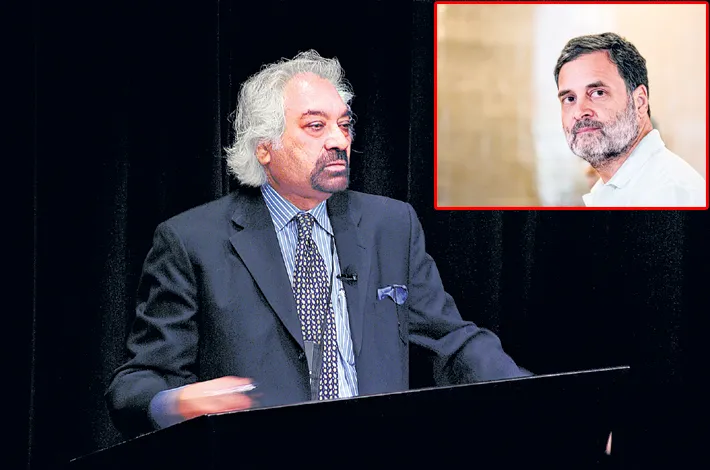
In a revealing exclusive interview with a private news channel, Sam Pitroda, the Chairperson of the Indian Overseas Congress, offered a staunch defense of Rahul Gandhi's recent visit to Germany amid the ongoing Winter Session of Parliament. Conducted on December 25, 2025, the conversation delved into the intricacies of international diplomacy, the state of Indian democracy, and pressing global issues. Pitroda, a telecom inventor and seasoned policy maker, emphasized the importance of such engagements in fostering a broader perspective for India's future.
Rahul Gandhi's absence from the Winter Session has drawn sharp criticism from political opponents, who accuse him of prioritizing foreign trips over parliamentary duties. Pitroda counters this narrative by explaining the logistical realities of international engagements. "These foreign tours are planned three to four months in advance," he stated, noting that they involve meticulously scheduled meetings with world leaders, universities, and think tanks.
The primary objective of Gandhi's Germany visit was to participate in a meeting of the Progressive Alliance—a coalition of democratic parties from approximately 110 countries. As a member of the presidium, Gandhi represents the Indian National Congress, which Pitroda proudly describes as "the largest democratic party in the world." Pitroda himself serves on the board, underscoring the deep ties between the Congress and this global network.
The timing, Pitroda argues, is not easily adjustable. With ongoing events in India—such as parliamentary sessions—and global calendars packed with summits, rescheduling is impractical. He draws a parallel to how international commitments cannot be derailed by domestic schedules, much like how world leaders juggle multiple fronts. This defense paints Gandhi not as an absentee leader but as a proactive statesman building bridges abroad.
In an era where isolationism threatens multilateralism, such visits are essential for India to assert its role on the world stage. Pitroda's perspective invites reflection on whether Indian politics should evolve to accommodate global responsibilities, especially for opposition figures like Gandhi who lack executive power but wield significant influence.
Truth without borders
One of the most contentious aspects of Gandhi's international appearances is his candid critique of domestic issues. During his Germany trip, Gandhi reportedly claimed that the Bharatiya Janata Party (BJP) is "capturing institutions" and launching a "full-scale assault on democracy" by weaponizing them. Critics label this as anti-India propaganda that tarnishes the nation's image abroad. Pitroda dismisses these accusations emphatically: "Truth is truth; there are no double standards." He insists that the same concerns—about institutions being captured, media manipulated, and civil society undermined—are voiced both at home and abroad. For Pitroda, consistency in messaging is a hallmark of integrity, not disloyalty.
Pitroda also addresses baseless claims that Gandhi met with "anti-India" figures allegedly funded by George Soros. Labeling these allegations as "nonsense," he clarifies that interactions occur at neutral venues like universities, without vetting every attendee's affiliations. More alarmingly, Pitroda confirms instances of government surveillance on Gandhi during his foreign trips. In Germany and the United States, embassy officials have reportedly discouraged certain meetings, a practice Pitroda views as an overreach that stifles open dialogue.
Shifting to economics, Pitroda criticizes the concentration of power in the hands of a few conglomerates, naming Adani and Ambani as examples of monopolies exacerbating income inequality. He links this to global trends, where wealth disparities fuel social unrest. China's manufacturing hegemony, he notes, poses a threat that democratic nations must address collaboratively. By advocating for joint production efforts, Pitroda envisions a realigned global economy that prioritizes equity and sustainability over dominance.
On regional matters, Pitroda touches on Bangladesh, emphasizing non-violence and cautious diplomacy. As a regional leader, India must foster good neighborly relations, he argues, without interfering unduly. This balanced approach reflects his development thinker background, prioritizing long-term stability over short-term gains.
A segment of the interview addresses violence against minorities, including attacks on Christians during Christmas celebrations. Pitroda laments that such incidents "tarnish" India's image globally, stemming from a failure to promote true democracy and empowerment through technology. He criticizes leadership that seeks control rather than inclusivity, arguing that these acts are universally disliked and undermine India's soft power.
Collective leadership
Defending Gandhi's leadership style, Pitroda stresses that decisions in the Congress are collective, involving debates without authoritarianism. This contrasts with what he sees as top-down approaches in other parties. Looking ahead, he affirms that foreign tours will continue, as global dialogues on democracy and institutions are vital for India's progress.
Pitroda's vision is clear: India must embrace honest conversations and international collaboration to emerge as a confident leader. As he aptly puts it, "Indian democracy is a global public good," and its preservation benefits the world. This episode reminds us that true patriotism lies in constructive critique and proactive diplomacy, not blind allegiance.