16 August, 2026 | 3:37 AM


‘Urban Naxal influence seen in Education Policy Draft’
11-03-2026 12:00:00 AM
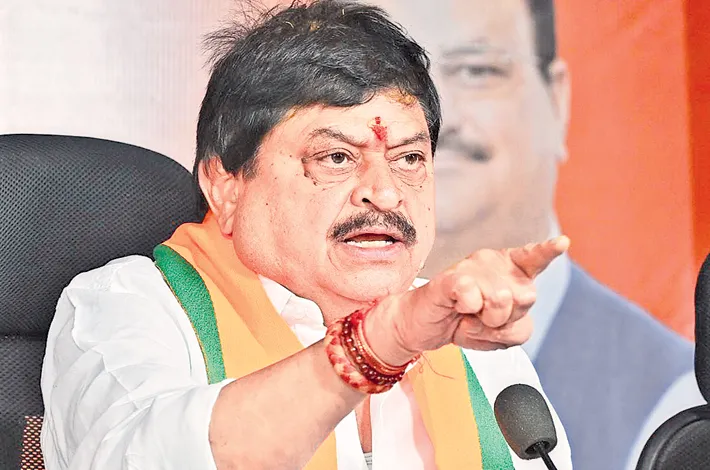
BJP State President N Ramchander Rao stressed that any new education policy in Telangana must primarily focus on increasing literacy and guiding students towards higher education, while expressing serious concerns over the direction of the proposed Telangana Education Policy 2026.
He was speaking at a round table conference on “Telangana Education System 2026” organized by the Forum for Nationalist Thinkers at the PGRRCDE Mini Conference Hall in Osmania University. The conference brought together educationists, public representatives, student leaders and experts to discuss key issues related to the state’s education system and the policies being pursued by the Congress government.
Ramchander Rao said the State Education Commission had recently submitted a draft for the proposed Telangana Education Policy and the government appeared keen to implement it. However, he alleged that the commission constituted by the Congress government was dominated by individuals with what he described as Urban Naxal and Maoist ideological leanings.
According to him, entrusting such individuals with the responsibility of preparing the Telangana Education Policy 2026 report raises serious concerns about attempts to impose Left oriented ideological influence on students. He said the government’s decisions in this regard could adversely impact the future of students.
He said a sound education policy must focus on improving literacy rates, strengthening the school system and ensuring access to higher education. However, he claimed that the education sector which was neglected during the previous BRS government continues to face challenges under the present Congress administration as well.
Rao pointed out that despite the presence of qualified BEd trained teachers in the state, adequate employment opportunities are not being created for them. He also raised concerns over delays in salary payments and promotions for teachers, stating that such issues are demoralizing the teaching community.
Highlighting structural problems in the system, he said government schools in rural areas are facing closures and many institutions lack basic infrastructure. He noted that in every district there are government schools with either no students or fewer than ten students.
He also alleged that the number of functional government schools has declined sharply from 5021 during 2024 to 25 to around 2023 at present. He held the state government responsible for the decline in the education system and also referred to the deaths of 44 students in Gurukul schools due to food poisoning, calling it a serious administrative failure.
Rao said that the National Education Policy 2020 and the Right to Education Act provide clear and constructive guidelines for improving the education sector. He urged the state government to align its policies with these frameworks.
He also demanded that the policy give priority to the mother tongue and reflect Indian cultural values. Strongly opposing any move to remove Sanskrit from the curriculum, he described it as an ancient language deeply rooted in Indian heritage. He also objected to suggestions regarding the abolition of Gurukul institutions run by the Tribal Welfare Department and criticized reports about cutting teacher salaries to fund infrastructure.
Former Osmania University Vice Chancellor Prof T Tirupati Rao said that instead of strengthening the education system, some recommendations of the commission appeared to be creating confusion within the public education framework. He also pointed out that around 80 percent faculty positions in state universities remain vacant and called for immediate recruitment to fill these posts.
Former Telangana State Council for Higher Education Chairman Prof R Limbadri said the commission’s report lacked clear objectives and several aspects require immediate revision. Emphasizing the importance of teachers in nation building, he said the National Education Policy formulated by the Central government should be implemented in the state without delay.