21 September, 2026 | 4:55 PM


Rain deficit hits Warangal paddy cultivation hard
15-07-2026 12:00:00 AM
Metro India News | MAHABUBABAD
The looming impact of El Niño and a prolonged rainfall deficit have cast uncertainty over the kharif season across the erstwhile Warangal district, with paddy cultivation suffering the most. Farmers who have already raised paddy nurseries are anxiously waiting for rains, while many others have prepared their fields but are unable to begin transplantation due to inadequate moisture.
The erstwhile Warangal region, comprising Mahabubabad, Warangal, Hanamkonda, Mulugu, Jayashankar Bhupalpally and Jangaon districts, normally receives around 350 to 400 mm of rainfall during June and July. Of this, nearly 130 mm is usually recorded in June, while July receives about 230 to 250 mm. However, officials said the region has received only 115 to 125 mm of rainfall from June 1 till date, leaving a significant rainfall deficit.
Unlike paddy, the cultivation of most other crops has remained close to normal levels. Farmers intending to cultivate paddy have already raised nurseries, while some have ploughed and prepared their fields in anticipation of rains. Others continue to wait for favourable weather before taking up transplantation.
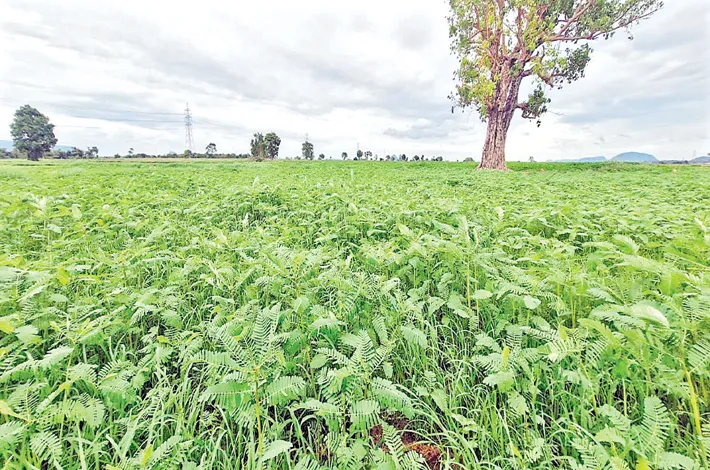
In areas dependent on major irrigation tanks, several farmers have sown green manure crops to improve soil fertility and retain soil health until adequate rainfall allows paddy transplantation. The impact is visible across Mahabubabad, Warangal, Hanamkonda, Mulugu, Jayashankar Bhupalpally and Jangaon districts, where paddy cultivation is far below the expected level. In Mahabubabad district alone, crops are planned over about 4.5 lakh acres, including more than 2 lakh acres under paddy. However, only around 16,000 acres have been brought under paddy cultivation so far. Overall, crops have been sown in nearly 1.3 lakh acres, including around 83,000 acres under cotton.
Agriculture Department officials warned that El Niño could further affect paddy cultivation if rainfall remains below normal. They have advised farmers to cultivate short-duration crop varieties, reduce water-intensive paddy wherever possible and shift to drought-tolerant alternative crops to minimise losses during the season.