24 October, 2026 | 8:34 PM


Rare Stone Age Rock art, dolmens found in Mulugu Hills
03-07-2026 12:00:00 AM
EKALAVYA MALLEPALLI I hyderabad
A new archaeological exploration in the hills of Mulugu district has uncovered rare prehistoric rock paintings and megalithic dolmens, shedding fresh light on Telangana's ancient past. The findings provide valuable evidence of human habitation spanning from the Middle Stone Age to the Megalithic period.
The discoveries were made by local youths Gaddam Kranthi Kumar and Tati Sambasiva Rao Dora, members of the Public Research Institute for History, Archaeology and Heritage (PRIHAH), under the guidance of Dr. M A Srinivasan, General Secretary of PRIHAH and Assistant Professor at Suravaram Pratap Reddy Telugu University.
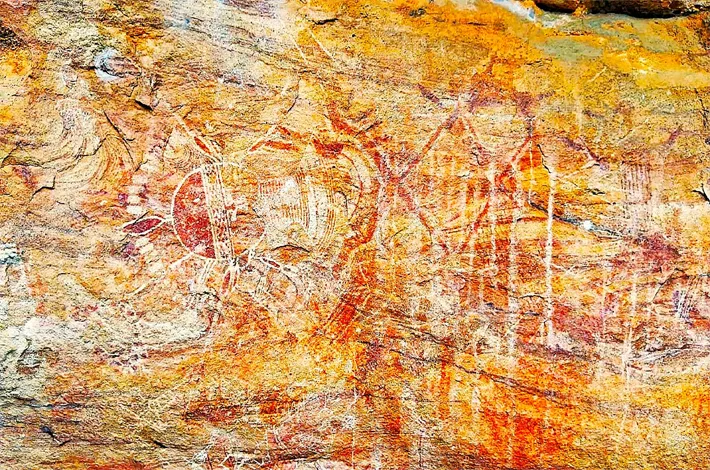
The rock art was found at Moddu Gutta, Darvajala Gutta and Nemali Gutta, located about 30 km from Mulugu town in the Bandlapahad forest. The paintings depict human figures, deer, bulls, turtles, foxes, a wild buffalo-like animal, geometric designs and linear patterns. Most are painted in red, while a few are in white. Though some images have faded due to natural weathering, experts believe they date to the Middle Stone Age, Neolithic and Megalithic periods, making them approximately 10,000 to 1,000 years old.
The most striking discovery is a pair of large human figures at Moddu Gutta, decorated with elaborate headgear, body ornaments and intricate designs in red and white. One figure stands upright with patterns covering its body, while the other is horizontal with distinctive decorations around the head and neck. Several paintings also show superimposition, indicating different phases of artistic activity.
Dr. Srinivasan said the Moddu Gutta figures are more artistic and richly decorated than similar rock art previously discovered at Bommala Loddi near Tadvai. He urged the government to conserve these sites, along with the numerous megalithic burials in Mulugu, and develop the region as a heritage tourism destination.
Darvajala Gutta features turtle paintings, white motifs and superimposed red figures, while Nemali Gutta contains white paintings of deer and bulls. Three nearby megalithic dolmens further indicate prehistoric human activity. Rock art expert Bandi Muralidhar Reddy described the human figures as unique and confirmed the paintings belong to the Middle Stone Age, Neolithic and Megalithic periods.
Moddu Gutta also houses a large cave,
now inhabited by bats, along with cup marks and Neolithic grooves on nearby rocks, suggesting it once served as a prehistoric settlement. PRIHAH said scientifically training local youth could help uncover many more archaeological treasures hidden across Telangana's forests and hills.
Former Archaeology Department Deputy Director S.S. Rangachari noted that with these discoveries, prehistoric rock art has now been identified at six hill sites in Mulugu district since the first finds at Kosse Gutta and Bommala Loddi in 1990. He added that evidence of prehistoric cultures extends from Basara to Bhadrachalam, highlighting the need for systematic exploration and conservation.